
In a groundbreaking move that underscores the intersection of energy and technology, ExxonMobil and NextEra Energy have announced a partnership to develop a massive gigawatt-scale data center site tailored for hyperscalers—those tech giants powering the AI revolution. This collaboration highlights how traditional oil and gas players are pivoting toward sustainable energy solutions to meet the skyrocketing power demands of artificial intelligence infrastructure. Drawing from recent announcements and financial insights, this article explores the project’s details, the synergy between an exploration and production (E&P) powerhouse like ExxonMobil and a leading electric power and infrastructure firm like NextEra, implications for investors, and whether this setup will operate “behind the meter” without burdening everyday consumers.
The Partnership: Powering AI with Low-Carbon Innovation
The deal, revealed through NextEra’s investor presentation on December 8, 2025, involves a memorandum of understanding (MOU) for a 1.2 gigawatt (GW) power plant dedicated to a data center campus.
Spanning 2,500 acres in the Southeast U.S., the project is still in its early phases, with NextEra planning to market the site to potential hyperscaler clients in the first quarter of 2026. No final agreements have been signed yet, but the initiative positions both companies at the forefront of addressing AI’s insatiable energy appetite.NextEra Energy, the world’s largest renewable energy developer, will take the lead in constructing the power plant and overall site development.
ExxonMobil, leveraging its expertise in natural gas and carbon capture and storage (CCS), will integrate CCS technology with gas-fired generation to minimize emissions.
This hybrid approach combines reliable natural gas baseload power with carbon mitigation, creating a “low-carbon” energy solution that’s attractive to tech firms under pressure to reduce their environmental footprint. ExxonMobil’s proximity to its existing CO2 pipeline infrastructure further streamlines the project, enabling efficient carbon sequestration.This isn’t NextEra’s first foray into data center power; the company is already developing campuses with Alphabet (Google’s parent) and has a pipeline for up to 20 GW of gas generation by 2032, alongside 15 GW specifically for data centers by 2035.
For ExxonMobil, the partnership aligns with CEO Darren Woods’ vision of engaging in advanced discussions with tech partners to fuel data centers, marking a strategic shift from pure fossil fuels toward integrated energy services.
Synergy Between Oil E&P and Electric Infrastructure: A Model for AI Energy Delivery
At its core, this collaboration demonstrates how E&P companies like ExxonMobil—focused on upstream activities such as oil and gas extraction—can complement electric power and infrastructure providers like NextEra to deliver turnkey solutions for AI data centers. ExxonMobil brings its vast natural gas reserves and CCS capabilities to the table, ensuring a stable fuel supply with reduced greenhouse gas emissions. NextEra, with its expertise in power generation, transmission, and renewable integration, handles the infrastructure buildout, including grid connections (or lack thereof) and efficient energy delivery.Data centers for AI hyperscalers require enormous, uninterrupted power—often in the range of hundreds of megawatts to gigawatts—far exceeding typical industrial needs. Traditional grids struggle to keep up, leading to delays and blackouts. By partnering, ExxonMobil provides the fuel and emission controls, while NextEra engineers the plant and site to meet hyperscaler specs. This model not only accelerates deployment but also positions both firms to capture value from the AI boom, where energy demand is projected to surge dramatically.
Financially, both companies are well-positioned to capitalize on this. NextEra Energy reported strong Q3 2025 results, with adjusted earnings for its Resources segment at $1.102 billion ($0.53 per share), up from the prior year.
The company anticipates adjusted EPS of $3.62–$3.70 for 2025 and $3.92–$4.02 for 2026, reflecting robust growth in renewables and gas projects.
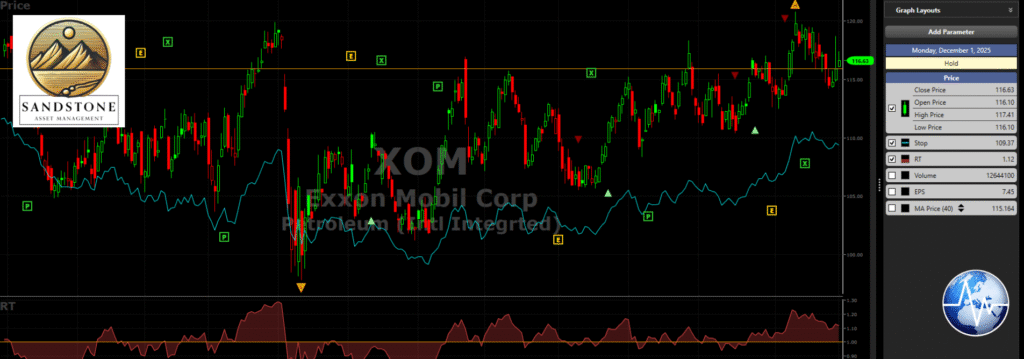
ExxonMobil, meanwhile, posted Q3 2025 earnings of $7.5 billion ($1.76 per share) and $14.8 billion in cash flow from operations, with an upgraded outlook for $25 billion in earnings growth and $35 billion in cash flow growth by 2030.
These figures highlight ExxonMobil’s financial resilience in E&P, bolstered by high production volumes (4.8 million oil-equivalent barrels per day), while NextEra’s infrastructure focus drives steady revenue from regulated utilities and clean energy.
Together, their financial health enables heavy investment in such ventures without straining balance sheets, creating a blueprint for other E&P firms to partner with utilities amid rising AI-driven power needs.
Implications for Investors: Opportunities in the Energy-AI Nexus
For investors, this partnership signals lucrative opportunities in the energy sector’s transformation. AI data centers are expected to drive trillions in economic value, but they hinge on reliable, scalable power. Companies like ExxonMobil and NextEra stand to benefit from this demand tailwind, potentially boosting stock valuations and dividends.ExxonMobil investors could see upside from diversifying beyond volatile oil prices into stable, long-term contracts with tech firms. The company’s CCS integration positions it as a leader in “transitional” energy, appealing to ESG-focused funds. NextEra, already a darling of renewable investors, gains from expanding its gas portfolio, which offers higher margins amid grid constraints on pure renewables.
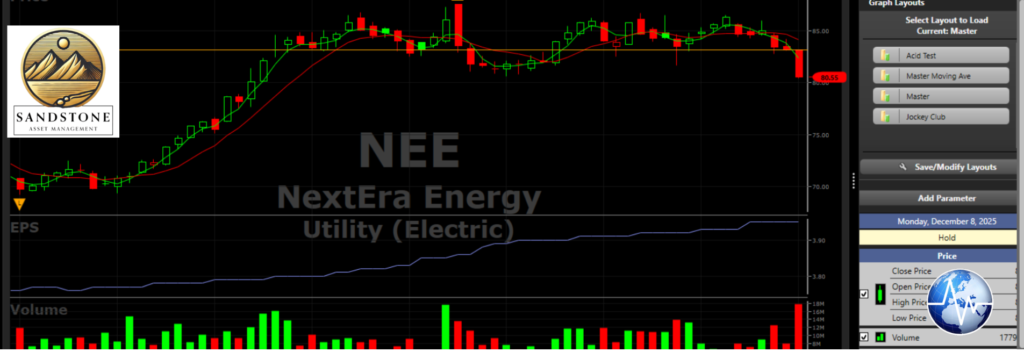
Broader market implications include potential rallies in energy stocks tied to AI infrastructure. However, risks remain: Regulatory hurdles for CCS, fluctuating natural gas prices, and competition from nuclear or pure renewables. Overall, this deal could enhance both firms’ EV/EBITDA multiples—NextEra’s at 16.68x and ExxonMobil’s at 6.85x in Q3 2025—reflecting investor optimism.
Long-term holders should monitor execution, as successful projects could yield significant returns in a sector poised for growth.
Behind the Meter: Shielding Consumers from AI’s Power Hunger?
A key question is whether this data center will operate “behind the meter,” meaning it generates power onsite without relying on the public grid. Behind-the-meter systems, such as dedicated solar, batteries, or gas plants, allow data centers to self-supply energy, avoiding utility rate hikes for consumers and bypassing grid queues.
Estimates suggest up to 25% of new data center demand through 2030 could come from such solutions, offering reliability and sustainability benefits.
While the announcement doesn’t explicitly state it, the project’s structure—a bespoke 1.2 GW gas plant with CCS built specifically for the data center—strongly indicates a behind-the-meter setup.
This would minimize grid impact, ensuring that residential and commercial consumers aren’t footing the bill for AI’s energy surge through higher electricity rates. Instead, the hyperscaler client would bear the costs directly, aligning with industry trends where tech companies invest in private power to expedite builds and control emissions.
In summary, the ExxonMobil-NextEra partnership exemplifies the energy industry’s adaptation to AI’s demands, blending fossil fuels with clean tech for mutual gain. For the Energy News Beat audience, this is a watchlist item: a fusion of old and new energy worlds that could redefine investment landscapes while keeping consumer impacts at bay.
Sources: CNBC.COM, latitudemedia.com, datacenterknowledge.com, finance.yahoo.com, corporate.exxonmobil.com, investor.nexteraenergy.com
Want to get your story in front of our massive audience? Get a media Kit Here. Please help us help you grow your business in Energy.