


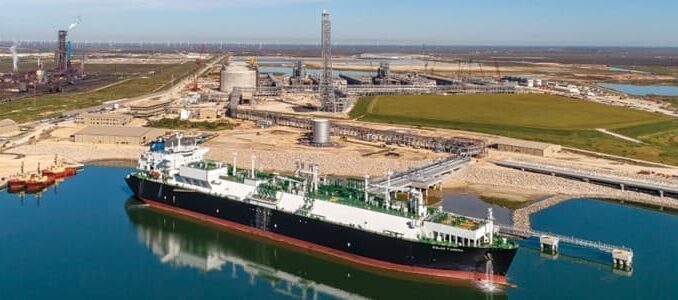
The escalating conflict between the United States, Israel, and Iran, which erupted in late February 2026, has thrust global energy markets into turmoil. Iranian retaliatory strikes, including drone attacks on key energy infrastructure in the Gulf, have effectively shuttered the Strait of Hormuz—a vital chokepoint for approximately 20% of the world’s oil and liquefied natural gas (LNG) trade. Qatar, the world’s second-largest LNG exporter, halted production at its major facilities following direct hits, declaring force majeure on shipments and removing roughly 20% of global LNG supply from the market. This disruption has sent prices soaring, with European natural gas futures jumping nearly 70% and Asian spot prices following suit. As the conflict enters its second week, the LNG market is on edge, with ripple effects felt from boardrooms to households worldwide.
This article examines the recent upheavals in the LNG sector, global demand and supply dynamics, key players in exports and imports, regional impacts on Asia, Europe, and the United States, Qatar’s estimated downtime, potential recovery timelines if the conflict resolves swiftly, and the pace at which new LNG capacity could come online to mitigate shortages.
Recent Changes in the LNG Market: A Timeline of Turmoil
The past few weeks have seen a rapid escalation that has upended LNG flows. On February 28, 2026, U.S. and Israeli forces launched strikes on Iranian targets, prompting Iran to retaliate with missiles and drones across the Gulf.
By March 2, Iranian attacks targeted energy sites in Qatar, Saudi Arabia, and other neighbors, leading to a de facto closure of the Strait of Hormuz.
QatarEnergy, responsible for about 20% of global LNG output (around 81 million metric tons per annum or Mtpa), suspended operations at its Ras Laffan and Mesaieed facilities after drone strikes caused damage.
On March 4, the company declared force majeure, halting liquefaction and shipments entirely.
These events have slashed Middle Eastern LNG exports by an estimated 70%, with shipping traffic through the strait dropping 85% compared to the previous year.
Global LNG prices have spiked: Brent crude hit $90 per barrel for the first time in two years, while European benchmark prices rose up to 50% and Asian prices followed closely.
Analysts warn that even a short-term disruption could erase 1.5 Mt (2.2 billion cubic meters) of weekly LNG supply, forcing markets to draw heavily on storage and compete fiercely for spot cargoes.
Global LNG Demand, Supply, Exporters, and Buyers
Prior to the conflict, global LNG demand was projected to grow robustly in 2026, reaching around 466-484 Mtpa, up 4-10% from 2025, driven by Asia’s industrial recovery and Europe’s storage needs.
Supply was expected to match this, with new capacity additions pushing totals to 460-484 Mtpa.
However, the crisis has created an immediate shortfall of about 20% of supply, equivalent to 80-100 Mtpa annually from Qatar and the UAE alone.
Major Exporters (Pre-Conflict):
United States: World’s largest at ~111 Mtpa in 2025, exporting ~15 billion cubic feet per day (Bcf/d), with flexible contracts benefiting from price surges.Australia: ~80 Mtpa, stable but distant from disrupted routes.
Qatar: ~81 Mtpa (now offline), primarily to Asia (80% of exports).Russia: ~30 Mtpa, with potential for rerouting but sanctions-limited.
Others: UAE (~6 Mtpa, affected), Algeria, Norway.
Major Buyers:Asia: Dominates with ~65% of global imports, led by China (73 Mtpa forecast), Japan, South Korea, India, and Taiwan; highly exposed to Qatari supply.
Europe: ~30% of imports, relying on spot market flexibility but with low storage levels (35% below five-year average).
Others: Latin America, Middle East (e.g., Egypt up 9 bcm in 2025).
The conflict has shifted dynamics: Buyers are scrambling for U.S. and Australian cargoes, while exporters like the U.S. see windfall gains from higher prices.
Regional Impacts: Asia, Europe, and the United States
Asia: Most vulnerable, as 80% of Qatari LNG heads there, accounting for 25% of the region’s supply and 30% of China’s.
Prices have risen 50%, risking industrial slowdowns in energy-intensive sectors like manufacturing in China and Japan. Countries like Pakistan and Bangladesh, reliant on Qatar for 70-99% of imports, face spot market premiums that could spike utility bills and curb growth.
Long-term, this could disrupt 200 Mtpa of forecast demand growth over the next decade.
Europe: Gas prices have doubled, with TTF futures up 70%.
Low storage (46 bcm at end-February vs. 60 bcm in 2025) leaves little buffer, reigniting competition with Asia for U.S. cargoes.
Inflationary pressures could dent growth, though diversification since 2022 (more U.S. imports) offers some resilience.
United States: As the top exporter, the U.S. benefits from surging demand and prices, potentially adding $10-15/bbl to Brent forecasts.
Domestic Henry Hub prices may rise to $3.90/MMBtu in 2026 from export pull, but shale abundance shields consumers.
Windfalls for firms like Cheniere and ExxonMobil could boost investments, though volatility risks supply chain disruptions.
Qatar’s Estimated Downtime and Recovery Scenarios
Initial assessments suggest Qatar’s facilities sustained damage from drone strikes, requiring at least two weeks of shutdown for safety evaluations.
Qatar’s Energy Minister stated that even if hostilities cease immediately, resuming normal delivery cycles could take “weeks to months” due to logistical challenges and gradual restarts to avoid equipment damage.
Sources indicate a full liquefaction halt, with restart decisions pending regional stability, followed by another two weeks to reach capacity.
If the conflict ends in 30 days (four weeks total), recovery might take 4-8 weeks post-cessation—far short of six months unless major repairs are needed.
In a baseline scenario of a U.S.-Iran deal within four weeks, markets could adapt, with prices stabilizing by end-2026.
Prolonged fighting risks extending downtime indefinitely.
How Fast Can New LNG Come Online in the US and Elsewhere?
To offset losses, new capacity is crucial. The U.S., with export capacity at ~15 Bcf/d in early 2026, is set to add ~2 Bcf/d this year via Golden Pass LNG (first train by mid-2026) and Corpus Christi Stage 3 expansions.
Overall, U.S. capacity could reach 19 Bcf/d by year-end, surging to 24 Bcf/d by 2027 with projects like Plaquemines Phase 2.
Ramp-ups typically take 3-6 months post-commissioning.
Elsewhere, Australia and Canada offer limited near-term additions (e.g., LNG Canada at 1.8 Bcf/d, ramping in 2026), while Qatar’s North Field expansion (adding 64 Mtpa by 2030) is paused.
Global supply could loosen by 7% in 2026 absent disruptions, but the crisis accelerates U.S. dominance.
Top US LNG Export Companies
The United States is the world’s largest LNG exporter, with export capacity exceeding 15 billion cubic feet per day (Bcf/d) as of early 2026. Key players operate major terminals along the Gulf Coast, including Sabine Pass, Corpus Christi, Calcasieu Pass, Plaquemines, Cameron, Freeport, Cove Point, and emerging projects like Golden Pass and Rio Grande. Based on production volumes, market share, and operational status, the top US LNG export companies (focusing on terminal operators and major stakeholders) include:
|
Company
|
Key Terminals/Operations
|
2025 Export Volume (Approx.)
|
Notes
|
|---|---|---|---|
|
Cheniere Energy (NYSE: LNG)
|
Sabine Pass (LA), Corpus Christi (TX)
|
~4-5 Bcf/d
|
Largest US exporter; ~30-40% of total US exports. Invested $50B+ in facilities; plans to double output to 100 Mtpa by mid-2030s.
|
|
Venture Global LNG (NYSE: VG)
|
Calcasieu Pass (LA), Plaquemines (LA)
|
~3-4 Bcf/d
|
Second-largest; rapid expansion with Plaquemines fully online in 2025. Exported record cargoes in 2025.
|
|
Freeport LNG
|
Freeport (TX)
|
~2 Bcf/d
|
Private company; partners include Osaka Gas and JERA. Capacity ~15 Mtpa; key supplier to Asia and Europe.
|
|
Sempra Energy (NYSE: SRE)
|
Cameron LNG (LA), Energia Costa Azul (Mexico, but US-linked)
|
~1-2 Bcf/d
|
Operates Cameron with partners like TotalEnergies; exports ~12 Mtpa.
|
|
ExxonMobil (NYSE: XOM) / QatarEnergy
|
Golden Pass (TX)
|
~1 Bcf/d (ramping up)
|
Joint venture; first cargoes in early 2026; capacity 18 Mtpa by full operations.
|
|
NextDecade Corporation (NASDAQ: NEXT)
|
Rio Grande LNG (TX)
|
Emerging (first trains online mid-2026)
|
Phase 1 under construction; signed 40 Mtpa SPAs in 2025; partners include TotalEnergies and GIP.
|
|
TotalEnergies (NYSE: TTE)
|
Various offtake from US terminals (e.g., Cameron, Sabine Pass)
|
~10 Mtpa exported
|
Leading exporter via stakes and contracts; not a primary operator but ships significant volumes.
|
Other notable players include Tellurian Inc. (acquired by Woodside Energy in 2024; Driftwood LNG under development) and Dominion Energy (Cove Point, MD; smaller scale). Data reflects 2025 operations; capacities are expanding rapidly, with US total expected to reach 18 Bcf/d by 2027.
Summary of Latest Earnings Reports
Most recent earnings are for Q4/full year 2025 (reported in February/March 2026). Private companies like Freeport LNG do not publicly report. Highlights for public companies:
Cheniere Energy: Reported Q4 2025 EPS of $10.68 (beat estimates of $3.86 by 177%). Full-year 2025 revenues ~$20B+ with adjusted EBITDA ~$9B. Net income boosted by derivative gains. Introduced 2026 guidance: Consolidated Adjusted EBITDA $6.75B-$7.25B; Distributable Cash Flow $4.35B-$4.85B. Dividend increased to $0.555/share.
Venture Global LNG: Q4 2025 EPS of $0.41 (beat estimates of $0.35 by 17%). Revenues $4.4B (missed estimates of $4.7B but up 193% YoY). Full-year 2025 revenues $13.77B (up 177% YoY); adjusted EBITDA $6.27B (up 198% YoY); net income $2.26B (up 53% YoY). Exported record 486 cargoes in 2025. 2026 outlook: Adjusted EBITDA $5.2B-$5.8B; 486-527 cargoes expected.
Sempra Energy: Q4 2025 EPS of $1.28 (beat estimates of $1.16 by 10%). Full-year 2025 adjusted EPS $4.69 (high end of guidance). Revenues ~$15B. Boosted 2026-2030 capital plan to $65B (95% utility-focused). Affirmed 2026 adjusted EPS guidance $4.80-$5.30; new 2027 guidance $5.10-$5.70; 2030 outlook $6.70-$7.50.
ExxonMobil: (Not LNG-specific; integrated). Q4 2025 EPS ~$2.50 (beat estimates). Full-year earnings ~$40B net income. LNG contributes via Golden Pass ramp-up; benefits from higher gas prices.
(Note: Exxon is more upstream-focused; no isolated LNG earnings.)
NextDecade Corporation: Q4 2025 EPS -$0.18 (beat estimates of -$0.64 by 72%; less loss than expected). No revenues yet (pre-commercial). Focused on Rio Grande construction (Trains 1-3 ~65% complete). Trailing EPS -$1.17; 2026 estimates forecast EPS -$1.00.
Tellurian Inc.: (Acquired by Woodside; limited updates). Last public report: Q4 2024 EPS -$0.05 (Feb 2025). No 2025 full-year data post-acquisition; Driftwood project advancing under new ownership.
TotalEnergies: Q4 2025 EPS ~$2.50 (beat estimates). Full-year net income ~$25B. US LNG exports ~10 Mtpa; benefits from offtake agreements.
Companies That Sell to Them or Benefit from Increased LNG Sales
Increased US LNG exports drive demand for natural gas production, transportation, and related services. Beneficiaries include upstream producers (supplying feedgas), midstream companies (pipelines/storage), and integrated players. Exports boost volumes by ~15% annually, adding $100B+ to US GDP via jobs and investments.
Here’s a summary:Upstream Suppliers (Natural Gas Producers)
These sell feedgas to LNG terminals, benefiting from higher prices and volumes (e.g., Permian, Haynesville shales).ExxonMobil (NYSE: XOM): Major producer; supplies Golden Pass. Benefits from ~$10B annual LNG-related revenues.
Chevron (NYSE: CVX): Shale gas output; long-term contracts with Cheniere/Venture Global.
EQT Corporation (NYSE: EQT): Largest US gas producer (Appalachian focus); exports drive 1-2% annual demand growth.
Devon Energy (NYSE: DVN): Permian/Haynesville producer; tied to midstream expansions.
Midstream/Transportation Companies (Pipelines, Storage)These transport gas to terminals, earning fee-based revenues from higher flows.
Energy Transfer (NYSE: ET): Largest US pipeline network; building Gulf Run and Permian lines. ~50% revenues from gas transport; dividend yield ~8%.
Kinder Morgan (NYSE: KMI): Operates 66,000 miles of pipelines; expanding Gulf Coast Express. Handles 40% of US gas; dividend ~6%.
Williams Companies (NYSE: WMB): Transco pipeline key for exports; 15% US storage. Benefits from AI/data center demand pull.
EnLink Midstream (NYSE: ENLC) / MPLX (NYSE: MPLX): NGL/gas gathering; partners in Matterhorn Pipeline to Permian exports.
Integrated/Other BeneficiariesShell (NYSE: SHEL): Major offtaker/trader; owns Prelude but buys US LNG for global sales.
ConocoPhillips (NYSE: COP): Alaska/Conoco LNG; upstream supplier with export exposure.
These companies see windfalls from price surges (e.g., Henry Hub up to $3.90/MMBtu in 2026) and volume growth, with minimal downside from fixed-fee models.
Overall, a 60% global LNG demand rise by 2040 positions these for sustained gains.
Implications for the Market, Investors, and Consumers
The LNG market faces a tight balance, with prices likely elevated through 2026, risking a shift to coal or renewables in price-sensitive regions.
Investors in U.S. LNG firms stand to gain from premiums, but volatility could deter long-term contracts; diversified portfolios in renewables may hedge risks. Consumers worldwide brace for higher bills—up 25-50% in Europe and Asia—potentially fueling inflation and slowing growth.
A swift resolution offers relief, but prolonged conflict could reshape global energy alliances, boosting U.S. exports while exposing Asia’s vulnerabilities. As tensions simmer, the LNG sector’s resilience will be tested like never before.
Sources: cnbc.com, oilprice.com, iea.org, pwc.com, farmonaut.com, allianz.com
Get your CEO on the #1 Energy Podcast in the United States: https://sandstoneassetmgmt.com/media/
Is oil and gas right for your portfolio? https://energynewsbeat.co/invest/

Be the first to comment