



Energy News Beat Special Report – March 2026
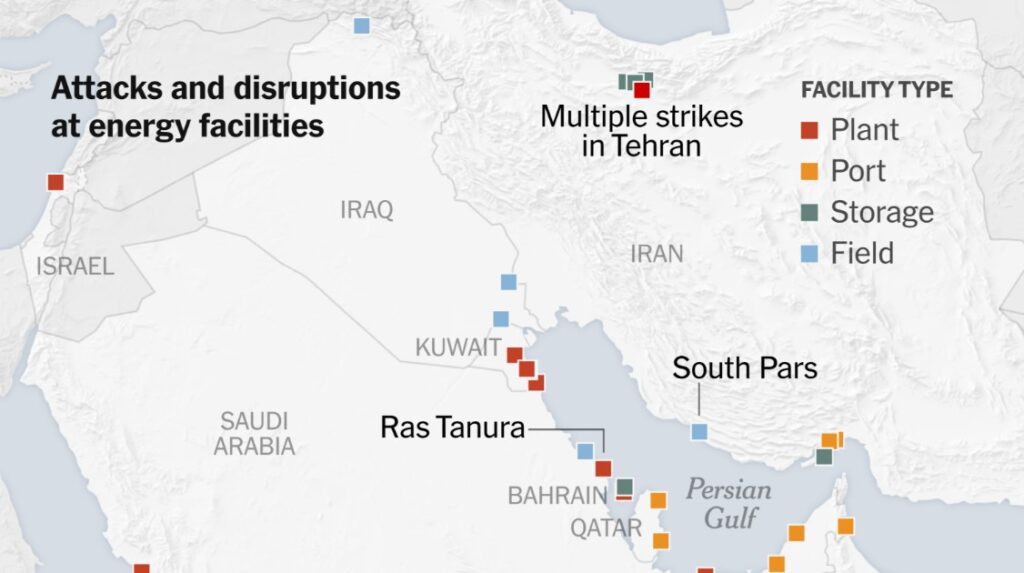
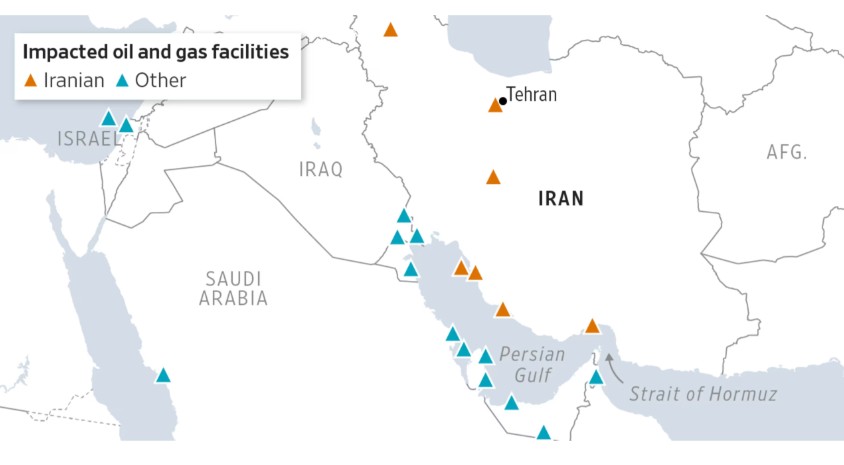
Escalating conflicts have turned oil refineries into strategic targets worldwide. Ukrainian drone campaigns continue to hammer Russian facilities, while the 2026 Iran war (U.S.-Israeli strikes on Iran and Iranian retaliation across the Gulf) has triggered widespread damage to refineries, terminals, and related gas infrastructure in Saudi Arabia, the UAE, Bahrain, Kuwait, Qatar, and Israel. These attacks have taken approximately 2.8 million barrels per day (bpd) of global refining capacity offline—roughly 3-4% of worldwide runs—and disrupted downstream products including gasoline, diesel, jet fuel, and fertilizers.
Below is a comprehensive country-by-country breakdown based on the latest verified impacts (as of mid-March 2026). Where specific unit damage is reported, I note it; otherwise, full or partial shutdowns are indicated with estimated offline volumes. Product yields use industry-standard averages (gasoline ~42%, diesel ~30%, jet fuel ~10%, other/petrochemicals ~18%) adjusted slightly for regional configurations (Russia is more diesel-heavy).
Comprehensive List by Country
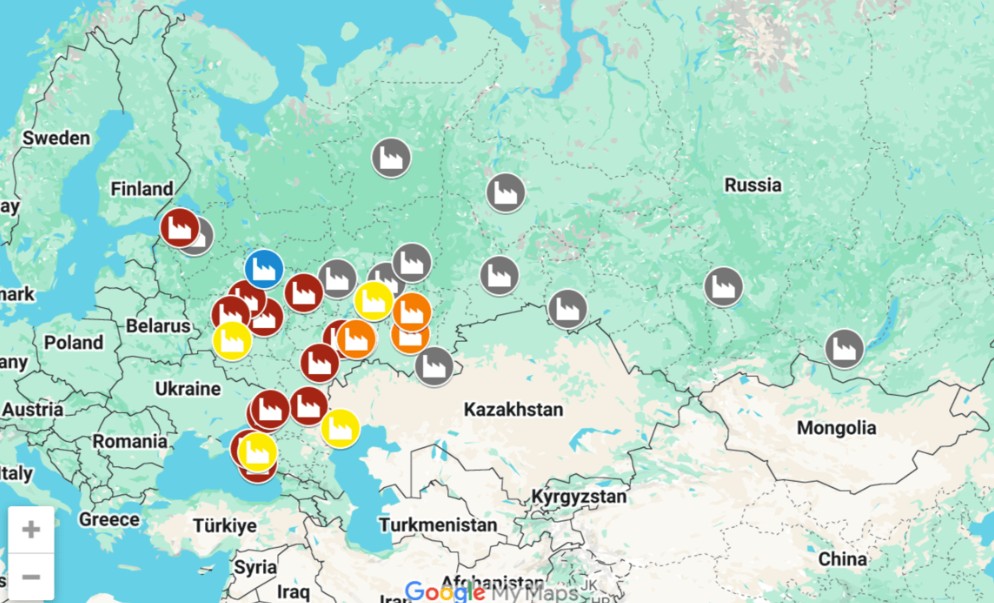
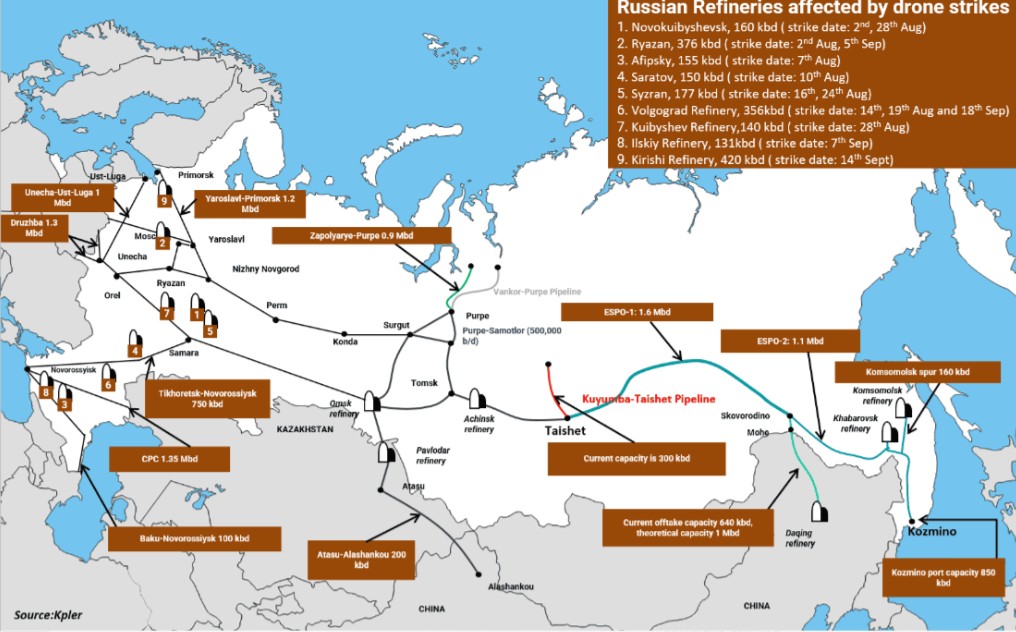
Russia (attacked by Ukrainian long-range drones)
Who attacked: Ukrainian forces (Unmanned Systems Forces and military intelligence). Over 120 strikes in 2025 alone, continuing into 2026 (e.g., Volgograd refinery halted February 2026).
Major facilities impacted (examples): Ryazan (Rosneft, 340k bpd, repeated hits on gasoline/jet units), Volgograd (300k bpd, full halt), Ilsky (first 2026 strike), Saratov, Syzran, Afipsky, Novokuybyshevsk, Kirishi, and 20+ others.
Offline capacity: ~500,000 bpd persistent (15% of Russia’s ~5.5–6 Mb/d total).
Products now offline (est. daily): Gasoline ~210,000 bpd, diesel ~175,000 bpd, jet fuel ~50,000 bpd, other ~65,000 bpd. This has caused domestic shortages (up to 20% in southern regions), export bans on gasoline, and reduced military jet fuel supply.
Saudi Arabia (Iranian drones)
Who attacked: Iranian retaliation (drones/debris).
Ras Tanura (Aramco, 550k bpd): Temporarily halted after fire; partially restarted but ongoing risk.
SAMREF (Yanbu) (Aramco-Exxon JV, 400k bpd): Damaged; operations assessing/suspended. Yields include ~35% gasoline, ~30% diesel, ~15% jet.
Offline capacity: ~950k bpd combined (partial/full).
Products offline (est.): Gasoline ~400k bpd equiv., diesel ~285k, jet ~95k, other ~170k.
United Arab Emirates (Iranian drones)
Who attacked: Iranian retaliation.
Ruwais complex (ADNOC, ~922k bpd total): Precautionary shutdown after industrial fire.
Offline capacity: Up to 900k bpd.
Products offline (est.): Gasoline ~380k bpd, diesel ~270k, jet ~90k, other ~160k.
Bahrain (Iranian attacks)
Who attacked: Iranian retaliation.
Bapco Energies Sitra (~380k bpd expanded): Damaged; force majeure declared.
Offline capacity: ~380k bpd.
Products offline (est.): Gasoline ~160k bpd, diesel ~114k, jet ~38k, other ~68k.
Kuwait (Iranian drones)
Who attacked: Iranian retaliation.
Mina Al-Ahmadi (~346k bpd): Multiple strikes, fires in units.
Mina Abdullah (~300–450k bpd range reported): Fires extinguished.
Offline capacity: ~600–800k bpd combined.
Products offline (est.): Gasoline ~250–340k bpd, diesel ~180–240k, jet ~60–80k.
Israel (Iranian missile)
Who attacked: Iranian retaliation.
Haifa refinery (Bazan, 197k bpd): Essential infrastructure damaged; production restoring.
Offline capacity: ~197k bpd.
Products offline (est.): Gasoline ~83k bpd, diesel ~59k, jet ~20k.
Iran & Qatar (U.S./Israeli strikes + Iranian operations)
Iran: Tehran refinery (~220k bpd) damaged; South Pars gas field (feeds petrochemicals) hit.
Qatar: Ras Laffan LNG/industrial city and Mesaieed urea plant suspended (major downstream fertilizer impact).
Offline refining/gas capacity: ~400k+ bpd refining + major LNG/urea disruption.
Products offline (est. refining): Gasoline ~170k bpd equiv. Fertilizer note: Qatar’s world-largest urea plant halted; ~30–49% of global urea exports disrupted via Strait of Hormuz.
Other countries: Minimal recent military attacks (e.g., older incidents in Nigeria/Libya via sabotage or cyber; no major 2026 additions).Global Total Lost Refining Capacity: ~2.8 million bpd (Russia ~0.5M + Gulf/ME ~1.9M+ + Israel/Iran ~0.4M). This equates to: Gasoline offline: ~1.18 million bpd
Diesel offline: ~840,000 bpd
Jet fuel offline: ~280,000 bpd
Other products: ~504,000 bpd
Top 4 Hot Spots for Shortages
Russia (Gasoline/Diesel): Domestic shortages up to 20%; panic buying, export bans. Impacts military logistics.
Gulf States (Jet Fuel/Diesel): Regional aviation and trucking disruptions; export routes (including Red Sea alternatives) strained.
Europe (Diesel from Russian supply loss): Higher prices and potential winter/short-term gaps in distillates.
Global Agriculture (Fertilizer/Urea): Qatar/Iran gas disruptions + Hormuz blockade have halted ~30–49% of traded urea/ammonia. Prices surged 30–50%; India, Bangladesh, and Asia face plant shutdowns, threatening spring planting and food security.
Revenue Lost & Repair Costs (Estimates)Using an average refined-product selling price of ~$110/bbl (reflecting current surged markets: gasoline ~$105/bbl, diesel ~$110–126, jet ~$174–197/bbl wholesale equivalents): Global daily revenue loss: ~$308 million.
Russia daily: ~$55 million.
Annualized (if persistent 1 year): ~$112 billion globally.
Repair Costs (per location/aggregate): Russia (aggregate): Direct physical damage >$1.2–1.3 billion in 2025 alone; total losses (incl. lost profits) >$12.9–13 billion. Individual major refinery repairs: $50–200+ million (cracking units hardest/slowest due to sanctions). Full recovery projected mid-2026+.
Saudi (Ras Tanura/SAMREF): $200–500 million per site (similar to past incidents).
UAE Ruwais, Bahrain Bapco, Kuwait facilities: $100–400 million each; Qatar Ras Laffan: $20 billion+ in projected revenue loss over 3–5 years.
Gulf total repairs likely several billion, with longer timelines for gas/urea plants.
Visual Maps of Attacks
Appendix: SourcesBloomberg, Reuters, Al Jazeera, IEA, Kpler, Carnegie Endowment, Kyiv Post, United24 Media, The Moscow Times, Forbes, Argus Media, S&P Global, and official statements from Aramco, ADNOC, KNPC, QatarEnergy (March 2026 reporting).
Capacities from industry standards (Wikipedia/ADNOC/KNPC data) and yield assumptions from refinery configuration reports.
All figures are estimates based on public reporting; actual classified damage may vary. Ongoing developments could shift numbers rapidly.
This crisis underscores the fragility of global energy supply chains. And the newest refinery fire in Port Arthur has yet to be investigated, with some reporting it as a sleeper cell; those claims are unsubstantiated, and we will wait for the official reports to come out before calling it a terrorist attack. It is, however, yet another refinery coming offline and is increasingly important to Texas.
Energy News Beat will continue monitoring—stay tuned for updates on shortages, price spikes, and repair timelines. For the latest podcast discussion, tune into Energy News Beat with Stuart Turley.
Check out the Energy News Beat Substack: https://theenergynewsbeat.substack.com/




Be the first to comment