

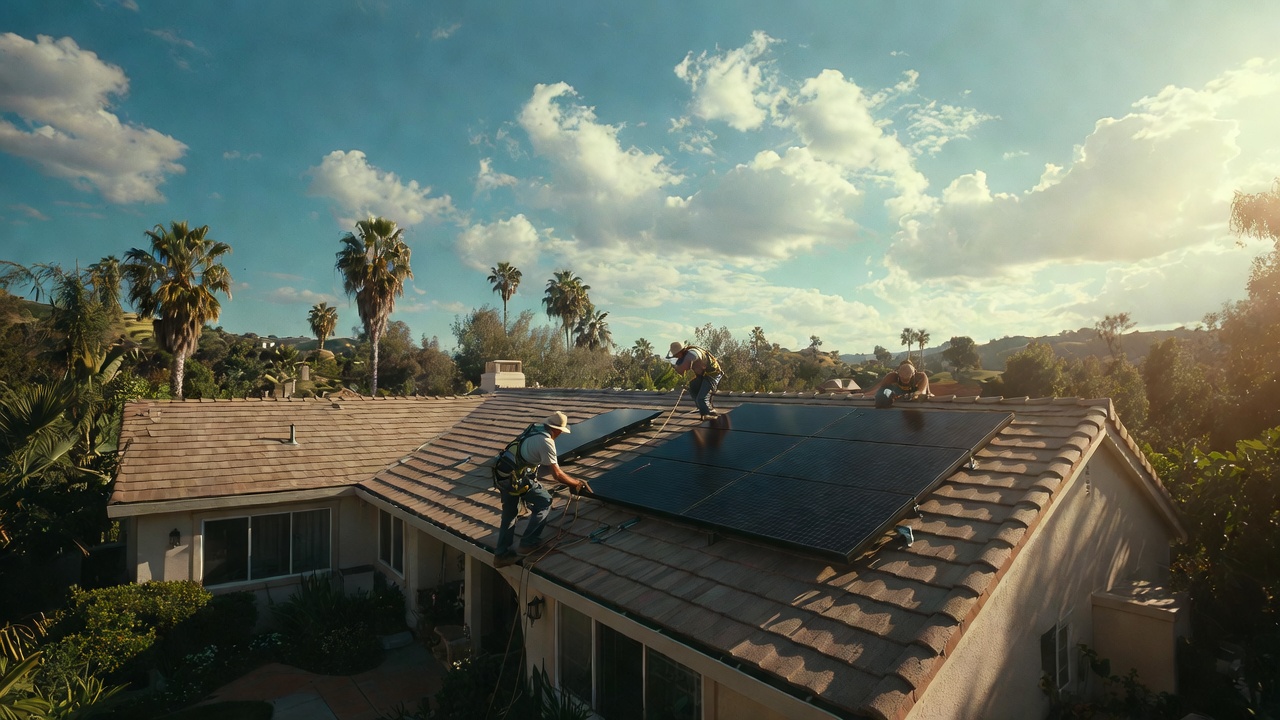
The U.S. residential solar sector, once hailed as a booming green-energy success story fueled by generous federal tax credits, is now in free fall.
Following the passage of the One Big Beautiful Bill Act (OBBBA) signed by President Donald Trump in July 2025—which accelerated the elimination of key subsidies, including the 30% residential Investment Tax Credit (Section 25D), effective at the end of 2025—home solar installations are contracting sharply. What began as a slowdown in 2025 has worsened in 2026, with industry forecasts pointing to a steep drop in new residential systems and widespread pain across the sector.
According to the Solar Energy Industries Association (SEIA) and Wood Mackenzie’s Solar Market Insight Report 2025 Year in Review, the U.S. added just 43.2 GWdc of total solar capacity in 2025—a 14% decline from 2024. While utility-scale solar fell 16% and community solar dropped 25%, the residential segment held relatively flat at 4.647 GWdc (down just 2% year-over-year) thanks to a last-minute rush to beat the credit expiration. That surge proved short-lived. For 2026, SEIA projects a 19% contraction in residential solar installations, with some analysts warning of even steeper declines amid financing challenges and a wave of installer layoffs.
Impact on Consumers
Homeowners are feeling the pain directly. The now-expired federal tax credit previously slashed upfront costs by an average of about $9,000 per system. Without it, the payback period for a typical residential solar installation has stretched from roughly 7 years to 10 years or longer in many markets—assuming stable electricity rates and no major repairs. Many lower- and middle-income families who once viewed solar as affordable are now priced out. Surveys of homeowners conducted as the credit phased out showed that 45% of those aware of the incentive said they could not afford solar without it, while another 33% called it a financial stretch.
Financing has also tightened. With the subsidy gone and interest rates still elevated, third-party ownership models (leases and power purchase agreements) are under pressure, even as some remain eligible for limited credits through mid-2030. Consumers who rushed installations in late 2025 now face potential equipment shortages, delayed service, and in some cases, systems that underperform relative to aggressive sales promises. The result: fewer new adopters, reduced energy-bill savings for those who do install, and a broader slowdown in the shift toward rooftop renewables.
Solar Companies Under Investigation for Scam Installations
The bust has coincided with heightened scrutiny of deceptive sales practices that plagued the industry even during the boom years. State attorneys general and consumer protection agencies have ramped up enforcement, targeting misleading claims about savings, hidden fees, and substandard installations.
In Texas, Attorney General Ken Paxton launched a major initiative in April 2026, issuing Civil Investigative Demands to major players, including Freedom Forever LLC (Freedom Solar), Sunrun Inc., Lone Star Solar Services LLC, and CAM Solar Inc. The Texas OAG has received over 100 formal complaints against these companies alone, with thousands more complaints circulating online. Nationwide, the Consumer Financial Protection Bureau and FTC have logged thousands of solar-related complaints in recent years, many involving promises of “$0 electric bills” that never materialized or financing traps that left homeowners with liens or unaffordable loans.
High-profile lawsuits continue to mount. New York City sued Radiant Solar in March 2026 for allegedly defrauding hundreds of homeowners with false savings claims. New York’s Attorney General Letitia James filed suit against Attyx (formerly SunCo) and its lending partners, accusing the company of defrauding consumers and generating roughly $275 million through deceptive practices across more than 4,500 systems—with over 200 customer complaints documented. Similar actions have emerged in California, Kansas City, and other states, where investigators have documented aggressive door-to-door tactics, misrepresented performance data, and installations on unsuitable roofs.
While not every installer engages in fraud, regulators warn that the subsidy-driven boom attracted unscrupulous operators, and the current bust is exposing those weaknesses as struggling companies cut corners or exit the market entirely.
Cost Increases on the Grid
Rooftop solar’s expansion has long been linked to grid cost shifts. When customers generate their own power and receive credits under net-metering policies, utilities recover fixed infrastructure costs (poles, wires, maintenance) from a shrinking base of remaining ratepayers—often leading to higher bills for non-solar households. Studies have quantified this effect: one analysis found rooftop solar contributed to a roughly 1.48% average rate increase for utilities to offset revenue losses, with disproportionate impacts on lower-income non-solar customers. In states like California, regulators and utilities have estimated billions in annual cost shifts, though independent analyses sometimes dispute the net impact.
With residential solar growth now contracting, the pace of this cost shift is slowing. However, existing systems installed under prior incentives will continue to affect rate structures for years. Critics of subsidies argue that the federal credits artificially accelerated adoption without fully accounting for grid modernization expenses, ultimately raising electricity prices for everyone. Proponents counter that solar reduces long-term fuel and infrastructure needs, but the current policy reversal is forcing a market reckoning.
What Happens to the Solar Industry Without Subsidies?
The removal of federal incentives is reshaping the entire solar ecosystem. Multiple large installers have already filed for bankruptcy or shuttered operations between 2024 and 2026, with more expected. Wood Mackenzie and other forecasters now project U.S. solar installations over the next decade to be about 17% lower than pre-OBBBA outlooks. Residential solar is described by some analysts as a “zero-growth sector” in the near term.
The industry is adapting: companies are pivoting to states with remaining local incentives, emphasizing battery storage for resiliency, and focusing on cost reductions through better supply chains. Utility-scale solar, less dependent on the residential credit, is expected to rebound somewhat in 2026 thanks to safe-harbor provisions and strong demand growth in states like Texas.
Overall, solar is still projected to account for the majority of new U.S. electricity capacity additions in the coming years—but at a slower pace and without the artificial boost of taxpayer subsidies.
Longer term, falling panel prices, rising retail electricity rates, and growing interest in energy independence may support a recovery. For now, however, the bust has worsened, delivering a stark lesson in the limits of subsidy-dependent markets.
We would like to add that currently, 90 to 95% of the solar panels in the United States are not recycled and end up in toxic landfills. Wind and solar need to include that in the up-front portion of their projects. Just saying.
Appendix: Sources and Links
- SEIA & Wood Mackenzie Solar Market Insight Report 2025 Year in Review: https://seia.org/research-resources/solar-market-insight-report-2025-year-in-review/
- Reuters: “US solar installations down in 2025 after Trump policies jolt market”: https://www.reuters.com/sustainability/climate-energy/us-solar-installations-down-2025-after-trump-policies-jolt-market-report-says-2026-03-10/
- The Hill: “Solar installations drop after Trump guts subsidies, tax breaks”: https://thehill.com/policy/energy-environment/5776709-solar-installations-decline-us-trump-administration/
- Texas Attorney General: Initiative against solar fraud companies (April 2026): https://www.texasattorneygeneral.gov/news/releases/attorney-general-ken-paxton-launches-major-initiative-combat-widespread-fraud-companies-selling
- New York City lawsuit against Radiant Solar: https://finance.yahoo.com/news/nyc-sues-solar-panel-company-110000397.html
- Inside Climate News on rooftop solar and electricity costs: https://insideclimatenews.org/news/18122025/inside-clean-energy-rooftop-solar-electricity-rates/
- Bloomberg (May 7, 2026): “The Bust in US Home Solar Has Worsened After Trump Ends Subsidies”: https://www.bloomberg.com/news/articles/2026-05-07/the-bust-in-us-home-solar-has-worsened-after-trump-ends-subsidies
- Additional consumer and policy analyses from EnergySage, Aurora Solar, and state AG reports as referenced.
Energy News Beat Channel – Delivering straight facts on America’s energy future.