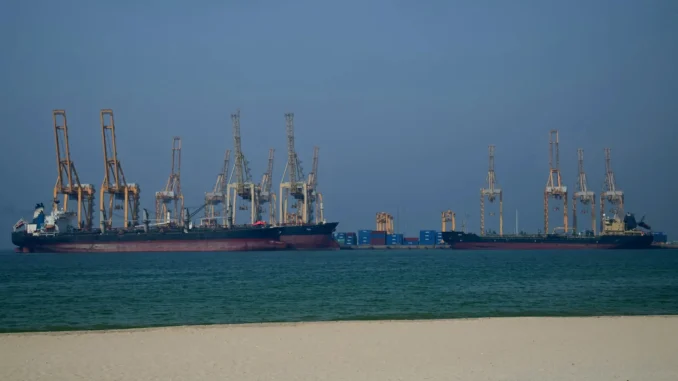
In a landmark move to bolster bilateral ties, the United Arab Emirates and India have committed to doubling their trade to $200 billion by 2032, while sealing a significant long-term liquefied natural gas (LNG) supply agreement.
The deal, signed during UAE President Sheikh Mohamed bin Zayed Al Nahyan’s visit to New Delhi on January 19, 2026, underscores the growing energy partnership amid India’s push for cleaner fuels and the UAE’s ambition to expand its LNG exports.
ADNOC Gas, a subsidiary of the Abu Dhabi National Oil Company (ADNOC), has inked a 10-year contract with India’s Hindustan Petroleum Corporation Limited (HPCL) for 0.5 million metric tons per annum (mtpa) of LNG, valued at $2.5-$3 billion, with deliveries starting in 2028.
This positions the UAE as India’s second-largest LNG supplier after Qatar, enhancing New Delhi’s energy security as it transitions toward natural gas in power and industry sectors.
The agreement is part of a broader “mega partnership” that includes investments in India’s Dholera Special Investment Region for infrastructure like airports and rail, alongside collaborations in defense, space, and AI.
As global LNG demand surges—projected to hit 600-700 mtpa by 2035—the UAE is positioning itself as a key exporter, leveraging expansions to meet Asia’s growing needs.
UAE’s LNG Capacity: A Regional Powerhouse
The UAE’s current LNG production capacity stands at approximately 6 mtpa, centered at ADNOC’s Das Island facility, one of the world’s oldest operating LNG plants since 1977.
This facility processes and exports LNG primarily to Asian markets, supporting the UAE’s role as a mid-tier global supplier.
By 2029, with the addition of the Ruwais LNG project, total capacity is expected to reach 15.6 mtpa, more than doubling output and enabling greater export volumes.
Ruwais, featuring two 4.8 mtpa trains, will be the first LNG facility in the MENA region powered by clean energy, aligning with the UAE’s net-zero ambitions.
Historical Shipments: Steady Growth Over the Last Decade
Over the past 10 years, UAE LNG exports have averaged around 5-6 mtpa, or about 0.7 billion cubic feet per day (Bcf/d), with a focus on long-term contracts in Asia.
In 2023, exports totaled approximately 5.5 mtpa, valued at $3.5 billion, with key destinations including India ($2.23 billion), Japan ($663 million), and China ($435 million).
Exports have remained stable despite global disruptions, rising slightly from 91.12 million metric tons (mt) in 2021 to 92.18 mt in 2023 for the Middle East trio (Qatar, Oman, UAE).
Das Island has shipped over 3,500 cargoes worldwide, but domestic demand for power and desalination has constrained net exports, leading to occasional imports via the Dolphin pipeline from Qatar.
Expansion Plans: Betting Big on Gas
The UAE is investing heavily in LNG infrastructure under a $150 billion gas strategy to boost production by 50% to 9 Bcf/d by 2030, aiming for self-sufficiency and export surplus.
Key to this is the Ruwais LNG project, with FID in 2024 and operations starting in 2028, adding 9.6 mtpa.
ADNOC’s international arm, XRG, targets 20-25 mtpa capacity by 2035 through global investments.
Additional projects include debottlenecking Das Island for 0.9 mtpa more and expansions at Fujairah terminal.
These align with global LNG growth, forecasted at 150 mtpa new capacity by 2030, with the UAE focusing on low-carbon tech.
Other Key Customers: Asia Dominates, Europe Emerges
India has become the UAE’s largest LNG customer, with over 3.2 mtpa contracted by 2029, including deals with IndianOil (1 mtpa from Ruwais) and GAIL (0.5 mtpa).
Historically, Japan and China absorb significant volumes, with 65% of MENA LNG (including UAE) flowing to South and East Asia in 2022.
Europe is gaining traction, with a 15-year deal for 1 mtpa to Germany’s SEFE and recent offtakes by Shell (1 mtpa from Ruwais).
Over 8 mtpa of Ruwais capacity is already committed, leaving room for further diversification to emerging markets in Asia and Africa.
|
Metric
|
Current (2026)
|
Projected (2029)
|
Key Markets
|
|---|---|---|---|
|
Capacity
|
~6 mtpa (Das Island)
|
~15.6 mtpa (incl. Ruwais)
|
India (largest), Japan, China, Europe
|
|
Annual Exports (Avg. Last Decade)
|
5-6 mtpa
|
10-15 mtpa potential
|
Asia 65%, Europe 30%
|
|
Committed Volumes (India)
|
0.5 mtpa (HPCL)
|
3.2 mtpa total
|
Growing to 20% of UAE output
|
Publicly Traded Companies Involved and Investor Impacts
Several publicly traded entities are deeply embedded in UAE LNG operations. ADNOC Gas (ADX: ADNOCGAS), listed in 2023, leads the charge and benefits directly from such deals, with shares potentially buoyed by secured revenues.
In Ruwais, international partners Shell (NYSE: SHEL), BP (NYSE: BP), TotalEnergies (NYSE: TTE), and Mitsui (OTCMKTS: MITSY) each hold 10% stakes, providing exposure to low-carbon LNG growth.
On the buyer side, HPCL (NSE: HINDPETRO) and other Indian firms like IndianOil (NSE: IOC) stand to gain from stable supplies, potentially stabilizing margins amid volatile prices.
Investors could see positive impacts: Long-term contracts like this reduce revenue volatility, enhancing valuations for these firms. For instance, Shell and TotalEnergies, already top LNG players, may experience stock uplifts from expanded portfolios, while ADNOC Gas’s focus on Asia could drive earnings growth in a market where demand outpaces supply.
However, risks include geopolitical tensions and oversupply if global expansions flood the market.
This UAE-India pact not only cements energy ties but signals the UAE’s pivot to become a global LNG heavyweight, potentially reshaping Asian supply chains while rewarding investors in involved public companies. As expansions unfold, watch for further deals that could accelerate this transformation.
How Did President Trump Change the Oil Markets?