


By Stuart Turley, Energy News Beat
February 23, 2026A powerful winter storm, dubbed Winter Storm Hernando by The Weather Channel, has unleashed chaos across the Northeastern United States, bringing heavy snowfall, blizzard conditions, and high winds that have disrupted daily life for millions.
This nor’easter, which intensified into a historic blizzard, began impacting the region on February 22 and continued through February 23, affecting a broad swath from the Mid-Atlantic to New England.
With snowfall totals reaching up to 2 feet in some areas, the storm has led to widespread power outages, massive flight cancellations, and declarations of states of emergency in multiple states. As energy professionals, we at Energy News Beat are closely monitoring how this event is straining the region’s power grid and highlighting the resilience—or vulnerabilities—of our energy infrastructure.
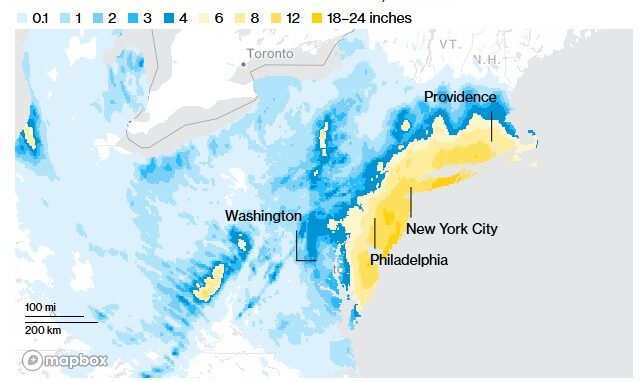
The Storm’s Scope and Affected StatesWinter Storm Hernando has battered the Northeast with heavy snow falling at rates of 2 to 3 inches per hour in places, accompanied by winds gusting over 50 mph, creating whiteout conditions and coastal flooding along shorelines.
Blizzard warnings were issued for over 40 million people, marking the first such alert for New York City in nearly a decade.
The storm’s path has primarily targeted the Interstate 95 corridor, with the heaviest impacts felt in densely populated urban centers like Philadelphia, New York City, and Boston.
Key states involved include:Massachusetts: Hardest hit with up to 2 feet of snow in some areas, leading to travel bans and school closures.
New Jersey: Blizzard conditions statewide, with coastal flooding and high winds.
New York: New York City and Long Island seeing 15-24 inches of snow.
Pennsylvania: Philadelphia and surrounding areas buried under 11-15 inches.
Rhode Island: Heavy accumulations of 18-20 inches.
Connecticut: Widespread blizzard warnings and power disruptions.
Delaware and Maryland: Southern edges of the storm with 12-19 inches of snow and coastal impacts.
Virginia: Northern parts affected with lighter snow but significant outages.
Other New England states like New Hampshire, Vermont, and Maine experienced lighter but still disruptive snowfall.
States of emergency were declared in New Jersey, New York, Pennsylvania, Connecticut, Rhode Island, Delaware, and Massachusetts, activating National Guard units and imposing commercial vehicle bans to aid snow removal and emergency response.
The storm is expected to taper off by late afternoon in New York but linger into the evening in Boston and upper New England.
Power Outages: Hundreds of Thousands in the Dark
As of this morning, the storm has knocked out power for approximately 676,778 customers nationwide, with the vast majority in the Northeast.
High winds and heavy, wet snow have downed power lines and trees, exacerbating outages during a time when heating demand is critical. This figure is up slightly from the 669,936 reported earlier, underscoring the ongoing impact.
Breakdown by state:
Massachusetts: 289,268 customers without power
New Jersey: 128,979
Delaware: 72,694
Rhode Island: 43,315
Maryland: 26,475
New York: 22,622
Virginia: 16,510
These outages highlight the challenges facing utility companies in restoring service amid treacherous conditions. In Massachusetts and New Jersey alone, over 400,000 households are affected, with restoration efforts potentially taking days in some rural areas.
From an energy perspective, this event tests the grid’s reliability, especially as demand spikes for electric heating during the cold snap.
Flight Cancellations: Air Travel Grounded
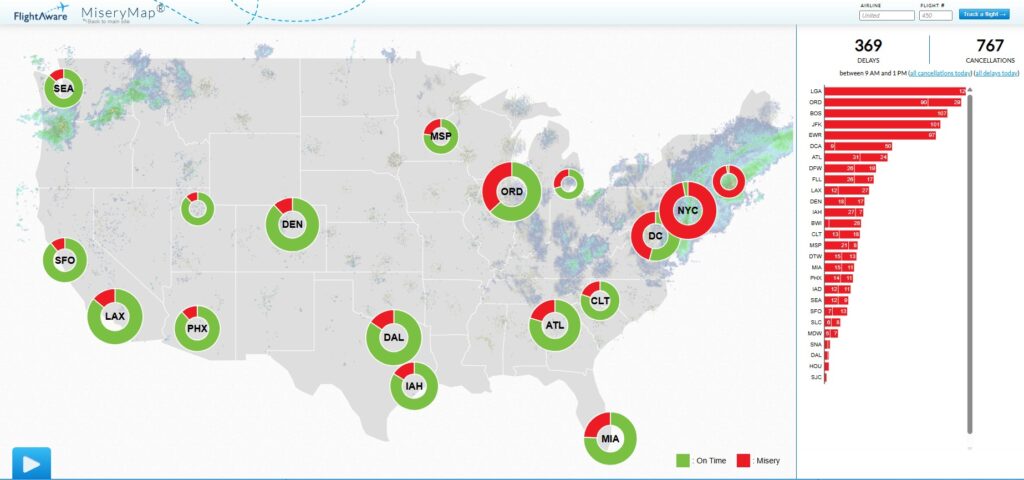
The storm has crippled air travel across the region, with airports like New York’s JFK, LaGuardia, and Newark; Boston’s Logan; and Philadelphia International seeing near-total shutdowns.
As of Monday morning, over 5,300 flights were canceled nationwide for February 23, with an additional 3,400 on Sunday and more than 1,600 preemptively canceled for Tuesday.
Total disruptions exceed 10,000 flights, cascading effects felt as far as Florida airports with routes to the Northeast.
Major carriers like American, Delta, United, and Southwest issued waivers allowing passengers to rebook without fees, but the backlog could persist for days.
De-icing operations and visibility issues have compounded the problems, grounding nearly all departures from affected hubs. This not only strands travelers but also disrupts cargo shipments, including energy-related supplies like fuel and equipment.
Current Energy Mix in Key Affected States
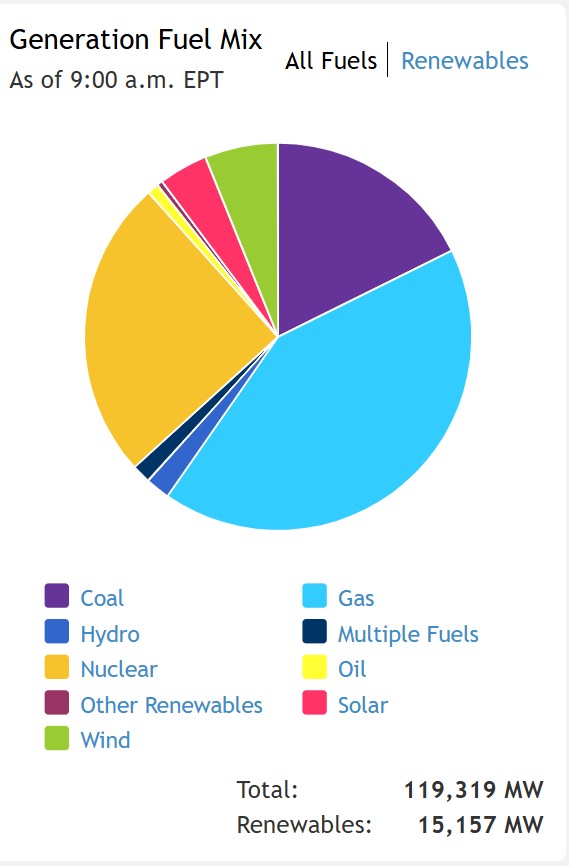
Amid the outages, the region’s power grids are under strain, relying on diverse fuel sources to meet demand. Here’s a snapshot of the real-time energy generation mix for the requested states, based on data from grid operators NYISO (for New York) and PJM (which serves New Jersey, Pennsylvania, and Virginia). Note that real-time data fluctuates, and these figures reflect early morning conditions on February 23, adjusted for the storm’s impact.
New York (NYISO): New York’s grid is heavily reliant on natural gas and nuclear for baseload power, with renewables playing a growing role. As of recent dashboard data, natural gas dominates as the main source, followed by nuclear and hydro. Dual fuel (oil/gas) units are activated for reliability during high demand. Load is around 17,000-19,000 MW, with renewables contributing variably due to weather conditions.
New Jersey, Pennsylvania, and Virginia (PJM Interconnection): These states are part of the PJM grid, which covers 13 states and provides a regional view. As of 7:00 a.m. EST on February 23, the fuel mix is approximately:
Natural Gas: 42.1% (44,114 MW)
Nuclear: 29.1% (30,463 MW)
Coal: 18.4% (19,336 MW)
Hydro: 0.9% (946 MW)
Multiple Fuels: 0.9% (956 MW)
Oil: 0.1% (176 MW)
Other Renewables: 0.5% (556 MW)
Renewables (including wind and solar, estimated to fill remaining ~8%): ~8-10%, with wind and solar limited by storm conditions.
Total generation is around 105,000 MW, with natural gas and nuclear providing stability amid the outages.
PJM’s diverse mix has helped maintain supply, but the storm’s winds could affect wind generation, while gas pipelines remain critical.
This storm underscores the importance of a resilient energy mix, with natural gas and nuclear proving reliable during extreme weather, while renewables face variability. As restoration efforts continue, Energy News Beat will keep tracking how this event influences energy policy and infrastructure investments in the Northeast.
Stay safe, and follow us for more updates on energy impacts from severe weather.
Sources: Compiled from National Weather Service, utility reports, and grid operator data, nytimes.com, dataminer2.pjm.com
Get your CEO on the #1 Energy Podcast in the United States: https://sandstoneassetmgmt.com/media/
Is oil and gas right for your portfolio? https://sandstoneassetmgmt.com/invest-in-oil-and-gas/




Be the first to comment