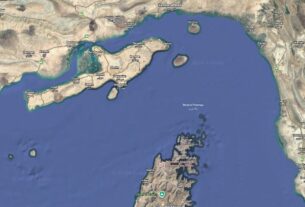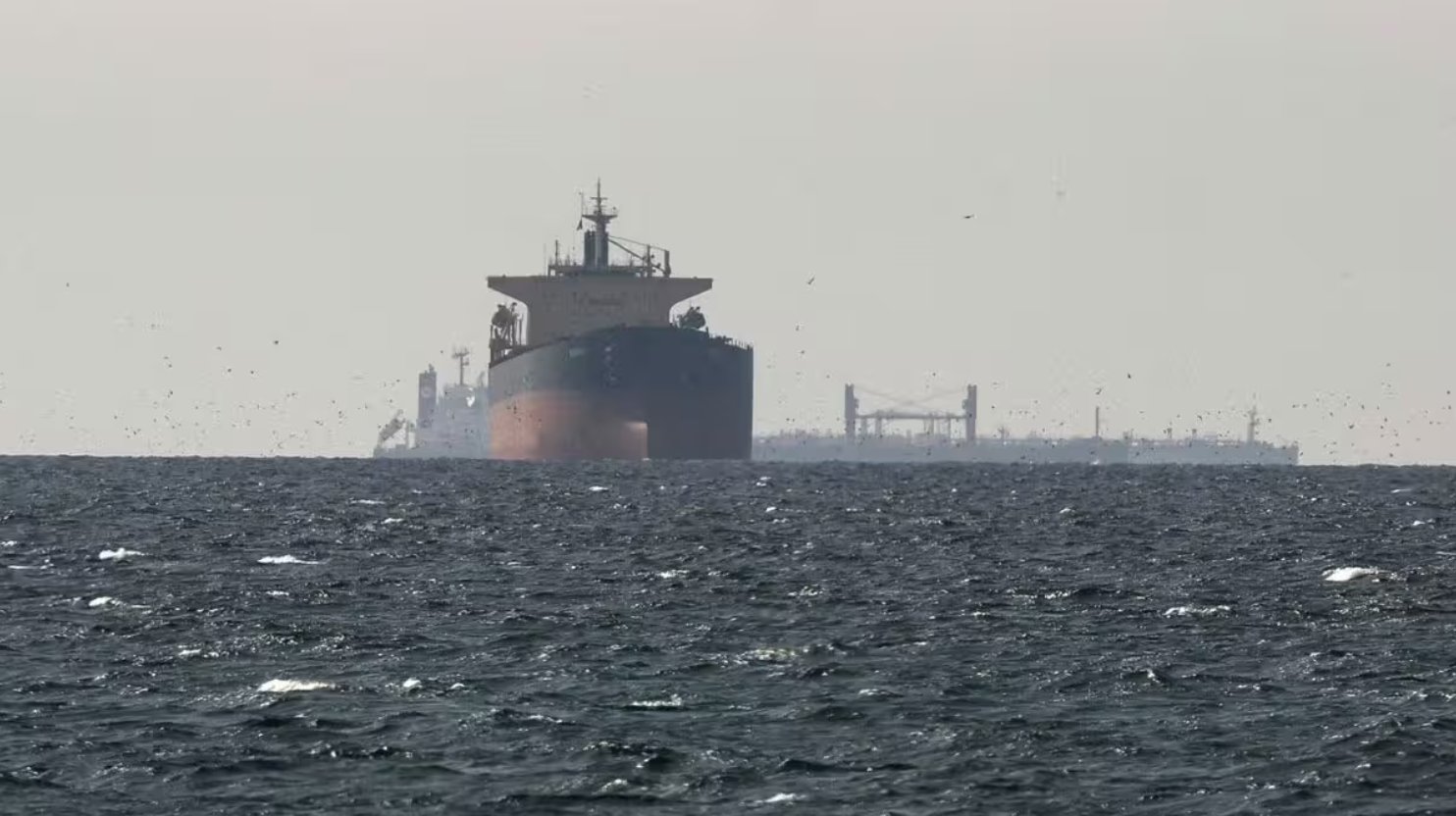
The Strait of Hormuz crisis, now in its third month, has evolved from a dramatic military flashpoint into a grinding economic and diplomatic stalemate. As of May 12, 2026, President Donald Trump has rejected Iran’s latest counterproposal as “totally unacceptable,” describing the broader ceasefire as on “life support.”
The Islamic Revolutionary Guard Corps (IRGC) continues to assert de facto control over the vital waterway—through which roughly 20% of global oil and gas flows—via its newly announced Persian Gulf Strait Authority (PGSA), selective ship seizures, and threats of further escalation.
Global oil markets remain relatively calm, pricing in the expectation of an eventual deal, yet fuel prices have surged roughly 40% amid supply fears in Asia and Europe. Asian buyers (Japan and South Korea in particular) are accelerating diversification away from Gulf crude, eyeing routes through Russia and Africa.
The longer this drags on, the greater the risk of munitions depletion, wider economic fallout, and unintended environmental damage in the Persian Gulf. IRGC Options: Asymmetric Endurance and Control.
The IRGC’s playbook relies on its strengths—speedboats, drones, mines, and fast-attack tactics—coupled with a willingness to endure pain. Since March 2026, the Guard has closed or heavily restricted the strait to “unfriendly” vessels, boarded and seized merchant ships (including the MSC Francesca and Epaminondas in April), laid mines, and warned of setting violators “ablaze.”
It has also expanded its claimed maritime zone into a 500-kilometer “crescent” and created the PGSA to issue transit permissions, effectively turning the strait into a tollbooth for compliant shipping.
Militarily, the IRGC knows it cannot win a conventional showdown with the U.S. Navy, but it can impose costs through harassment and selective disruption. Economically, it continues shadow oil sales—primarily to China via front companies in Hong Kong, UAE, and Oman—despite fresh U.S. “Economic Fury” sanctions targeting the Shahid Purafrangi Oil Headquarters and related networks.
The Guard’s dominance inside Iran has only grown during the crisis, giving hardliners leverage to reject concessions they view as surrender.
President Trump’s Options: Pressure, Escorts, and Leverage
The U.S. response combines naval enforcement (“Project Freedom” to escort commercial traffic), a counter-blockade on Iranian ports, and intensified sanctions. Trump has signaled readiness to resume major combat operations if talks collapse, while keeping military assets positioned for “lethal prosecution.”
The administration is also pressing China—Tehran’s largest oil customer—to use its leverage ahead of the May 14-15 Trump-Xi summit. Diplomatically, the U.S. is open to phased sanctions relief in exchange for verifiable limits on Iran’s enriched uranium stockpile, caps on future enrichment, and physical constraints (even if ground inspectors are off the table). The core red lines remain: no nuclear weapons capability and guaranteed safe, open transit through Hormuz.
Stu Turley’s Long-Term Solution: Denuclearization + Venezuelan-Style Oil Controls
Energy News Beat host Stu Turley has been clear: the only sustainable path forward requires Iran and the IRGC to accept zero nuclear weapons capability, paired with strict, Venezuelan-style international controls on oil revenues.
Under such a framework—modeled on the heavy financial oversight and licensing applied to PDVSA—oil sales would be tightly monitored to ensure revenues benefit the Iranian people rather than funding proxy militias (Hezbollah, Houthis, Hamas, and others) or the IRGC’s regional adventures.
This approach would starve the proxy network of cash while giving Iran an economic off-ramp, aligning energy security with non-proliferation goals. Turley argues this is the realistic “off-ramp” that prevents endless cycles of sanctions and escalation. Current Negotiation Options
Talks center on a 14-point Iranian proposal that includes U.S. withdrawal guarantees, asset releases, and sanctions relief. Trump has dismissed it for failing to deliver credible nuclear curbs or immediate Hormuz reopening. A workable compromise likely involves: Verifiable physical limits on Iran’s nuclear program.
Phased sanctions relief tied to oil-flow milestones.
A face-saving “authority-sharing” arrangement for the strait (possibly with Omani or international monitoring).
Explicit mechanisms to cut IRGC proxy funding.
Both sides are signaling they want a deal, but domestic politics and hardliner influence make concessions difficult.
Updates on Potential Leaking in the Persian Gulf
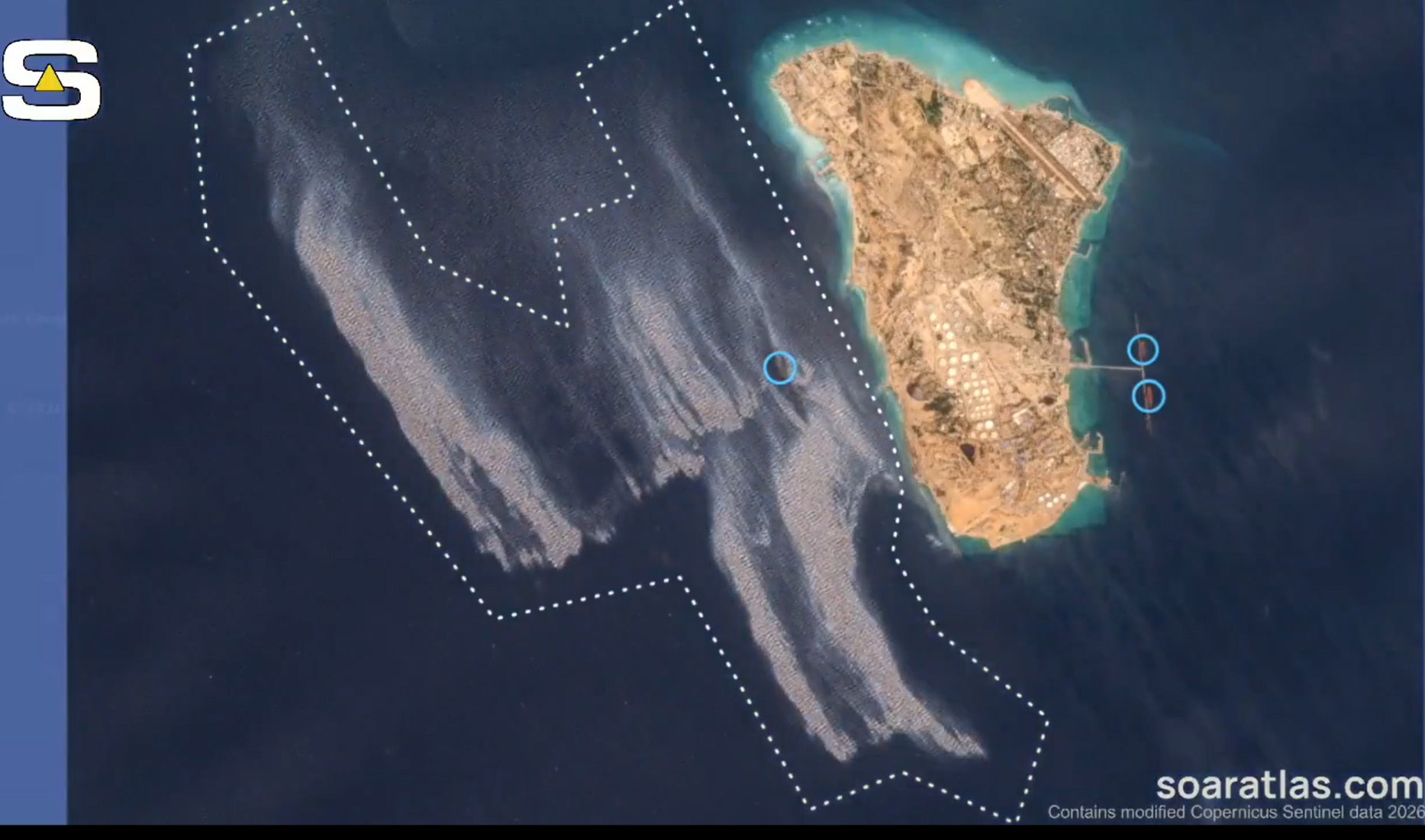
Environmental risks are rising alongside the military standoff. Satellite imagery from May 6-8, 2026, revealed a large oil slick—spanning more than 20 square miles—spreading off Kharg Island, Iran’s primary crude export terminal. Estimates suggest several thousand barrels may have leaked, likely from storage overflow or infrastructure strain caused by the U.S. blockade and halted exports. Iran’s Oil Terminals Company has denied any leak after inspections, but independent monitoring services and media reports (NYT, Reuters) confirm the slick’s presence. Earlier strikes also caused visible spills from damaged tankers and facilities, raising fears of a broader ecological crisis in the Gulf.
How Much Longer Can the IRGC Hold Out?
Western officials and analysts assess Iran can endure the current blockade for several months—perhaps 3-4 or longer—thanks to strategic petroleum reserves, continued shadow exports to China, and the IRGC’s political entrenchment. Trump initially predicted an infrastructure “explosion” within days, but the regime has adapted through endurance tactics and asymmetric pressure. However, revenue losses are mounting (potentially tens of billions annually), inflation is rising, and public hardship is growing. The IRGC’s strategy is to outlast U.S. political patience, betting that domestic and allied pressure will force Washington to blink first.
Who Will Blink First—and Next Steps?
This remains a classic game of chicken. Markets are betting on compromise because the costs of prolonged disruption are too high for everyone. The Trump-Xi summit this week is a pivotal moment: if Beijing leans on Tehran, a breakthrough becomes more likely. Absent movement, the risk of resumed U.S. strikes on IRGC assets or expanded escort operations grows.
The energy sector’s takeaway is clear: volatility will persist until the Strait reopens fully and nuclear issues are addressed.
Stu Turley’s framework—denuclearization paired with Venezuelan-style oil oversight—offers the clearest long-term blueprint for stability that protects both global energy flows and regional security.
- OilPrice.com: “Diplomacy Falters as Hormuz Crisis Edges Toward Escalation” (May 12, 2026) – https://oilprice.com/Energy/Energy-General/Diplomacy-Falters-as-Hormuz-Crisis-Edges-Toward-Escalation.html
- Wikipedia: 2026 Strait of Hormuz crisis – https://en.wikipedia.org/wiki/2026_Strait_of_Hormuz_crisis
- Al Jazeera: Iran on Hormuz transit and IRGC statements (May 6, 2026) – https://www.aljazeera.com/news/2026/5/6/french-container-ship-struck-in-latest-escalation-at-strait-of-hormuz
- New York Times / Reuters: Oil slick off Kharg Island (May 8-10, 2026 reports)
- CNN: Trump on ceasefire “life support” and resumption considerations (May 12, 2026) – https://www.cnn.com/2026/05/12/world/live-news/trump-iran-war-news
- NBC News: Iran’s endurance under blockade (recent analysis)
- U.S. Treasury: Economic Fury sanctions on IRGC oil networks (May 11, 2026)
- Crisis Group / Britannica: Timeline and context of 2026 Iran war and Hormuz campaign
- Energy News Beat Podcast / Stu Turley commentary (referenced per host statements on Iran/Venezuela oil controls) – https://podcasts.apple.com/us/podcast/energy-news-beat-podcast/id1564334366
Energy News Beat will continue monitoring developments daily. Markets move fast—stay informed.