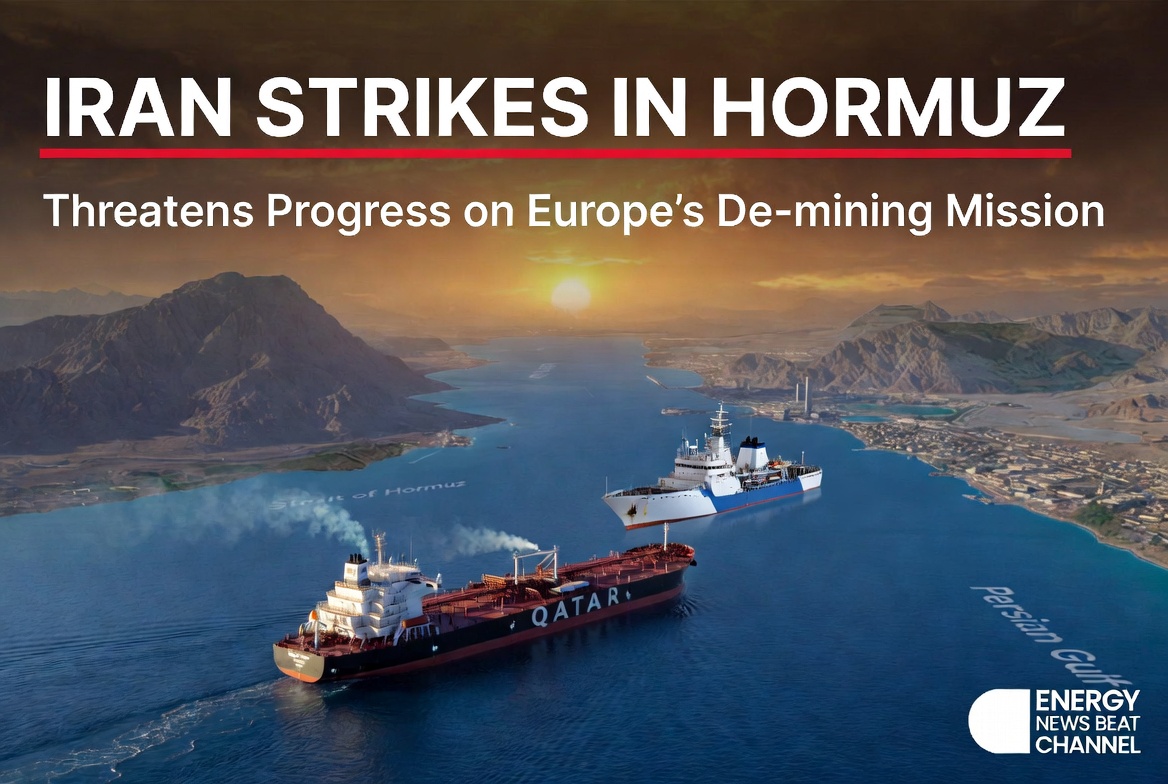
A fresh Iranian missile strike on a Qatari LNG tanker in the Strait of Hormuz has dealt a significant setback to UK and French plans to begin limited de-mining operations in the waterway’s southern route. The incident, reported on July 7, 2026, comes just days after Oman granted permission for European forces to assist in clearing mines in Omani waters.
The attack underscores the fragile security environment in one of the world’s most critical energy chokepoints and raises fresh doubts about the speed of any full reopening of commercial shipping lanes.
Details of the July 7 Strike
In the early hours of July 7, an Iranian missile struck the Qatari LNG carrier Al Rekayyat (owned and managed by Nakilat/Qatar Gas Transport Company) as it exited the Strait near the Omani coast. A separate Saudi-flagged crude oil tanker also sustained damage while departing the waterway. No casualties were reported, though the LNG vessel reportedly suffered an engine room fire and heavy smoke.
The Al Rekayyat had been using the southern route hugging Oman’s coastline — precisely the area where UK and French mine-hunting vessels are positioned to begin operations. Qatar’s foreign ministry stated that Tehran bears full legal responsibility for the attack.
This marks the first time a Qatari LNG ship has been struck since the start of the 2026 Iran conflict in late February. The incident tests the late-June U.S.-Iran memorandum of understanding aimed at halting attacks and gradually restoring transit.
Europe’s De-mining Mission at Risk
UK and French mine-hunting vessels and forces have been ready to commence a limited de-mining operation in Omani waters once a military order is issued. Oman granted permission days earlier for this strictly defensive effort focused on the southern route.
The mission forms part of broader European (and G7-aligned) proposals for an independent, defensive naval presence to clear mines, reassure commercial shipping, and potentially provide escorts once conditions allow. EU diplomatic channels had proposed giving the bloc’s Aspides mission a primary role in mine clearance “when conditions allow.”
Iran has strongly opposed foreign involvement, with its Foreign Ministry spokesman asserting that Tehran alone has the authority and responsibility for security in the Strait. Any Western deployment, Tehran warns, would only complicate matters further.
The latest strike is expected to delay the issuance of the military order needed to begin de-mining and could force European planners to reassess risk levels before committing assets.
Impact on the Opening of the Strait of Hormuz
The Strait of Hormuz — just 21 miles wide at its narrowest — normally carries approximately 20 million barrels per day (mb/d) of crude oil and oil products (around 20-27% of global seaborne oil trade) plus roughly 20% of global LNG trade, primarily from Qatar. The vast majority head to Asia.
Pre-crisis traffic (2025 baseline): Steady high volumes of oil tankers, LNG carriers, and other vessels.February–March 2026 crisis peak: Traffic collapsed dramatically after U.S./Israeli strikes on Iran (Feb 28) triggered Iranian retaliation, mine-laying, and attacks. Daily tanker transits fell to near zero in early March.
Here is a clear visualization of the initial collapse:
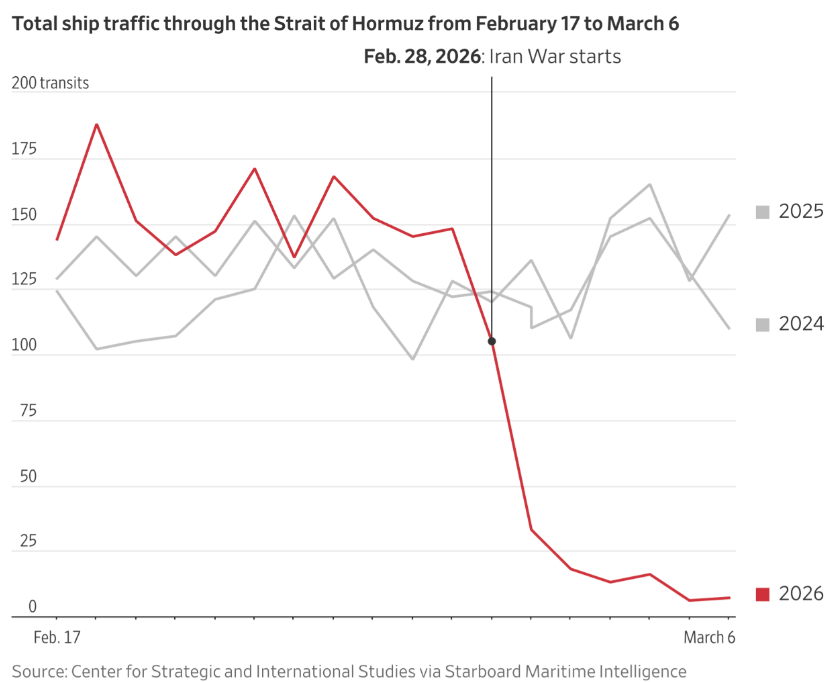
Post-June 2026 MoU recovery: Following the mid-June U.S.-Iran memorandum, traffic began a tentative rebound. One week in mid-June saw 125 transits (the highest weekly total since the war began). On June 24, 62 commercial vessel crossings were recorded — about 53% of the same day the previous year. However, LNG and fertilizer shipments remained largely suppressed, with crude oil seeing only limited restarts.
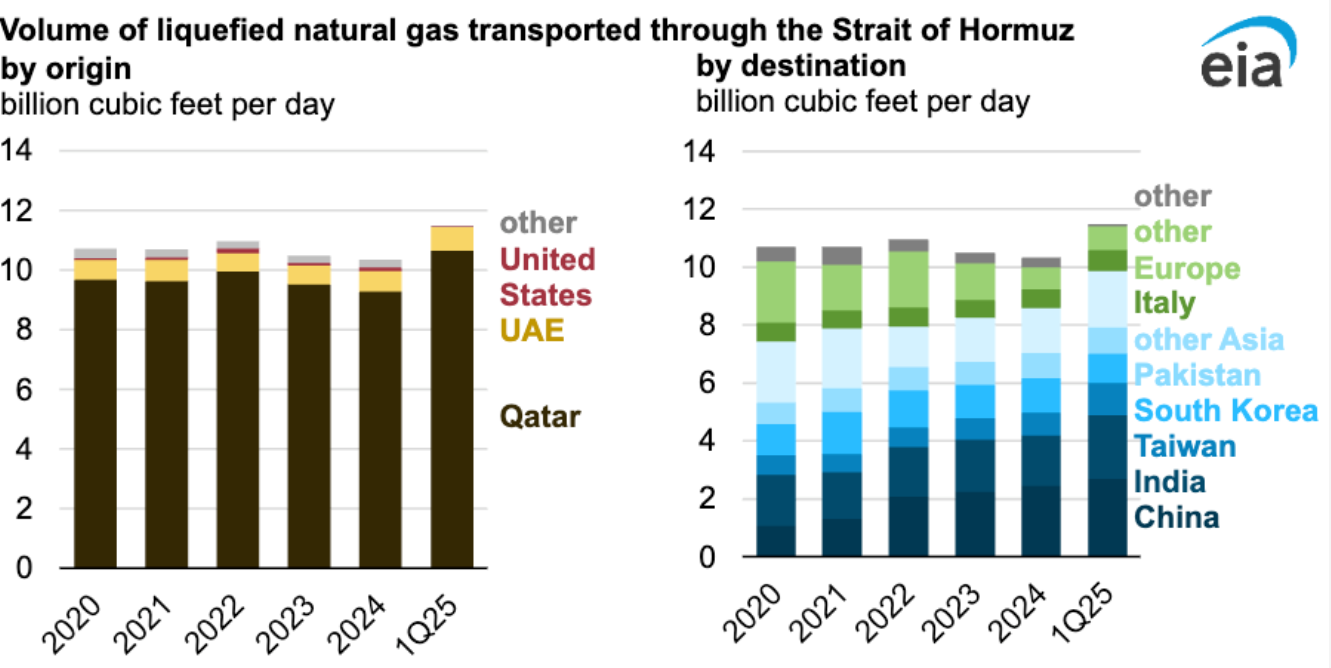
The July 7 strike is likely to slow or reverse this fragile recovery. Shipowners and insurers have repeatedly stated that confidence will take weeks to rebuild even after a deal, and any new attacks reinforce war-risk premiums and caution.LNG flows (pre-crisis volumes shown for context):energy-analytics-institute.org
Overall importance of the Strait:
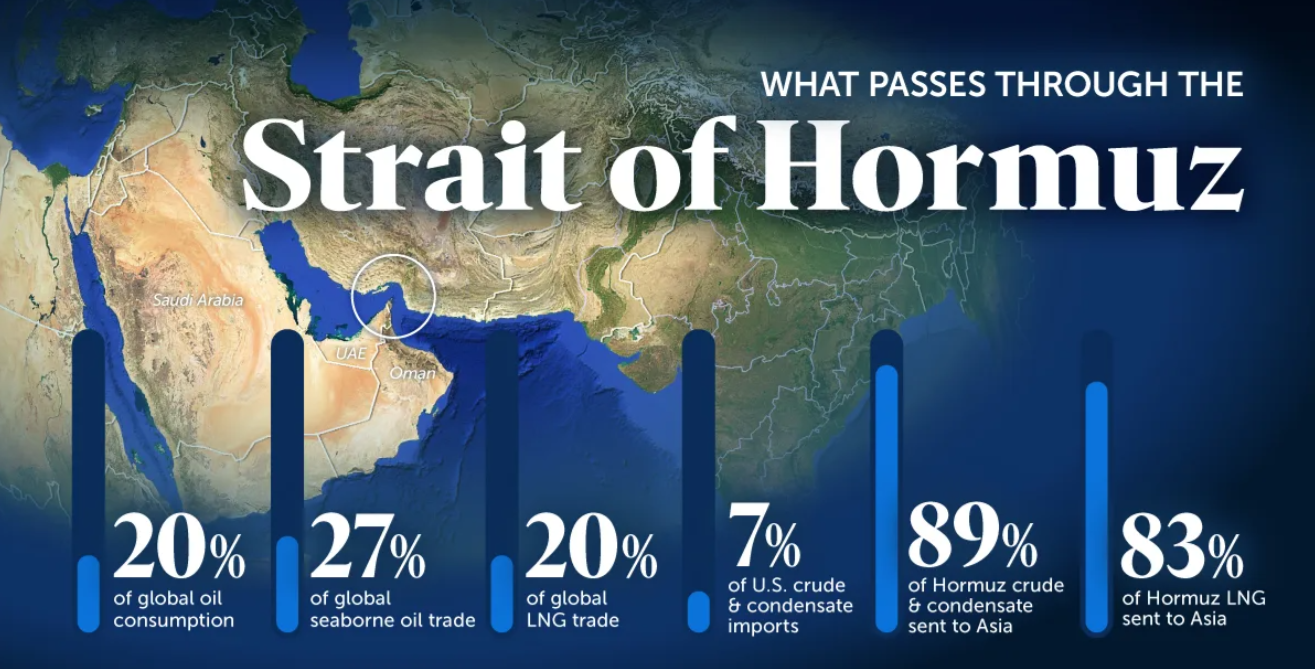
In 12 to 24 months, this chart shown above will not even be close. New pipelines and supply line contracts are being developed, and Iran will lose control.
Key Takeaways on Traffic and Energy Flows
Oil tankers: Partial recovery underway, but highly sensitive to incidents. A single strike can cause immediate hesitation.
LNG carriers: Particularly vulnerable; Qatar’s exports have been heavily disrupted, with ripple effects on global gas markets (Europe benefited from alternative sources during the peak crisis).
Other shipping: Container and bulk carriers largely avoided the route or used southern Omani waters when possible.
Alternatives: Limited. Saudi and UAE pipelines bypass only a fraction of volumes. Rerouting around Africa adds weeks and massive costs.
The combination of lingering mine threats, ongoing attacks, and Iran’s insistence on controlling security means full normalization remains distant. European de-mining efforts, while welcome in principle by many shippers, now face heightened political and operational hurdles.
Outlook
The July 7 incidents highlight how quickly progress toward reopening the Strait can unravel. While the U.S.-Iran framework provides a diplomatic window, repeated violations and mutual distrust continue to undermine commercial confidence.
For Europe’s de-mining mission specifically, the attack serves as a stark reminder that operational readiness is only one piece of the puzzle — political buy-in from all parties, including Iran and Oman, and demonstrable security improvements will be essential before vessels can safely begin clearing mines.
Energy News Beat Channel will continue monitoring developments in real time.
- Bloomberg: “Hormuz Strike Threatens Progress on Europe’s De-mining Mission” (July 7, 2026) — https://www.bloomberg.com/news/articles/2026-07-07/hormuz-strike-threatens-progress-on-europe-s-de-mining-mission
- Bloomberg: “Qatari LNG Ship Struck in Strait of Hormuz, Testing US Talks” (July 7, 2026) — https://www.bloomberg.com/news/articles/2026-07-07/iranian-missile-hits-qatari-lng-ship-in-strait-testing-us-talks
- Reuters: Coverage of July 7 attacks on Qatari LNG and Saudi tanker
- Wikipedia: “2026 Strait of Hormuz crisis” (comprehensive timeline and data)
- IEA & EIA reports on pre-crisis flows through the Strait of Hormuz
- CSIS, WSJ, CNBC, and LSEG shipping data analyses (various 2026 articles on traffic volumes)
- Various G7 and EU statements on proposed Hormuz naval/de-mining mission (April–June 2026)
All data and events current as of July 7, 2026. Shipping statistics are derived from AIS, vessel tracking, and analyst compilations and remain subject to revision