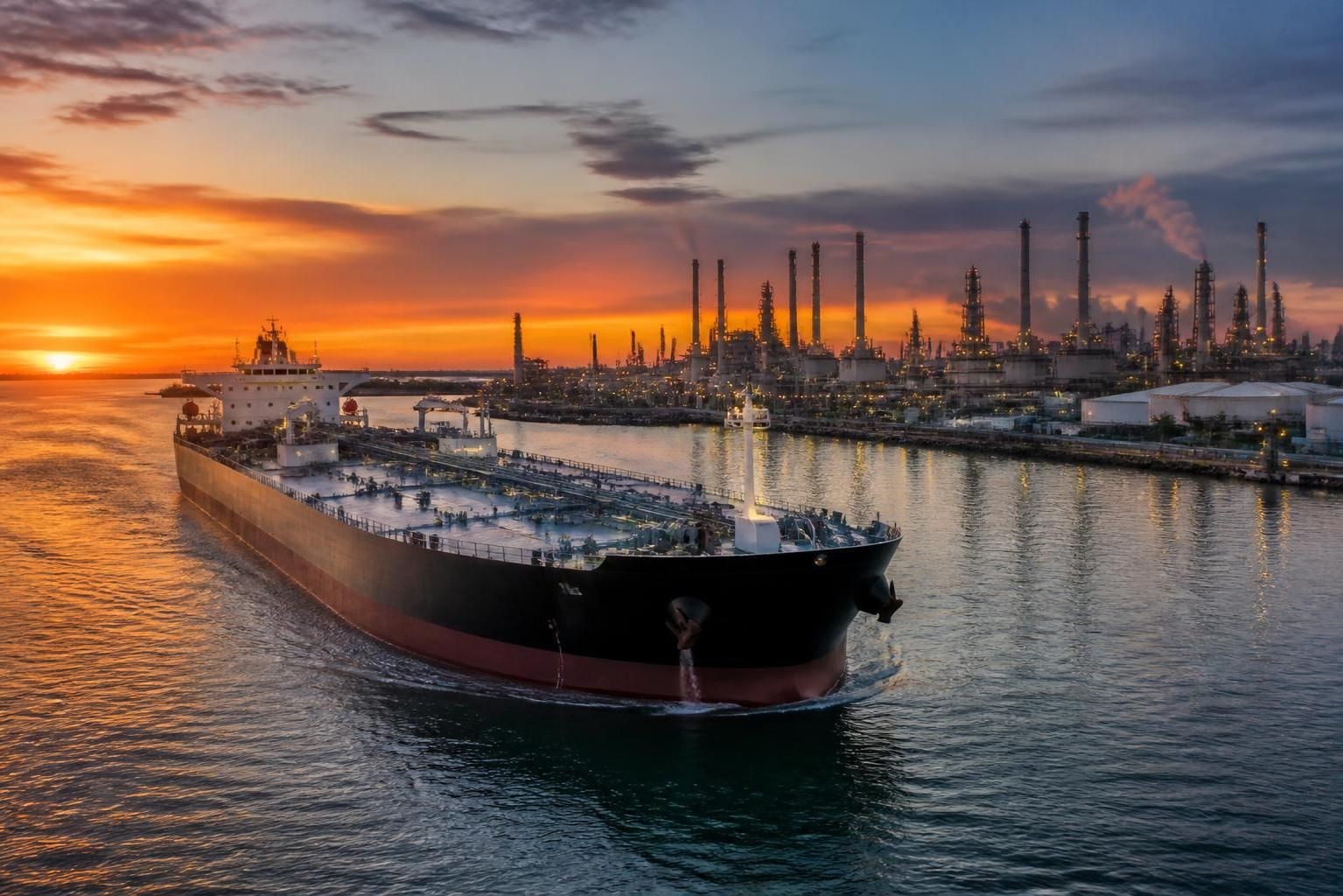
Brent crude settled at $109.86 per barrel on Friday, October 16, after touching $110 intraday—the highest since May—while WTI closed at $101.41. The move capped a week of gains driven by persistent supply risks from the ongoing U.S.-Iran conflict (now approaching eight months), Russian-Ukrainian strikes on energy infrastructure, Houthi activity, and a sharp acceleration in attacks on commercial shipping. Markets are finding it difficult to rebalance as crude and product flows face logistical friction, elevated costs, and upcoming refinery maintenance.Benzinga
Global Oil Market Overview
The International Energy Agency’s October Oil Market Report projects global oil supply averaging 100.7 million barrels per day (mb/d) in 2026, a 5.8 mb/d year-on-year decline, before rebounding by 7.7 mb/d in 2027. Demand is forecast to fall 2.6 mb/d this year to 102.4 mb/d (with diesel accounting for a substantial share of the drop), before a partial recovery next year that still leaves consumption below 2025 levels. Observed inventories remain well below pre-conflict levels (cumulative draws of roughly 500+ million barrels since February), and September saw further pressure on on-land stocks even as oil-on-water volumes rose with partial recovery in Gulf exports.Iea
Strait of Hormuz flows have recovered toward roughly 70% of pre-war levels in some weekly readings (around 9–11 mb/d in recent data points), supported by U.S. naval escorts and ship-to-ship operations, but remain volatile and well below the pre-February baseline near 17 mb/d. Russia-Ukraine hostilities continue to constrain refined product availability, particularly middle distillates. The result is a market that is tighter on products than the headline crude balance sometimes implies, with high prices feeding through to consumers (U.S. average gasoline near $4.33/gal and diesel above $6.30/gal).The Hill
Attacks on Ships in the Last Two Weeks
Maritime security reporting shows a clear escalation. UK Maritime Trade Operations (UKMTO) data indicated 12 vessels attacked between roughly October 5–11 (the highest weekly total since the conflict began), including six on October 11 alone—the busiest single day of the war. The Financial Times, compiling UKMTO and European security sources, counted about 24 ships targeted in the two weeks to October 11. Tankers (crude and products) have been the primary targets, alongside container ships; one Singapore-flagged feeder (GFS Pride) sank after a strike. Additional incidents continued into mid-October, including projectiles hitting tankers near the Saudi Gulf coast (Jubail area) and activity in the Gulf of Oman and Bab el-Mandeb. UKMTO has noted that many attacks go unreported, so official tallies likely understate the true total. Black Sea incidents near Romania have added further shipping risk outside the Middle East.FT
Tankers Shifting Outside Choke Points
Operators and charterers have adapted by emphasizing loadings and transfers outside the most contested segments of the Strait of Hormuz. Ship-to-ship (STS) operations in the Gulf of Oman, shuttle services under naval protection, and increased use of Fujairah and other bypass points have grown. Kpler has highlighted that Gulf of Oman loadings (avoiding full Strait transit) carry a lower but still elevated freight cost relative to Middle East Gulf (MEG) loadings. A large share of the global VLCC fleet has concentrated in or near the region for these shuttle and transfer roles, reducing effective availability for other routes. Red Sea and Bab el-Mandeb traffic has also been affected by Houthi activity targeting Saudi-linked shipping.Kpler
Surge in Tanker Rates
Freight has become a major component of delivered crude costs. Kpler reported MEG–China VLCC freight reaching about $24/bbl (with Gulf of Oman loadings around $12/bbl), so that freight accounted for roughly 25% of the FOB crude price from the MEG—far above the pre-war ~5% and early-conflict levels. Peak VLCC earnings on Persian Gulf–Asia routes hit records near or above $1.2–1.4 million per day. U.S. Gulf to Asia or Japan fixtures have been reported in the $76–82 million range per cargo (implying $38–41/bbl in some cases). War-risk insurance premiums have multiplied dramatically (reports of 30x normal levels in extreme assessments). Rates have eased modestly from absolute peaks as some demand softened after the latest attack waves, but they remain at historically extreme levels that tighten the global tanker market as vessels are tied up in higher-risk or longer-duration trades.Kpler
Refinery Bottlenecks and Upcoming Maintenance
Product markets face their own constraints. The IEA expects global refinery runs to reach a seasonal low of 81.3 mb/d in October before recovering toward 84.6 mb/d by year-end. Full-year 2026 runs are projected down 2.3 mb/d to 81.7 mb/d. Middle East export refineries have operated well below capacity due to the conflict and infrastructure issues, while Russian runs remain depressed by Ukrainian strikes. Diesel and gasoil balances have tightened sharply (losses of 1.5–1.7 mb/d year-on-year in recent quarters), forcing counter-seasonal stock draws ahead of autumn maintenance and peak winter demand. The agency warns that even a year-end recovery in runs will be insufficient to fully offset the middle-distillate deficit accumulated in 2026, with tightness potentially extending well into 2027 unless Middle East product exports normalize. High freight and crude costs have squeezed margins in Europe and Asia, while U.S. refiners have benefited from discounted feedstocks.Iea
What Analysts Are Saying on Duration
Views diverge on how long prices stay elevated above $100, but most emphasize persistent risk rather than a quick return to pre-conflict norms:
- Goldman Sachs raised its December 2026 Brent forecast to $90/bbl (from $85), with a 2027 average of $80. It sees adaptation of Middle East supply eventually supporting a surplus and lower prices, but notes a substantial risk premium (~$20+) and upside to ~$125 in 2027 if Gulf output remains ~5 mb/d below early-2026 levels due to infrastructure damage or intensified shipping attacks.Goldmansachs
- The U.S. EIA forecasts Brent averaging $105 in 4Q26 (assuming constrained flows and ~4.5 mb/d shut-ins), then declining toward $87 by 2Q27 and ~$74 by late 2027 as workarounds expand and inventories rebuild.
- BMI’s Cedric Chehab has said Brent is likely to remain above $100 for months, with a U.S.-Iran deal possibly not arriving until end-Q1 2027; the firm has projected 4Q26 averages near $107 and elevated levels into early 2027.
- S&P Global Energy has framed a broad $80–100 range through 2027 in base cases, with Dated Brent averaging around $90 or higher for the rest of 2026.
Consensus points to elevated prices and volatility persisting through year-end and into early 2027 unless diplomacy produces a sustained de-escalation that restores more normal transit and production. Upside risks from further infrastructure hits or shipping intensification remain material, while downside depends on faster Gulf recovery, demand destruction, or additional strategic stock releases.
In short, the combination of physical attacks, expensive and inefficient shipping workarounds, low inventories, and seasonal refining constraints is keeping the market from easy rebalancing even as some crude volumes find alternative paths out of the Gulf. Product tightness, especially diesel, may prove more durable than the crude price spike itself.
Check out the World’s Greatest Podcast Show Notes at EnergyNewsBeat.co or EnergyNewsBeat.com. And subscribe to: The Energy News Beat Substack.
Appendix: Sources and Links
- Benzinga / CNBC TV18 / The Hill / Rigzone / Business Times coverage of Friday’s price action and drivers: e.g., https://www.benzinga.com/markets/macro-economic-events/26/10/62427044/brent-crude-hits-110-global-oil-supply-disruptions ; https://www.cnbctv18.com/market/commodities/crude-oil-prices-brent-wti-why-are-rates-rising-explained-saudi-houthis-hormuz-iran-us-russia-ukraine-20013997.htm
- Reuters / Maritime Executive / FT / World Ports / Splash247 on UKMTO attacks and Hormuz incidents (mid-October 2026): https://www.reuters.com/world/middle-east/tanker-struck-by-unknown-projectile-off-saudi-arabia-friday-ukmto-says-2026-10-17/ ; https://www.ft.com/content/a4ab83d4-81b5-4336-9569-a0708b41e894 ; https://maritime-executive.com/article/ukmto-reports-third-strike-in-a-day-on-a-tanker-in-the-mideast
- Kpler analyses on tanker rates, freight share of price, STS/Gulf of Oman activity, and attack pace: https://www.kpler.com/blog/crude-tanker-rates-hit-new-highs-as-hormuz-risk-escalates ; related Kpler notes on VLCC freight peaks and Hormuz flows
- IEA Oil Market Report – October 2026: https://www.iea.org/reports/oil-market-report-october-2026 (supply/demand, refinery runs at 81.3 mb/d seasonal low, diesel tightness)
- Goldman Sachs Research (December 2026 $90, 2027 $80, upside scenarios): https://www.goldmansachs.com/insights/articles/will-oil-prices-decline-as-middle-east-supply-recovers ; Economic Times summary https://m.economictimes.com/industry/energy/oil-gas/oil-prices-may-ease-to-80-per-barrel-in-2027-as-middle-east-supply-recovers-goldman-sachs/articleshow/135009000.cms
- BMI / Cedric Chehab comments on sustained >$100 prices: https://oilprice.com/Latest-Energy-News/World-News/BMI-Predicts-Brent-Crude-Will-Remain-Above-100-for-Months.html
- EIA Short-Term Energy Outlook (October 2026): https://www.eia.gov (Brent $105 4Q26 average assumption)
- Additional rate and shipping context: Reuters on supertanker rates easing from peaks; World Ports / Bloomberg-linked reporting on VLCC earnings and fleet concentration; ING note on record tanker earnings
(Note: Figures are as reported in mid-October 2026 coverage and agency reports; markets remain highly sensitive to daily security developments.)