

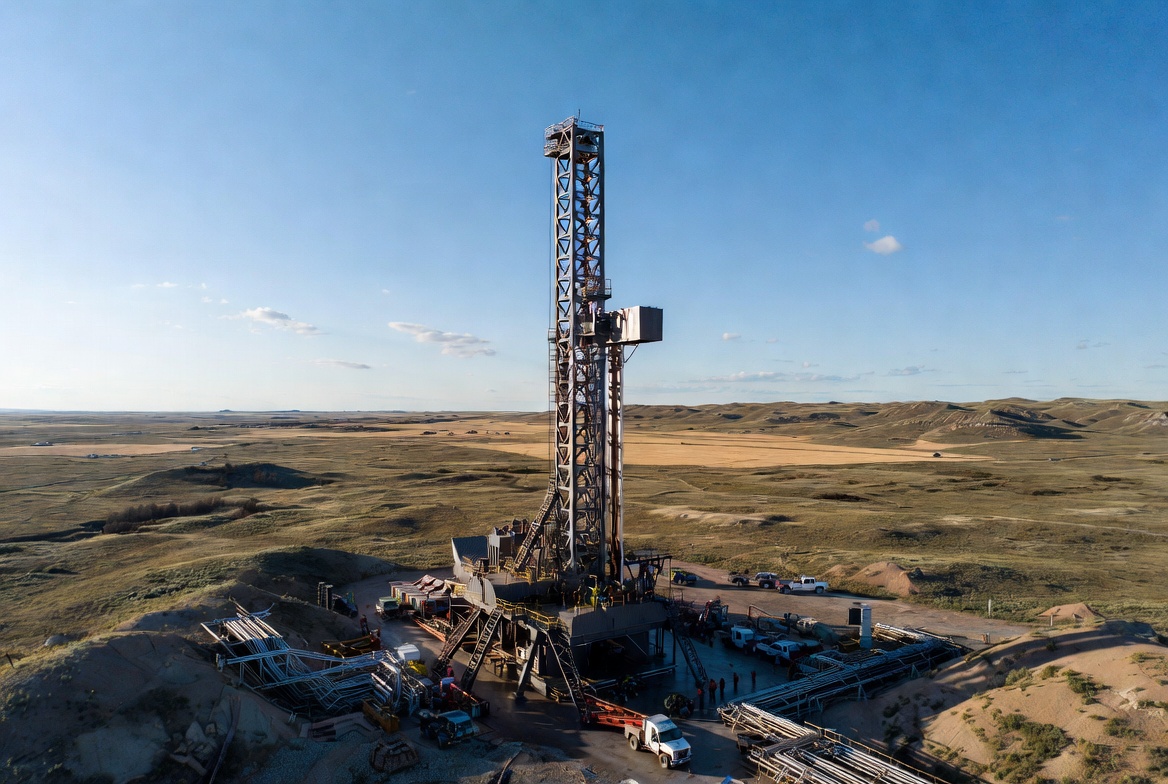
As the world grapples with the ongoing Strait of Hormuz crisis—triggered by the 2026 Iran conflict and resulting in the near-closure of a chokepoint carrying roughly 20% of global oil trade—energy security has never been more critical. North Dakota is positioning itself for a dramatic encore: a second Bakken boom powered by enhanced oil recovery (EOR) techniques. With over 5 billion barrels already produced since the shale revolution kicked off in 2007, producers are now targeting the remaining 85% of the resource still locked in the tight rock.
North Dakota Governor Kelly Armstrong captured the moment perfectly in May 2026: “We’ve only tapped 15% of the Bakken and Three Forks. The other 85% is still trapped in the rock. If we can create the policy and the incentives, and you all can unlock even another 15% with EOR, that’s an entirely new boom.”
This isn’t just North Dakota’s story. It’s a blueprint the United States can—and should—export to allies worldwide. Energy security starts at home, but true energy dominance is displayed through exports—including the oilfield exploration and services expertise that made the Bakken possible. As global supply chains reel from disruptions in the Strait of Hormuz, countries with similar tight-oil formations are ramping up drilling programs. American technology transfer can help them do it faster, cheaper, and more sustainably.
The Bakken: America’s Tight-Oil Powerhouse
The Bakken Formation underlies the Williston Basin across western North Dakota, eastern Montana, and into Saskatchewan and Manitoba, Canada. Formed in the Late Devonian to Early Mississippian period, it consists of three members: organic-rich upper and lower shales (the source rocks, with total organic carbon up to 35%) sandwiching a middle dolomite/siltstone reservoir.
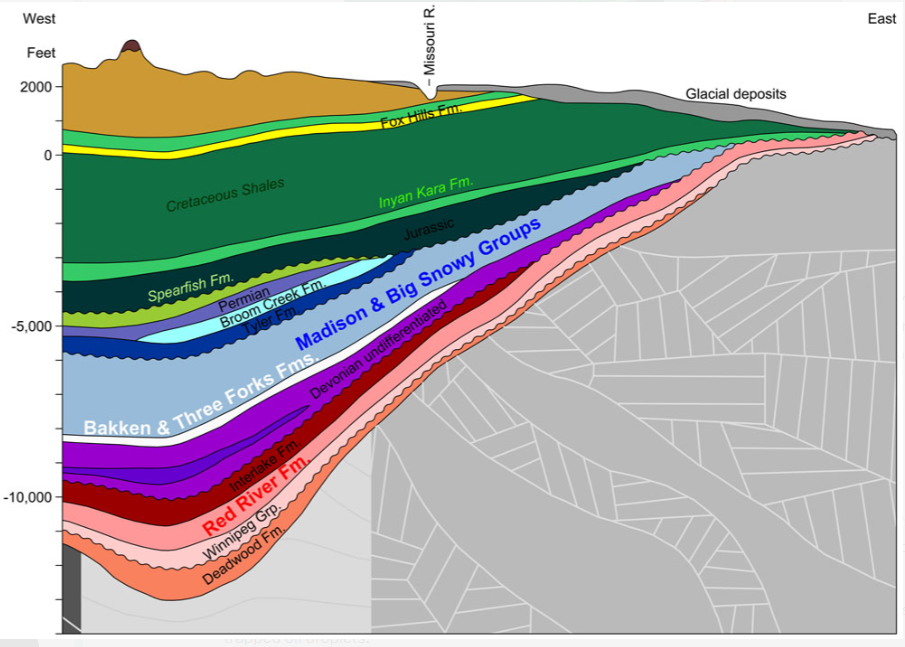
At depths of 3,100–11,000 feet, the rock is ultra-tight: average porosity around 5% and permeability as low as 0.04 millidarcies. Natural fractures help, but commercial production only became viable with horizontal drilling and multi-stage hydraulic fracturing. Breakeven costs hover near $60 per barrel—higher than the Permian but still competitive in today’s market.
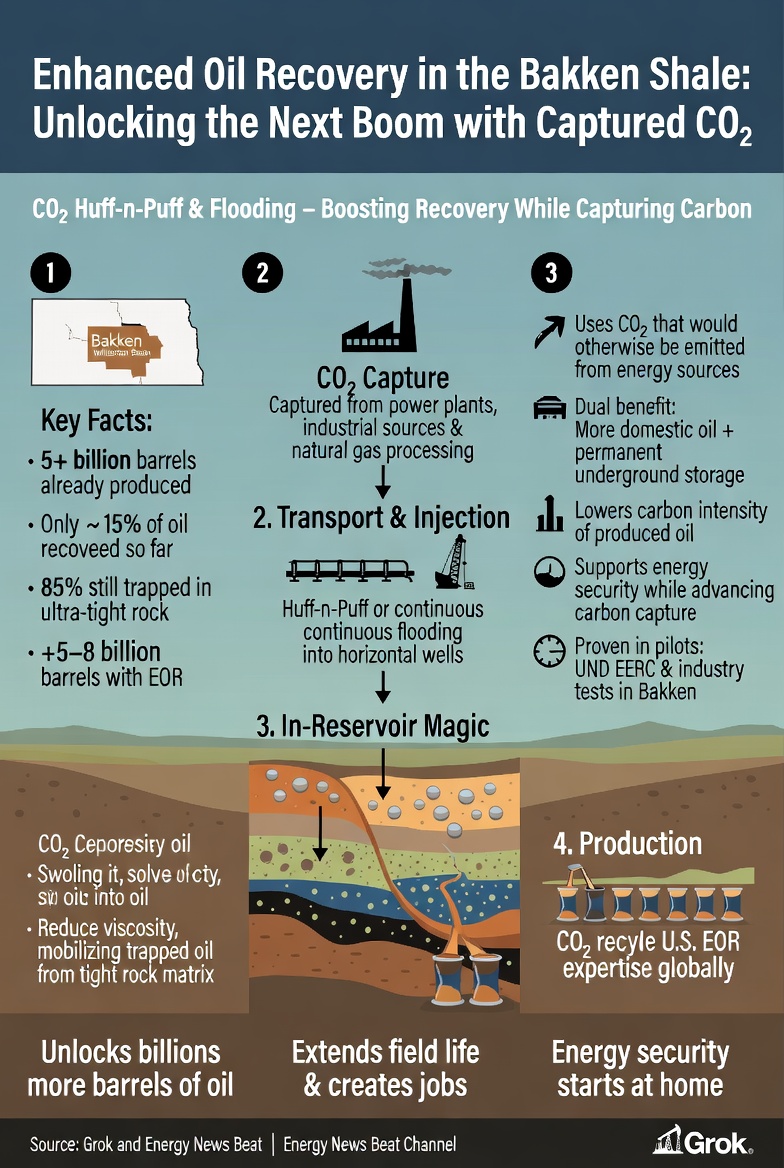
- Gas Injection (especially CO₂): The leading candidate, already ~60% of U.S. EOR projects. CO₂ dissolves into oil, reduces viscosity, swells the oil, and restores pressure. Huff-n-puff pilots and continuous flooding are being tested.
- Waterflooding and Chemical Injection: Polymers improve sweep efficiency; surfactants release trapped oil droplets.
- Thermal Recovery: Steam injection for shallower zones (less common in the deep Bakken).
Major players like Occidental Petroleum (with 34 CO₂ EOR projects in the Permian) and ExxonMobil (via its Denbury acquisition and massive CO₂ infrastructure from Wyoming’s LaBarge facility) are bringing proven tech north.
Can the U.S. Teach the World? Absolutely—Through Exports and Expertise
The Strait of Hormuz crisis has exposed the fragility of Middle East–dependent supply chains. Global oil flows dropped sharply, prices spiked, and nations are scrambling to diversify.
- Argentina – Vaca Muerta: Often called the “South American Bakken,” this massive shale play holds billions of barrels of technically recoverable tight oil. Horizontal drilling and fracking are already scaling; EOR (especially CO₂ and gas injection) could replicate North Dakota’s success.
- Russia – Bazhenov Formation (West Siberia): One of the world’s largest untapped tight-oil resources, with geology strikingly similar to the Bakken (organic-rich shales, low permeability). Russian operators like Gazprom Neft are piloting horizontal wells and EOR; U.S. service companies could accelerate results.
- Canada – Duvernay, Montney, and the Canadian Bakken extension: Already a tight-oil powerhouse outside the U.S., with established infrastructure. CO₂ EOR and water-alternating-gas methods transfer directly.
- Other analogs: China’s tight-oil basins, Algeria, Mexico’s Chicontepec, and Australia’s Arckaringa Basin all share low-permeability, fractured shale characteristics where American EOR know-how applies.
- U.S. oilfield service companies—Halliburton, Schlumberger, Baker Hughes, and dozens of smaller innovators—have already exported horizontal drilling, fracking, and now EOR expertise globally. These services are a key part of America’s energy exports portfolio. When North Dakota or the Permian thrives, American steel, pumps, chemicals, and know-how ship worldwide.
The United States isn’t just producing more oil—we’re exporting the technology that makes it possible. That’s real energy dominance.Stu Turley, Energy News Beat Podcast Host
Appendix: Sources and Links
All information drawn from publicly available, credible sources as of June 2026. Full links provided for transparency and further reading.
- OilPrice.com article (primary source): “North Dakota Chases A Second Bakken Boom Through Enhanced Recovery” by Alex Kimani, June 4, 2026. https://oilprice.com/Energy/Crude-Oil/North-Dakota-Chases-A-Second-Bakken-Boom-Through-Enhanced-Recovery.html
- Wikipedia – Bakken Formation: https://en.wikipedia.org/wiki/Bakken_formation
- USGS Geologic Assessment of the Bakken: https://pubs.usgs.gov/dds/dds-069/dds-069-w/contents/REPORTS/69_W_CH_5.pdf
- EIA World Shale Resources Report (2013 baseline, still foundational): https://www.eia.gov/todayinenergy/detail.php?id=11611
- Wood Mackenzie analysis on global tight-oil plays: https://www.woodmac.com/blogs/the-edge/tight-oil-plays-outside-the-us/
- Additional EOR studies: NETL, SPE papers on CO₂ huff-n-puff in Bakken/analogous shales.
- Strait of Hormuz crisis coverage: IEA, Wood Mackenzie, Reuters, Bloomberg (multiple 2026 reports).
- WellDatabase.com
Energy News Beat will continue tracking these developments. Stay tuned to the podcast for deeper dives with industry leaders. Energy security isn’t optional—it’s strategic. Let’s lead the way.