As global oil prices remain elevated amid geopolitical tensions — including recent spikes tied to Middle East conflicts and risks around the Strait of Hormuz — Guyana’s offshore oil sector is surging ahead. This tiny nation (population under 1 million) is delivering one of the world’s most remarkable energy success stories, proving that energy security truly starts at home through bold exploration and development of new resources.
Stu Turley of the Energy News Beat Podcast has long emphasized that real energy dominance comes from producing and exporting from secure, domestic or allied sources rather than relying on distant, volatile regions. Guyana embodies this principle perfectly: it is developing world-class resources right in the Western Hemisphere, far from any choke points, and supplying reliable barrels to the Americas and beyond.
From Discovery to Global Player in Record Time
Guyana went from its first major discovery in 2015 to its first oil in late 2019. Today, it is South America’s third-largest oil producer (behind Brazil and ahead of Venezuela in recent rankings) and one of the fastest-growing oil nations on Earth.
All current production comes from the massive Stabroek Block offshore, operated by ExxonMobil. As of April 2026, Guyana averaged 903,000 barrels per day (bpd), with peaks above 926,000 bpd earlier in the year.
The Stabroek Block has already delivered over 11 billion barrels of discovered recoverable resources (some estimates cite nearly 11 billion boe). Production is on track to reach a capacity of around 1.3 million bpd by end-2027 and ~1.7 million bpd by 2030, with longer-term potential even higher when including associated gas and condensate.
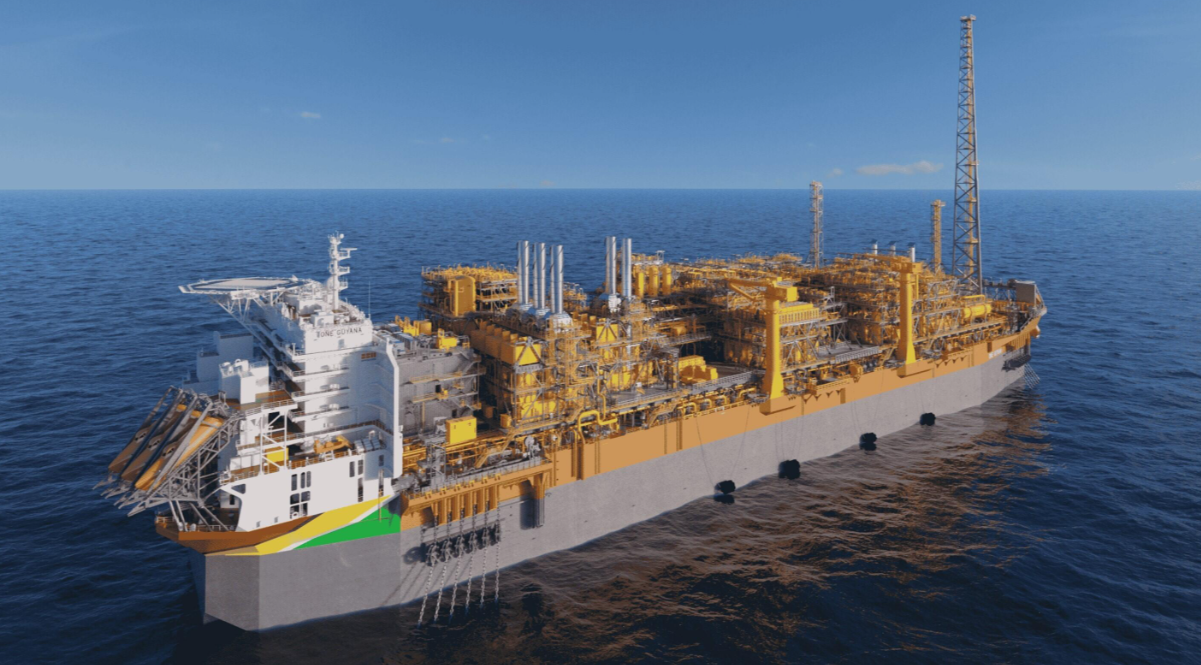
ONE GUYANA FPSO — one of the vessels powering Guyana’s rapid production ramp-up.
Higher Oil Prices = Major Windfall
Higher crude prices (with Brent recently surging well above $100 and even touching much higher levels amid supply concerns) deliver an immediate boost to Guyana’s revenues. The country’s Natural Resource Fund (NRF) stood at approximately $4.1 billion by end-April 2026 and is projected to exceed $13 billion by 2030.
Cost recovery under the 2016 production sharing agreement is expected to be largely complete in 2026. After that, Guyana’s share of profit oil jumps significantly (to around 50%), supercharging government revenues while still leaving strong returns for the operators.
This is exactly the kind of new supply the world needs. We simply have not drilled enough in recent years to meet long-term demand. Guyana shows what frontier exploration and development can deliver when done right.
Major Companies Driving the Boom
ExxonMobil is the clear leader:45% working interest and operator of the Stabroek Block
Over 35 discoveries since 2015
Multiple FPSOs are already online (Liza Destiny, Liza Unity, Payara Prosperity, ONE GUYANA for Yellowtail) with more coming
Partners:
Chevron — 30% (via acquisition of Hess)
CNOOC (China National Offshore Oil Corporation) — 25%
This world-class consortium combines technical excellence, capital strength, and global reach. ExxonMobil in particular is seeing Guyana become one of its highest-margin, lowest-breakeven assets — a major growth engine for the company and its shareholders.commons.wikimedia.org
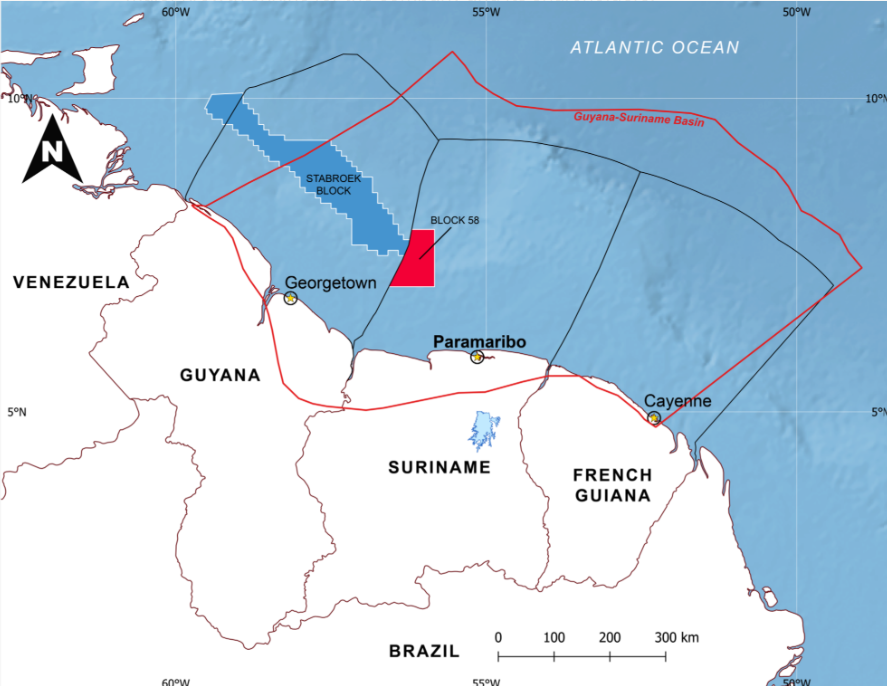
Stabroek Block location in the Guyana-Suriname Basin (offshore map).
Not Being in a Choke Point Matters — A Lot
Unlike oil from the Middle East that must pass through the Strait of Hormuz (handling ~20% of global seaborne oil trade), Guyana’s production exits directly into the Atlantic. Tankers can sail straight to U.S. Gulf Coast refineries (less than 3,000 miles away), Europe, or other markets without navigating narrow, contested waterways.
In a world of rising geopolitical risk — from the Strait of Hormuz to other potential flashpoints — this geographic advantage is enormous. Guyana provides secure, diversified supply that enhances energy security for the entire Western Hemisphere. It reduces reliance on any single region or chokepoint and supports the broader goal of “energy security starts at home” for importing nations in the Americas.
What This Means for Investors
For ExxonMobil (XOM) and its partners, Guyana is a standout success:
- Extremely low development costs per barrel
- High-margin production that strengthens balance sheets and free cash flow
- Long-life reserves that support decades of output
- Significant upside as production scales and cost recovery ends
Guyana has become a core growth driver in ExxonMobil’s upstream portfolio. The combination of rising volumes and favorable pricing creates substantial value for shareholders. Other investors in the sector are also watching closely — successful frontier plays like this de-risk similar opportunities elsewhere.
What This Means for Guyana’s Citizens
The transformation has been dramatic. Guyana has moved from one of the poorest countries in the Americas to experiencing some of the highest GDP growth rates in the world (double-digit and even higher in recent years). Oil revenues are funding infrastructure, education, healthcare, and diversification efforts.
The Natural Resource Fund is designed to save for future generations and smooth volatility — a key tool to avoid the “oil curse” seen in places like Venezuela.Positive impacts:
- Thousands of direct and indirect jobs
- Billions spent with local suppliers and contractors
- Major public investment programs
Challenges remain (as with any rapid boom):
Skills shortages and inflation pressures
Need for stronger institutions and diversification into non-oil sectors (agriculture, manufacturing, services)
Ensuring broad-based benefits reach ordinary citizens, not just elites
President Irfaan Ali’s government has emphasized governance reforms, local content requirements, and anti-corruption measures. Success will depend on prudent management of the windfall — exactly why the NRF and transparent rules matter.
The Bigger Picture: The World Needs More Guyanas
Global energy demand is not going away. While the energy transition continues, oil and gas will remain essential for decades. New, responsibly developed resources like Guyana’s are critical to meeting that demand, stabilizing prices, and enhancing security.
Guyana proves that with the right partnerships, technology, and governance, even small nations can become major energy players — and do so in a geopolitically stable location.
As Stu Turley often says on the Energy News Beat Podcast: “Energy security starts at home.” Guyana is living proof that developing new fields at home (or in friendly jurisdictions) delivers both prosperity and resilience.
Higher oil prices are simply accelerating an already impressive story. The best chapters are still being written.
|
Item
|
Details
|
|---|---|
|
Current Production
|
~900,000 – 926,000 bpd
|
|
Stabroek Recoverable Resources
|
>8–11 billion boe
|
|
2030 Production Capacity
|
~1.7 million bpd (oil); higher with gas/condensate
|
|
Major FPSOs Online
|
Liza Destiny, Liza Unity, Payara Prosperity, ONE GUYANA (Yellowtail)
|
|
Next Major Project
|
Uaru (late 2026, +250k bpd capacity)
|
|
Natural Resource Fund
|
~$3.6–4.1 billion (growing rapidly)
|
|
Ownership (Stabroek)
|
ExxonMobil 45% (op.), Chevron 30%, CNOOC 25%
|
|
Key Advantage
|
No choke points; Atlantic access
|
Sources & Links
- OilPrice.com: “Guyana’s Oil Boom Gets a Major Boost From $100 Crude” (June 11, 2026) — primary reference article
- ExxonMobil Corporate: Guyana project updates and production milestones (corporate.exxonmobil.com/locations/guyana)
- OilNOW.gy: Regular production and revenue reporting
- Reuters and other wire services on economic impacts and forecasts
- IMF Article IV consultations on Guyana’s economy
- Energy News Beat Podcast with Stu Turley (theenergynewsbeat.substack.com/podcast) — for “Energy Security Starts at Home” perspective
Guyana’s story is one of the most exciting in global energy today. New development works — when executed with excellence and in the right locations. The world needs more of it.