ENB Pub Note: This article originally ran on RHG Phoenix’s site by Randy Green. We will be visiting with them on the podcast soon.
The global oil market is navigating a complex rebalancing act amid geopolitical disruptions, sanctions evasion, and shifting supply dynamics. As of mid-July 2026, Brent crude trades in the low-to-mid $80s per barrel (recent levels around $84–85/bbl, with fluctuations that have included periods near or below $80), reflecting a premium for supply risks even as physical flows continue through unconventional channels.
Russia’s refining capacity has been severely degraded by sustained Ukrainian drone strikes, forcing a pivot toward higher crude exports. Meanwhile, the sanctioned “dark fleet” (also called shadow fleet) of aging tankers enables both Russia and Iran to move oil despite Western restrictions. China remains a key buyer of discounted barrels. High refining crack spreads underscore tight product markets, justifying elevated prices while signaling pain ahead for consumers at the pump and in the skies.
Russia’s Degraded Refining Capacity and Export Shift
Ukrainian forces have struck over 24 of Russia’s 34 major refineries, slashing national refining runs to around 3.9 million barrels per day (mb/d) in recent assessments—well below pre-conflict levels. Specific hits, such as on the Gazprom Neftekhim Salavat and Afipsky facilities, have knocked out significant processing units and fuel output.
This degradation has domestic consequences: fuel shortages in Russia and temporary export bans (e.g., on jet fuel). In response, Russia has ramped up crude oil exports while reducing refined product loadings. Seaborne crude exports hovered around 3.88 mb/d in May 2026 data, with further increases expected as refineries struggle.
The market rebalances partly by converting what would have been refined products into exported crude, maintaining overall Russian hydrocarbon flows but altering the global product supply balance.
The Role of the Sanctioned Dark Fleet
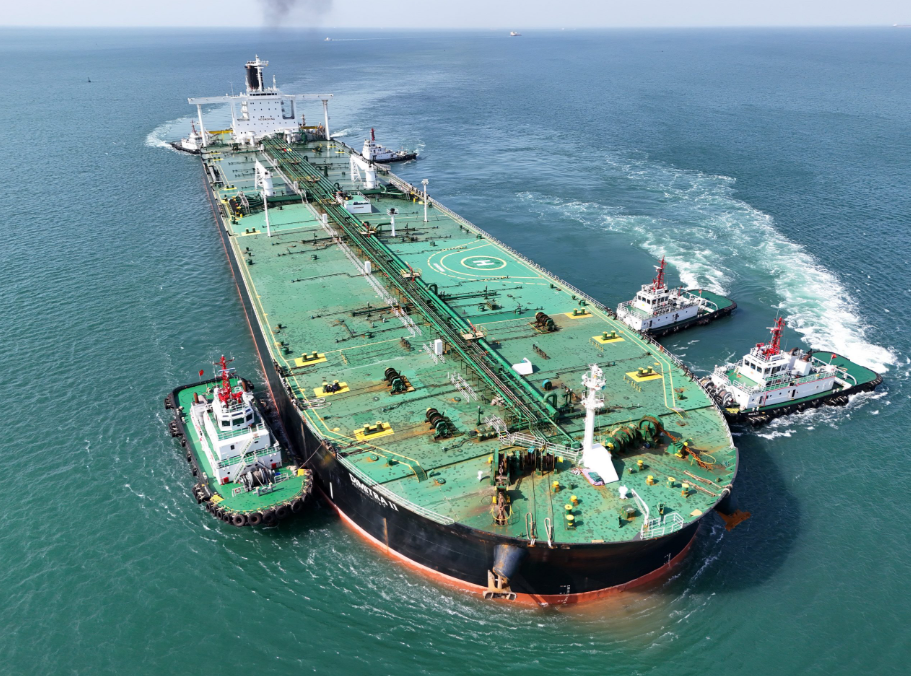
The dark fleet—hundreds of older, often re-flagged or opaque tankers—has become central to evading G7 price caps and sanctions on Russian (and Iranian) oil. In June 2026, 54% of Russia’s seaborne oil moved on sanctioned ‘shadow’ tankers, with the figure rising to 66% for crude oil specifically. A total of 405 vessels handled Russian crude and products that month.
Russia’s existing shadow fleet faces capacity constraints as crude exports rise post-refinery strikes, leading to greater reliance on Western maritime services in some cases and a structural vessel shortage. Many shadow tankers are 15–20+ years old, raising environmental and safety risks. Despite this, the fleet has sustained Russian export volumes in the 4–5 mb/d range for crude, preventing a sharper global supply shock.
Images above: Examples of tankers associated with shadow fleet operations—modern vessels alongside older, higher-risk ones commonly used for sanctioned trades.
Iranian Crude in Sanctioned Tankers
Iran’s oil exports have been highly volatile due to U.S. enforcement actions. A naval blockade in May 2026 cratered exports to record lows (~65,000 bpd). A temporary lifting in June allowed a rebound to ~1.76 mb/d, but President Trump reinstated the blockade on July 13, 2026, triggering price spikes.
Significant volumes remain in limbo: reports indicate ~30 million barrels loaded on tankers and ~60 million barrels in floating storage, much of it on shadow or sanctioned vessels destined primarily for China. Earlier in 2026, up to 69 million barrels sat on 41 tankers due to enforcement.
These floating inventories act as a buffer but also represent sanctioned crude that the market must eventually absorb or that contributes to tightness if flows are disrupted further.
China Continues Buying Discounted Oil
Yes—China remains a major buyer of both Russian and Iranian crude via shadow fleet channels, capitalizing on discounts. In recent months, China has accounted for roughly 50% of Russia’s crude exports (much of it ESPO and Sokol grades), with total Russian fossil fuel purchases generating billions in revenue for Moscow.
Chinese imports of Russian crude reached record levels earlier in 2026 (exceeding 2 mb/d at peaks) as independent refiners sought discounted barrels. China has also absorbed Iranian volumes during periods of higher exports. This demand helps rebalance the market by providing an outlet for sanctioned oil, keeping global supply from tightening more dramatically.
Justifying Prices Around $80+ Amid Record Crack Spreads
Markets can justify prices in the $80–85 range (or recent levels near $79–80 in some sessions) because product markets are tighter than crude markets. Global refining capacity offline stands at roughly 8 mb/d (~10% of world capacity), driven by Russian strikes and damage to Middle East facilities amid regional conflicts.
This has pushed refining margins (crack spreads) to record highs:
- Overall margins around $60 per barrel.
- WTI crack spreads hitting $59–64/bbl—nearly triple early 2026 levels and far above the historical ~$10 average.
Refiners profit handsomely as gasoline, diesel, and jet fuel prices outpace crude input costs. Physical delivery prices reflect real-time supply (including discounted Russian/Iranian barrels), but futures embed geopolitical risk premiums. High cracks signal that the market is pricing in constrained refined product availability more than outright crude scarcity.
The rebalancing works through shadow fleets maintaining crude flows while refining outages create product tightness—supporting elevated benchmarks even as some crude trades at discounts.
Consumer Impact: Higher Fuel Costs Looming
Consumers face higher diesel, gasoline, and jet fuel prices in the near term. Low inventories, strong summer demand, and elevated crack spreads are already translating into higher pump prices and airline costs. Russia’s reduced product exports (exacerbated by refinery damage and bans) and global refining shortfalls amplify this.
Households and businesses will absorb higher transportation and heating costs, potentially leading to demand destruction, shifts toward efficiency measures, or greater adoption of alternatives (EVs, public transit) over time. Airlines may pass on jet fuel surcharges. Recovery in refining capacity is not expected until 2027, meaning elevated product prices could persist.
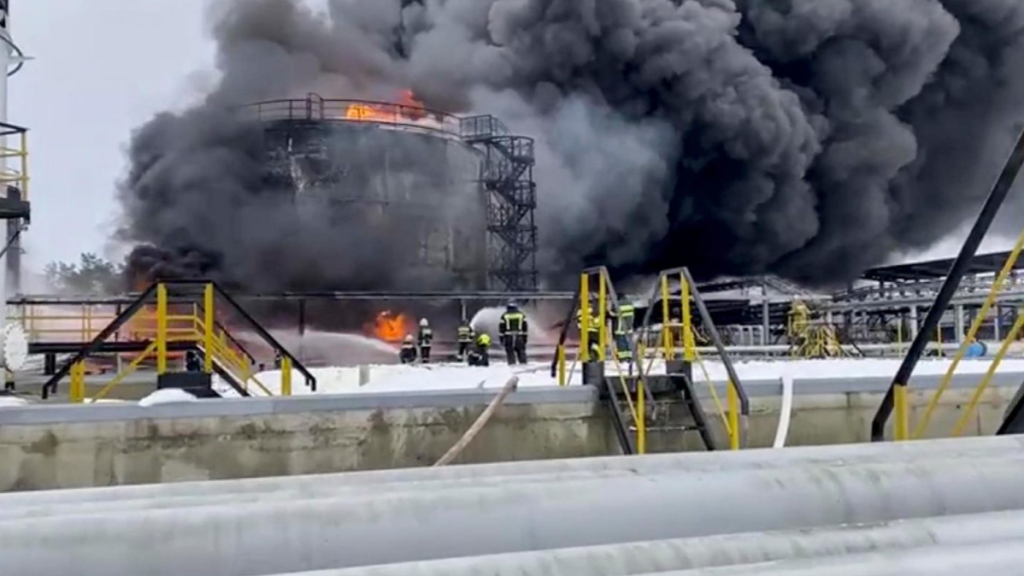
Image above: Example of fire and smoke at a Russian oil facility following reported drone strikes—illustrating the physical damage contributing to capacity loss.
Outlook
The oil market is rebalancing through pragmatic (if risky) channels: Russia’s degraded refineries push more crude into export markets serviced by the dark fleet, Iran maintains some flows via similar evasion tactics, and China provides steady demand for discounted barrels. This prevents a full-blown supply crisis but embeds higher costs and risks into the system.
Record crack spreads highlight that the real pinch is in refined products, not just crude—explaining why benchmarks around $80+ remain defensible. For consumers, the horizon holds higher fuel costs until global refining capacity recovers. The shadow fleet buys time for producers but shifts burdens downstream.
Appendix: Sources and Links
- Center for Research on Energy and Clean Air (CREA) – June 2026 Russian fossil fuel exports analysis: https://energyandcleanair.org/june-2026-monthly-analysis-of-russian-fossil-fuel-exports-and-sanctions/
- Kyiv School of Economics (KSE) Russian Oil Tracker – June 2026: https://kse.ua/about-the-school/news/russian-oil-tracker-june-2026-russia-ramps-up-crude-exports-after-refinery-strikes-as-a-shadow-fleet-shortage-deepens-its-reliance-on-western-maritime-services/
- United Against Nuclear Iran (UANI) Iran Tanker Trackers (May/June 2026): https://www.unitedagainstnucleariran.com/analysis/may-2026-iran-tanker-tracker and June edition
- Trading Economics – Brent Crude: https://tradingeconomics.com/commodity/brent-crude-oil
- Reuters and other reporting on U.S. actions vs. Iran (via aggregated sources)
- Vortexa and industry analyses on shadow fleet and refining outages (referenced in multiple reports)
- EIA and market commentary on crack spreads and capacity (e.g., via aggregated news)
Data reflects the most recent available as of July 15, 2026. Oil markets remain highly dynamic—monitor for updates on sanctions enforcement, refinery repairs, and geopolitical developments.