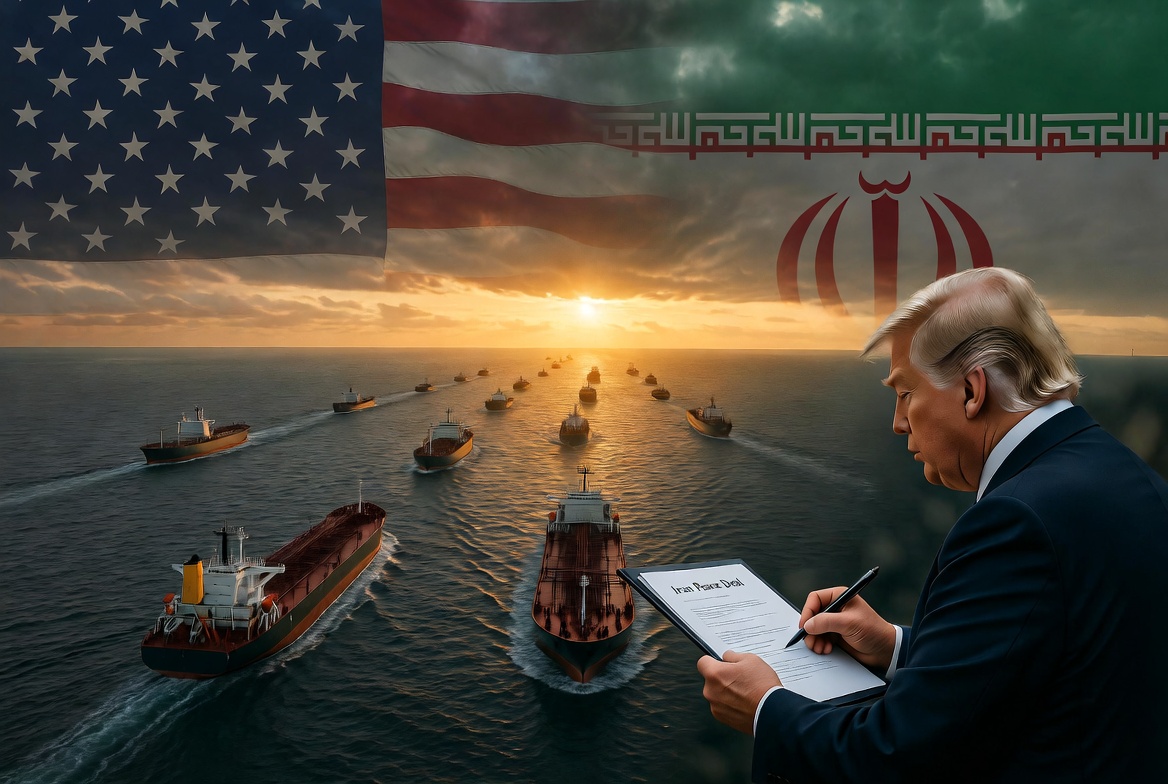
Energy News Beat – May 28, 2026 U.S. and Iranian negotiators have hammered out a tentative 60-day memorandum of understanding (MOU) to extend a fragile ceasefire and kick-start talks on Iran’s nuclear program — but the deal still needs final sign-off from President Donald Trump. According to Axios reporting, the framework aims to reopen the Strait of Hormuz to unrestricted commercial shipping, ease U.S. sanctions on Iranian oil exports, and address Tehran’s nuclear ambitions while broader regional de-escalation talks begin.
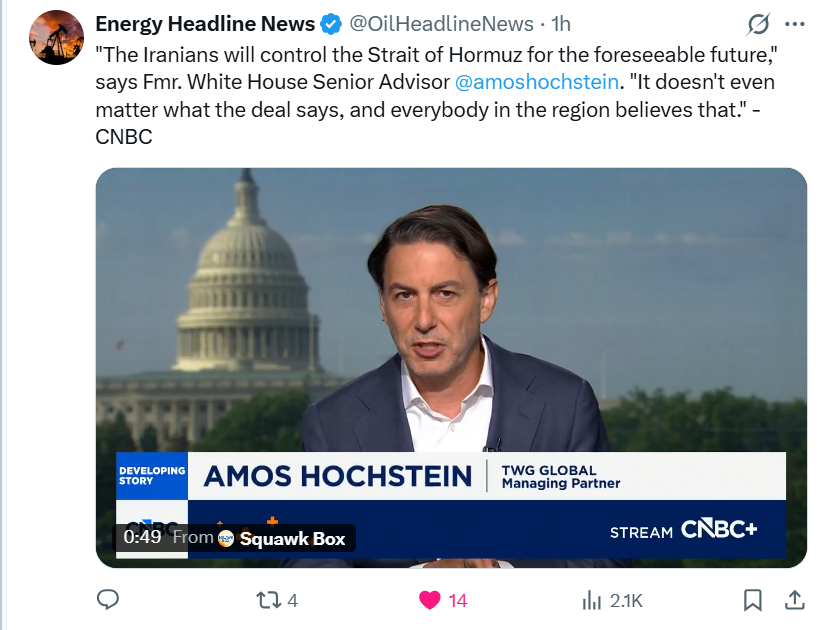
This comes after months of direct U.S.-Iran conflict in 2026, during which Iran (primarily through the Islamic Revolutionary Guard Corps Navy) effectively disrupted or blocked traffic in the Strait, triggering skirmishes as recently as the past 48 hours. Oil markets have been on a rollercoaster, with prices spiking on supply fears before easing on any hint of diplomacy. For energy traders, producers, and consumers alike, the big question is: Is this a genuine breakthrough or just the latest chapter in the Strait’s “open-closed-open-closed” drama?
What Does the Deal Actually Mean?
At its core, the MOU is a short-term bridge: Extend the existing ceasefire by 60 days.
Launch direct negotiations on Iran’s nuclear program.
Immediately stabilize energy flows by reopening the Strait of Hormuz.
If approved, it would mark the most significant diplomatic progress since the 2026 conflict escalated. Trump has been briefed and is taking a couple of days to review it, while Iran has not yet formally confirmed acceptance. U.S. officials emphasize there are no secret side deals or immediate cash transfers — sanctions relief and frozen funds would be earned through verifiable Iranian concessions.
Key Details of the Proposed MOU
- According to U.S. officials cited in the reporting, Strait of Hormuz: Unrestricted commercial shipping with no tolls and no harassment. Iran must remove all mines from the waterway within 30 days.
- U.S. Naval Blockade: Lifted proportionally as commercial shipping resumes.
- Iranian Oil Exports: U.S. sanctions waivers issued so Iran can sell oil freely on the global market.
- Nuclear Commitments: Iran agrees not to pursue a nuclear weapon. First-order talks focus on disposing of highly enriched uranium (HEU) and addressing enrichment activities.
- Sanctions & Aid: U.S. open to discussing broader sanctions relief and releasing frozen Iranian funds — plus a mechanism to facilitate humanitarian aid and goods into Iran.
- Regional Angle: The Israel-Hezbollah war in Lebanon ends as part of the framework, with future talks on Iran’s support for regional proxies to promote “regional peace.”
- If negotiations collapse, Trump retains “all options” — economic and military — and any U.S. force withdrawal would depend on a final agreement.
Can We Trust the IRGC to Honor Any of This?
Here’s the energy sector’s real concern: The IRGC (Islamic Revolutionary Guard Corps) effectively controls Iran’s naval operations in the Persian Gulf and Strait of Hormuz. They are not a conventional navy — they are the regime’s ideological shock troops with a long track record of asymmetric harassment, tanker seizures, and proxy warfare.
Historical Pattern: During the 1980s “Tanker War,” Iran mined the Gulf and attacked shipping. In 2019, IRGC forces seized tankers and attacked Saudi facilities. In 2026, IRGC officials publicly declared the Strait “closed” and enforced disruptions via mines, drones, and speedboat swarms, slashing tanker traffic and driving oil prices higher.
Structural Distrust: The IRGC operates with significant autonomy from Iran’s civilian diplomats. Past nuclear deals (like the JCPOA) were repeatedly violated through covert enrichment and proxy funding. Even if the Supreme Leader or negotiators sign off, IRGC commanders have incentives to test boundaries — especially if they view the deal as a temporary breathing room to rebuild capabilities.
Track Record on the Strait: Iran has never fully closed Hormuz long-term (it would hurt their own oil exports too), but they excel at creating uncertainty. A few mines, a radio warning to a tanker, or a “toll” demand can achieve the same effect as a blockade: higher insurance premiums, rerouted shipping, and volatile oil prices.
Bottom line for energy markets: Verbal commitments and even mine-clearing deadlines are only as good as IRGC compliance on the water. Skepticism is warranted until independent verification (U.S. Navy overflights, commercial traffic data, satellite imagery) confirms sustained open passage.
What Does This Mean for Oil Markets and the Strait of Hormuz?
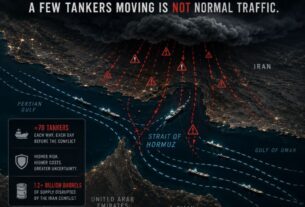
The Strait of Hormuz is the world’s most critical oil chokepoint — roughly 20-21 million barrels per day (about one-fifth of global seaborne oil trade) flows through it, primarily from Saudi Arabia, Iraq, UAE, Kuwait, and Iran itself.
If the Deal Holds and Traffic Resumes Fully: Iranian crude returns to market (potentially adding 1-2+ million bpd of supply). Safe passage for Gulf exporters stabilizes tanker routes to Asia and Europe. Expect downward pressure on Brent and WTI prices, reduced volatility, and relief at the pump. Markets have already shown sensitivity — any credible reopening news has triggered price dips.
If It’s Just Another “Open-Closed” Cycle: IRGC harassment resumes after the 30-day mine-clearing window or during nuclear talks. Insurance rates stay elevated, some tankers reroute (adding costs and delays), and a “fear premium” returns to oil futures. We’ve seen this movie: temporary lulls followed by incidents that spike prices $10-20/barrel overnight.
Broader Energy Impact: Lower risk premium benefits global refining margins, LNG shipping through the region, and downstream industries. But persistent uncertainty keeps strategic petroleum reserves on alert and encourages diversification (U.S. shale, Canadian oil sands, renewables acceleration).
In short: A verifiable, lasting reopening would be a massive supply-side win for consumers and a deflationary force on energy prices. Partial or temporary compliance keeps the market in “wait-and-see” mode with elevated risk.
Is This Just Another Day on the Strait?
The pattern is familiar. Iran threatens closure when squeezed economically or militarily, creates enough disruption to raise global prices and force diplomacy, then eases off for relief — only for tensions to reignite. The 2026 conflict simply amplified an existing playbook.
Whether this MOU becomes a durable framework or another tactical pause depends on Trump’s final call, Iranian internal politics, and — most critically — whether the IRGC actually stands down in the water. Energy markets will price in the upside quickly but will demand proof on the ground before fully repricing risk lower.
Energy News Beat will continue tracking tanker traffic data, satellite imagery of mine-clearing, and any IRGC statements. For now, the deal is promising on paper — but in the Strait of Hormuz, paper has never been enough.
Appendix: Sources and Links
- Primary source: Axios – “U.S. and Iran reach deal but need Trump’s approval, officials say” (May 28, 2026) → https://www.axios.com/2026/05/28/iran-peace-deal-trump-approval
- Related Axios coverage: Iran topic page → https://www.axios.com/world/iran
- Wikipedia: 2025–2026 Iran–United States negotiations → https://en.wikipedia.org/wiki/2025–2026_Iran–United_States_negotiations
- Congressional Research Service reports on Strait of Hormuz threats and historical disruptions (various dates, including 2012–2026 updates).
- Additional context from Reuters, BBC, CNN, Al Jazeera, and EIA on 2026 conflict, oil flows, and IRGC actions (May 2026 reporting).
- U.S. Energy Information Administration (EIA) data on Hormuz oil chokepoint volumes.
All analysis reflects publicly available reporting as of May 28, 2026. Markets move fast — stay tuned.