

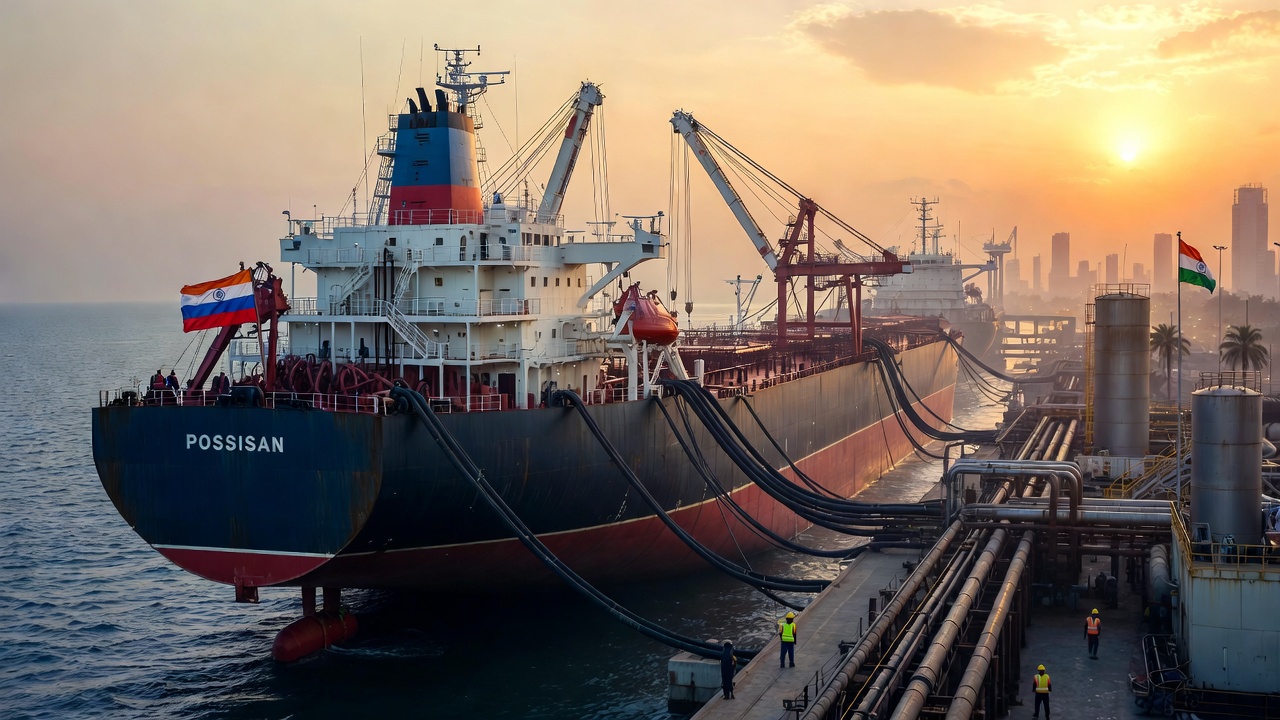
The ongoing conflict in the Middle East — sparked by U.S. and Israeli strikes on Iran in early 2026 — has delivered an unexpected windfall to the Kremlin. Global oil prices surged as threats to the Strait of Hormuz disrupted supplies from the region, pushing benchmark prices above $100 per barrel at peaks and lifting Russian Urals crude to its highest levels in years. As a result, Russia’s main oil tax revenue (the mineral extraction tax, or MET/NDPI) nearly doubled in April 2026 to approximately 700 billion rubles (~$9 billion), marking a six-month high and providing critical budget relief amid Western sanctions and earlier revenue shortfalls.
This price-driven boost comes at a time when Russia’s oil production and export volumes have shown modest declines in recent years due to OPEC+ quotas, sanctions, and maintenance issues. However, the revenue spike demonstrates how geopolitical shocks in the oil market can still deliver outsized gains to Moscow despite production constraints.
Russia’s Oil Output: Steady but Declining Slightly in Recent Years
Russia remains one of the world’s top oil producers, but output has trended modestly downward since peaking around 11 million barrels per day (bpd) in the early 2020s. Factors include Western sanctions following the 2022 Ukraine invasion, which forced a pivot in export routes and buyers, plus voluntary OPEC+ cuts.
Approximate annual average crude oil production (million bpd):
tradingeconomics.com +1
2020: ~10.7 (pandemic lows)
2021: ~11.0
2022: ~11.2 (peak resilience)
2023: ~10.3–10.8
2024: ~9.2–9.9 (EIA reports 9.2 million bpd crude, down 4% YoY)
2025: ~9.1–9.9 (continued modest decline)
Recent monthly figures hovered around 9.8–10 million bpd into late 2025/early 2026.

Chart: Russia Oil Output (Historical Trend and Projection) – Shows the post-2000s rise, 2020s plateau, and expected gradual decline.
Production remains resilient thanks to discounted sales and shadow fleet logistics, but the volume trend is not the driver of the recent revenue jump — it’s the price surge from the Iran conflict.
Export Shift: From Europe to Asia (China and India Dominate)
Pre-2022, Europe was Russia’s largest crude buyer. Sanctions changed that dramatically. By 2024–2025, China and India together accounted for roughly 80% of Russia’s seaborne crude exports. Turkey became a key buyer of refined products.
2024–1H 2025 export shares (crude oil and condensate, approximate %):China: 44–46%
India: 36–45%
Turkey: ~6–9%
Rest of Asia/Oceania, EU (minimal), and others: remainder

Chart: Crude Oil and Condensate Exports from Russia by Region (2020–1H 2025) – Clear pivot away from Europe toward China and India.
How the Iran War Is Helping Russia
The Iran conflict (with associated Strait of Hormuz risks) created a classic supply shock. Oil prices spiked sharply in March–April 2026, directly benefiting Russia’s tax formula, which is tied to global benchmarks. Reuters calculations show the MET oil tax alone jumping dramatically:
March 2026: ~327 billion rubles
April 2026: ~700 billion rubles (doubling, highest in six months)
Broader oil export revenues also surged (e.g., March figures approached $19 billion in some analyses, up sharply month-over-month).
Japan Imports Russian Tanker as Sanctions Are Waived
In a related development highlighting how the crisis is reshaping global flows, Japan recently received a tanker of Russian crude from the Sakhalin-2 project. The import was facilitated by temporary U.S. sanctions waivers issued to stabilize energy markets amid Hormuz disruptions. Japan, which relies on the Middle East for over 95% of its crude, has used these waivers and project-specific exemptions (Mitsui and Mitsubishi hold stakes in Sakhalin-2) to secure alternative supplies.
This marks one of the first such deliveries in nearly a year and underscores how even traditional U.S. allies are turning to Russian oil when Middle East supplies are threatened. Energy News Beat covered the arrival, noting it as part of broader supply-strain relief efforts.
Outlook and Implications
The Iran war has given Russia a timely revenue lifeline, but it is price-driven rather than volume-driven. Production remains under pressure, and any de-escalation in the Middle East could reverse the gains quickly. Still, the episode illustrates Russia’s continued ability to monetize its energy resources despite years of sanctions — thanks to Asian demand and geopolitical volatility.
Appendix: Sources and Links
- Reuters: “Iran war doubles Russia’s main oil revenue to $9 bln in April” (April 9, 2026) – https://www.reuters.com/business/energy/iran-war-doubles-russias-main-oil-revenue-9-bln-april-reuters-calculations-show-2026-04-09/
Financial Post / Investing.com reports on six-month high tax revenue – https://financialpost.com/pmn/business-pmn/iran-war-boosts-russias-april-oil-tax-revenue-to-six-month-high - CREA (Centre for Research on Energy and Clean Air): Monthly Russian fossil fuel export analyses (March 2026) – https://energyandcleanair.org/march-2026-monthly-analysis-of-russian-fossil-fuel-exports-and-sanctions/
- U.S. EIA: Russia Country Analysis Brief and export data – https://www.eia.gov/international/content/analysis/countries_long/russia/
Trading Economics / YCharts: Russia Crude Oil Production data – https://tradingeconomics.com/russia/crude-oil-production - Energy News Beat: Coverage of Russian oil arrivals in Japan amid supply strains (May 2026) – energynewsbeat.co (podcast and article references)
- Additional export charts: IEA, OEC, and related analyses.
Data current as of early May 2026. Revenues and prices remain fluid.