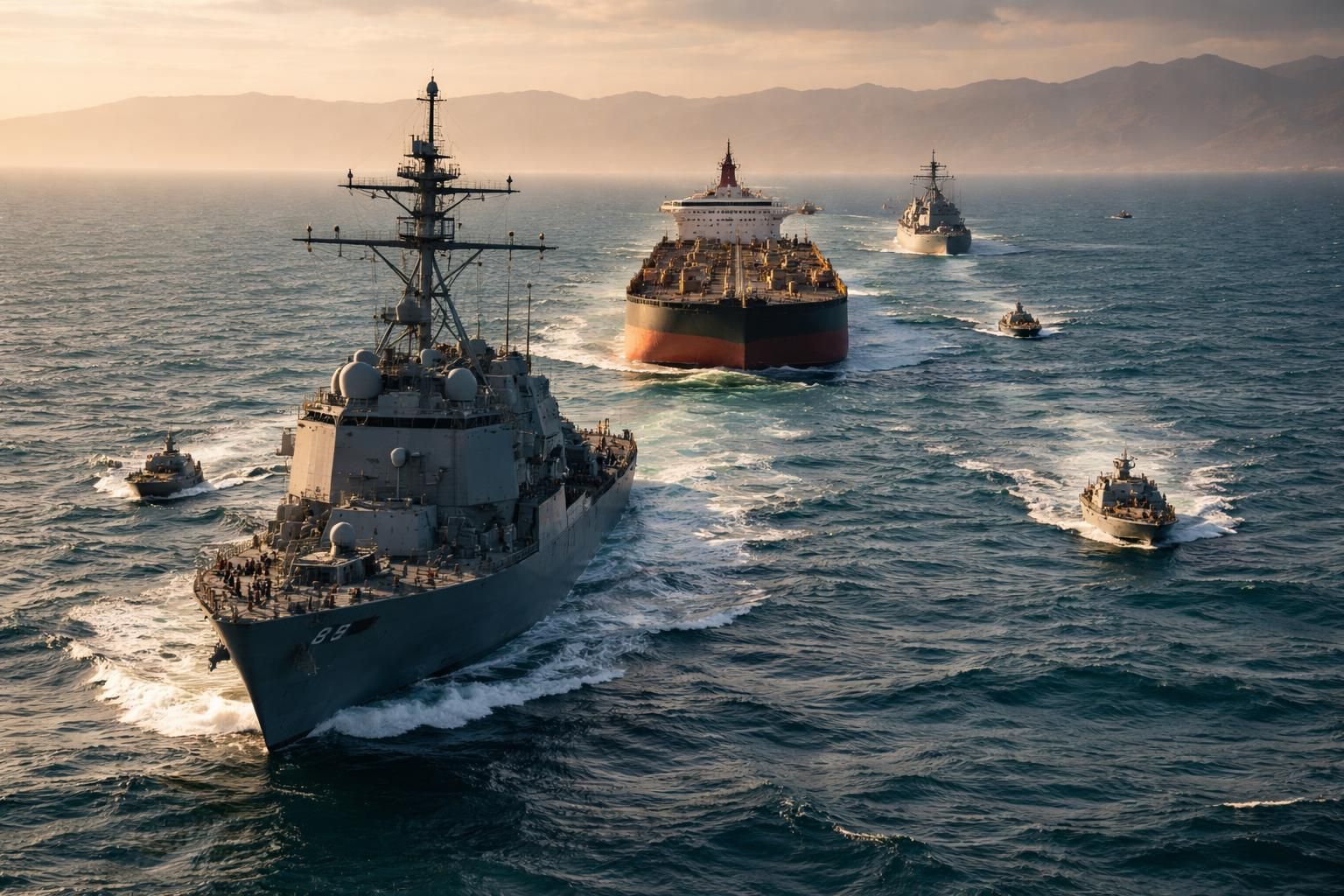
TAMPA, Fla. — U.S. Central Command (CENTCOM) announced that its forces will begin supporting Project Freedom on May 4, 2026, to restore freedom of navigation for commercial shipping through the Strait of Hormuz. The mission, directed by the President, aims to support merchant vessels seeking safe transit through this vital international trade corridor. A quarter of the world’s seaborne oil trade, along with significant volumes of liquefied natural gas (LNG), fuel, and fertilizer products, normally flows through the strait.
“Our support for this defensive mission is essential to regional security and the global economy as we also maintain the naval blockade,” said Adm. Brad Cooper, CENTCOM commander. The operation will involve guided-missile destroyers, over 100 land- and sea-based aircraft, multi-domain unmanned platforms, and 15,000 U.S. service members. It builds on the recently announced Maritime Freedom Construct, a U.S. Department of State and Department of Defense initiative to enhance coordination and information-sharing among international partners for maritime security.
Crisis Context and Shipping Disruptions
The Strait of Hormuz has been severely disrupted since the escalation of the 2026 Iran conflict in late February. Iran imposed restrictions and conducted attacks on vessels in response to U.S. and Israeli operations, while the U.S. implemented a naval blockade of Iranian ports starting in mid-April. This “dual blockade” effectively halted most commercial traffic.
Pre-crisis baseline (2025 data): Approximately 130 commercial ships transited the strait daily on average.
20–25% of global seaborne crude oil and petroleum products (20 million barrels per day).
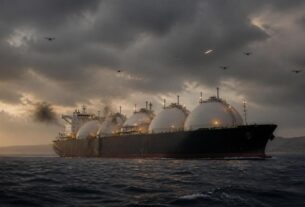
~20% of global LNG trade, with an average of about three laden LNG tankers passing daily (primarily from Qatar and the UAE).
During the crisis (February–April 2026): Tanker traffic initially dropped ~70% and later fell to a trickle (often fewer than 5–7 crossings per day, or ~5% of normal throughput in some periods).
Over 150 tankers (crude, product, and LNG) anchored in open waters beyond the strait in the Gulf of Oman and Arabian Sea approaches, with dozens more stationary on the other side.
Estimates of stranded vessels in the Persian Gulf reached up to 2,000 ships (including cargo, cruise ships, and others), affecting ~20,000 mariners. As of early April, ~230 loaded oil tankers were reported waiting inside the Gulf.
At least 17–41 attacks on merchant ships were recorded (projectiles, drones, boats, mines), resulting in damaged or abandoned vessels, crew casualties, and one tugboat sunk. GNSS jamming and other disruptions compounded risks.
LNG traffic was particularly hard-hit. Qatar and UAE exports, which dominate Middle East LNG flows to Asia and Europe, were effectively halted for weeks. Only rare crossings occurred, such as the ADNOC-managed Mubaraz (a 137,000-cubic-meter tanker loaded at Das Island, UAE, in early March), which became the first fully loaded LNG vessel to transit since the war began when it was tracked near India/Sri Lanka in late April.
Other commodities affected included ammonia and urea (fertilizers, ~20–35% of global seaborne trade from the Gulf), aluminum, helium, and sulfur. Ships in the Arabian Sea (east of the strait) faced U.S. redirection of vessels suspected of violating the Iran blockade, with 38+ turned back in the early weeks. Hundreds of tankers and bulk carriers clustered in holding patterns off Oman, UAE, and further into the Arabian Sea, creating a massive backlog.
Short-Term Market Stabilization Potential
Project Freedom is framed as a humanitarian effort to guide neutral (non-Iranian) commercial vessels safely out of the strait while upholding the U.S. blockade on Iranian ports. By providing military escorts and real-time coordination under the Maritime Freedom Construct, it could enable the release of stranded cargoes from GCC exporters (Saudi Arabia, UAE, Iraq, Kuwait, Qatar).Short-term effects: Supply relief: Resuming even partial transits would ease the backlog of ~230 loaded oil tankers and stranded LNG carriers, injecting supply back into global markets.
Price stabilization: Oil prices have already reacted positively to the announcement, with Brent crude falling more than $1 per barrel (to around $106) and WTI dropping similarly on May 4, as markets price in reduced risk premiums.
Broader commodities: Fertilizer and LNG flows could stabilize faster, easing pressure on Asian and European buyers who faced shortages, higher coal/oil switching, and price spikes (natural gas in Europe had doubled at peaks).
This is not a full reopening—the U.S. blockade remains in place, and Iran has criticized the operation as a potential ceasefire violation. However, in the near term (weeks to months), successful escorts could prevent further escalation and restore confidence in the chokepoint.
How Investors Should View This News
For energy investors, Project Freedom represents short-term de-risking rather than resolution. The crisis drove Brent above $100–$126 per barrel earlier in 2026, boosting energy sector performance. This operation could temper that upside but support broader market stability.Key considerations: Positive for producers: Gulf oil and LNG exporters (e.g., companies tied to Saudi Aramco, ADNOC, QatarEnergy, or majors with exposure like Chevron, ExxonMobil) stand to benefit from resumed flows and lower volatility. Eased supply fears reduce the risk of prolonged $100+ oil.
Tanker and shipping stocks: Mixed. Operators like Frontline or other crude/LNG carriers saw premiums from disruption risks; successful escorts could cool those gains but increase actual voyage activity and utilization.
Defense and security plays: Sustained U.S. presence supports contractors involved in maritime security.
Broader portfolio impact:
Lower energy price volatility is generally bullish for equities and the global economy, reducing inflation risks and supporting consumer spending. However, ongoing tensions mean investors should monitor for escalation (e.g., Iranian responses).
Risks: Any interference could reignite attacks or price spikes. Long-term, structural shifts in trade routes or alliances remain possible. Diversification into non-Gulf energy sources or companies with strong balance sheets and shareholder returns is advisable.
Analysts note this as a tactical move that could stabilize markets without ending the underlying blockade, providing a window for diplomacy while protecting global energy security.
Project Freedom marks a significant U.S. commitment to keeping critical energy arteries open. Its success in the coming days and weeks will be closely watched by markets, shippers, and governments alike.
- U.S. Central Command Official Post (May 3, 2026): https://x.com/CENTCOM/status/2051075238352355404
- Wikipedia: 2026 Strait of Hormuz Crisis (comprehensive timeline, shipping stats, attack data): https://en.wikipedia.org/wiki/2026_Strait_of_Hormuz_crisis
- The New York Times: “First Fully Loaded L.N.G. Tanker Since War Began” (April 28, 2026): https://www.nytimes.com/2026/04/28/business/iran-war-strait-of-hormuz-ship-crossing.html
- Reuters: “Hundreds of ships drop anchor in Middle East Gulf” (March 1, 2026) and related shipping data.
- Al Jazeera: “How many ships have passed the Strait of Hormuz” (April 14, 2026).
- Oil price reaction coverage (Global Banking & Finance, May 4, 2026): Reports on Brent/WTI drops post-announcement.
- Additional context from PBS, Washington Post, Arab News, and UNCTAD reports on Hormuz disruptions (March–April 2026).
All data drawn from publicly available reporting, ship-tracking firms (e.g., Kpler, MarineTraffic), and official statements as of May 4, 2026. Markets and operations are fluid; investors should consult professional advisors.