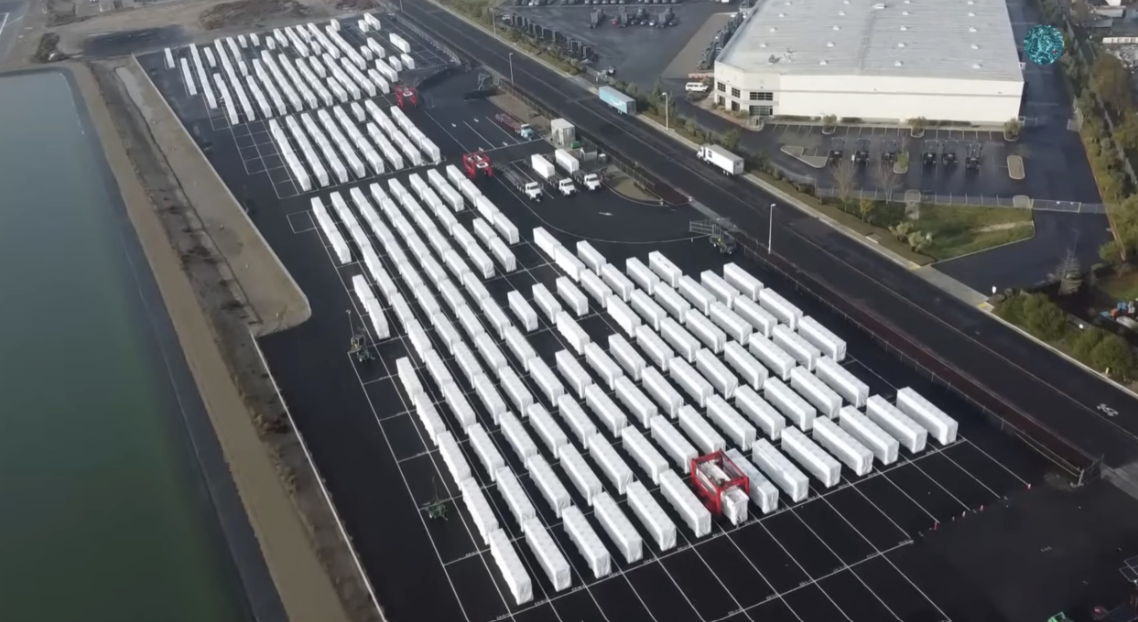
The Wall Street Journal recently highlighted how battery energy storage systems (BESS) are shifting from niche applications to meaningful scale in the United States, with residential deployments accelerating particularly fast. Companies like Base Power are installing home batteries at a rapid clip, and broader market data confirm strong growth in both utility-scale and behind-the-meter segments. Yet as energy analyst Doug Sheridan notes in his recent LinkedIn commentary, this expansion carries important caveats—especially around how subsidies distort investment signals and potentially undermine the broader grid investments needed for long-term stability and reliability.
Rapid Scaling in Grid and Home Markets
According to reports tied to the WSJ coverage and industry trackers, Base Power (co-founded by Zach Dell) has installed roughly 23,000 home batteries totaling about 550 MWh of cumulative capacity. The company is completing around 100 installations per day and aims to double that pace, supported by a recent funding round valuing the firm at $13 billion. These systems provide whole-home backup, enable rate arbitrage (charging when power is cheap and discharging during peaks), and can be aggregated into virtual power plants that support the grid. Pilot efforts, such as El Paso Electric’s placement of utility-owned batteries on congested feeders, illustrate operational benefits: deferring expensive infrastructure upgrades, delivering customer backup, and providing peak relief.
Broader U.S. market data underscore the momentum. In Q1 (aligned with 2026 reporting), the U.S. added 3.3 GW (about 8.4 GWh) of BESS capacity, with the residential segment setting a quarterly record near 1.3 GWh. For full-year 2025, the U.S. installed a record 18.9 GW / 51 GWh of battery energy storage across utility-scale, commercial & industrial (C&I), and residential segments—a 52% increase over 2024, according to the American Clean Power Association (ACP) and Wood Mackenzie U.S. Energy Storage Monitor. Utility-scale projects dominated, with strong activity diversifying beyond traditional leaders California and Texas into additional states. Cumulative installations since 2019 exceed 50 GW / 144 GWh.
Other trackers show complementary figures: SEIA/Benchmark Mineral Intelligence reported around 57–58 GWh of new capacity in 2025, with cumulative utility-scale reaching roughly 137 GWh by year-end (plus C&I and residential contributions). Grid battery capacity has grown dramatically from under 1 GW a decade ago to tens of gigawatts today, with individual projects now routinely exceeding hundreds of megawatts or even gigawatt-hour scale. Forecasts project hundreds of additional GWh through the early 2030s, driven by falling costs, load growth (including data centers), renewable integration needs, and remaining policy supports.
The home (residential) market is expanding especially quickly. In 2025 it reached a record of about 2.7 GW (a 92% year-over-year increase in some reports), with attachment rates to solar rising and virtual power plant programs gaining traction in states such as California, Texas, Arizona, Illinois, and Massachusetts. Drivers include resilience against outages, high retail rates in some markets, net-billing tariff structures that favor self-consumption, and residual federal incentives (such as the Section 25D ITC, which spurred pull-forward demand ahead of expirations or changes). Companies ranging from pure-play storage firms to solar installers and traditional energy players view modular home batteries as a fast way to add flexible, dispatchable capacity. Third-party ownership models are also growing, helping sustain deployments even as some tax credits phase or shift.
The Hidden Catches: Subsidies, Distorted Signals, and Reliability CostsSheridan’s core insight is that while BESS delivers legitimate value—flexibility, resilience, peak shaving, and better utilization of existing assets—aggressive, subsidy-driven buildouts risk further undermining investment signals already skewed by policies favoring wind and solar. When capital is steered indiscriminately toward intermittent generation and storage-dependent resources, it can crowd out investment in the dispatchable generation (gas, nuclear, etc.) and transmission/distribution infrastructure required for periods when the sun is down, wind is calm, and batteries are depleted. Grids must still cover the fixed and ongoing costs of those conventional assets; those costs are real and substantial.
Texas/ERCOT provides an early illustration. Long a leader in subsidized renewables and now a major BESS deployment center, the state has seen residential power prices rise. EIA-linked data referenced by Sheridan show year-over-year retail electric rate increases well above overall inflation in the state (with broader multi-year rises of roughly 30–40% in residential rates from earlier baselines into the mid-teens of cents per kWh). Similar dynamics appear elsewhere as investors in essential but non-subsidized assets demand higher returns to compensate for operating on grids that structurally favor subsidized resources.
Claims that data-center load alone explains the pressure overlook years of policy-driven misalignment.
Economic analyses reinforce the point: modest storage can be profitable and beneficial even without heavy support by smoothing prices and improving efficiency, but large-scale deployment often depends on continued subsidies or mandates. Equilibrium effects can reduce the very price volatility that makes batteries profitable, while also lowering revenues for dispatchable generators. Subsidies (investment tax credits, state mandates, etc.) accelerate deployment but can accelerate the crowding-out effect, raising the risk that overall system costs climb and reliability suffers if firm capacity and wires investments lag. BESS is not a cure-all for structural power-system challenges; batteries have finite duration, and multi-day or seasonal gaps still require other resources.
In short, the move of BESS to scale is real and valuable for flexibility and resilience. Home batteries are democratizing backup and enabling distributed grid services at impressive speed. Utility-scale systems are adding capacity faster than many traditional generation options. The open question—and a genuine risk—is whether subsidy-heavy policies will leave the grid short of the stable, reliable, dispatchable backbone and transmission investments needed when variable resources and finite storage fall short. Balanced policy that rewards actual system value rather than preferred technologies will be essential if the storage boom is to strengthen, rather than strain, long-term grid reliability and affordability.
We highly recommend that homeowners take their own energy security and add some temporary and emergency generation. Storms happen, and as we reported last week, there is an increased risk to hackers and grid resiliency due to the large demand increases.
Stay tuned to the Energy News Beat Channel for more updates.
- Doug Sheridan LinkedIn post summarizing WSJ reporting and analysis on BESS scaling, subsidies, and Texas rates: https://www.linkedin.com/posts/sheridandoug_energy-bess-electricity-share-7490110307319635968-GNFK/
- WSJ exclusive on Base Power / Zach Dell backyard batteries and $13B valuation (Aug. 2026): https://www.wsj.com/business/energy-oil/zach-dell-is-raising-money-to-put-a-battery-in-your-backyard-cd7e52e8
- ACP / Wood Mackenzie U.S. Energy Storage Monitor – 2025 record installations (18.9 GW / 51 GWh), cumulative >50 GW / 144 GWh since 2019, residential growth: https://cleanpower.org/news/report-2025-u-s-energy-storage-installations-set-new-record-surpass-2024-by-52/ and https://www.woodmac.com/press-releases/2025-u.s.-energy-storage-installations-set-new-record-surpass-2024-by-52
- SEIA / Benchmark Mineral Intelligence U.S. Energy Storage Market Outlook – ~57–58 GWh added in 2025, cumulative breakdowns: https://seia.org/news/united-states-installs-58-gwh-of-new-energy-storage-in-2025/ and related coverage
- Q1 2026 installations (3.3 GW / 8.4 GWh, residential record ~1.3 GWh): ACP/WoodMac references via cleanpower.org
- Base Power details (installations, capacity, funding, model): TechCrunch, pv magazine USA, and secondary WSJ citations (e.g., https://techcrunch.com/2026/08/03/base-power-raises-another-1b-to-save-the-grid-using-backyard-batteries/)
- EIA-linked Texas residential rate trends and broader U.S. price data: ratewatt.com / EIA series summaries and Electric Power Monthly tables
- Additional context on subsidy effects and equilibrium impacts of storage: academic and policy analyses (e.g., Microeconomic Insights on battery storage policy/markets; NBER-related working papers on storage equilibrium effects)
- Doug Sheridan background and related energy commentary: dougsheridan.com and prior analyses on PV-hybrid system costs
Data current as of early August 2026 reporting cycles; figures can vary slightly by source methodology (GW vs. GWh, utility-only vs. all segments).