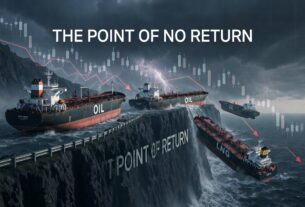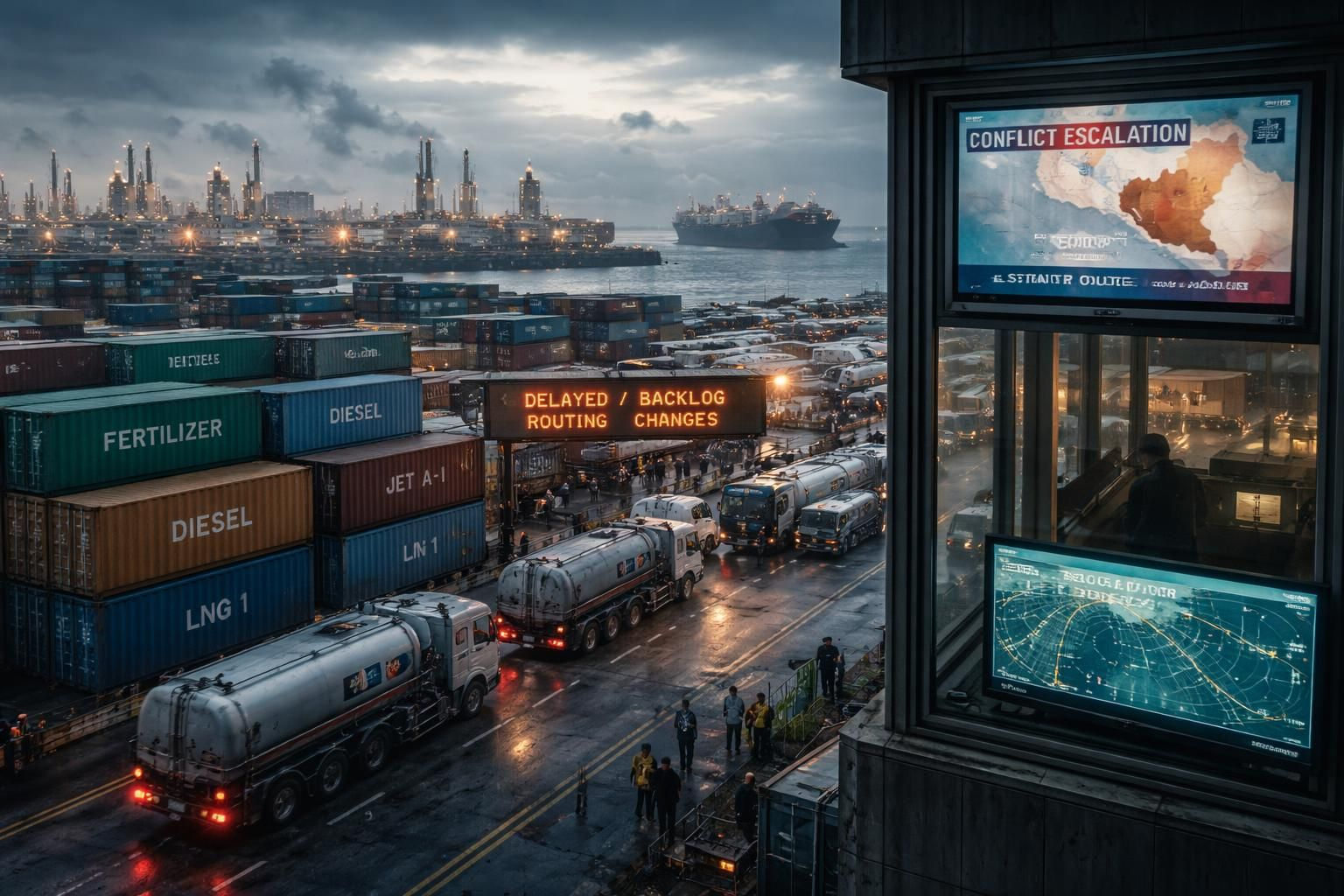
The 2026 Iran war has triggered what the International Energy Agency (IEA) calls the “largest supply disruption in the history of the global oil market.” Iran’s effective closure of the Strait of Hormuz—through which roughly 20% of the world’s oil and significant LNG volumes flow—has upended global energy supplies. Over 50 countries have implemented emergency measures as fuel stocks shrink and prices surge. Europe and Asia are rationing fuel, cutting power, shortening workweeks, and bracing for social unrest, while the United States stands relatively insulated thanks to domestic production ramp-ups.
Economist Peter St. Onge, Ph.D., captured the stark contrast in a widely shared post: “Largest energy crisis in history” as Europe and Asia ration fuel, cut power, and brace for riots. Meanwhile, America’s ramping up oil production and driving the drop-top Mustang with A/C on full blast.
Critical Global Crisis Points Highlighted by St. Onge and the Data
In his newsletter “The Greatest Energy Crisis in History,” St. Onge details how the Hormuz blockade—combined with attacks on regional energy infrastructure—has forced drastic responses worldwide. The IEA’s 2026 Energy Crisis Policy Response Tracker documents emergency actions across more than 50 countries, including:
Rationing and conservation: Fuel rationing, cash handouts to prevent riots, factory and university closures, and mandatory work-from-home policies.
Europe: Lost 75% of its jet fuel supplies, leading to widespread flight cancellations during peak tourism season.
Asia and beyond:Australia: Down to just 30 days of jet fuel before potential cutoff.
Pakistan: Mandated a 4-day workweek and closed universities to avert riots.
Sri Lanka: Declared every Wednesday a national holiday.
India: Restricted cremations to firewood or furniture due to gas shortages.
Egypt: Imposed a nationwide 9 p.m. curfew, closing shops, restaurants, and turning off streetlights.
Bangladesh: Multiple reports of gas station workers beaten to death amid fuel shortages.
A global release of 400 million barrels from strategic reserves has offset only about half the lost Iranian supply so far. Analysts warn that conditions could deteriorate into “Mad Max” scenarios once reserves deplete further, with oil futures projecting disruptions into 2027 or beyond.
Key chokepoints amplifying the crisis include:
Strait of Hormuz: The epicenter—~20 million barrels per day of oil and LNG flows halted.
Red Sea and related routes: Ongoing disruptions forcing longer detours.
Panama Canal: Now strained by rerouted tankers from the Gulf, with record bids for transit slots as Asian refiners scramble for U.S. crude alternatives.
The result: soaring oil prices (Brent crude hitting four-year highs near or above $100–120/bbl in recent weeks), inflation risks, and threats of stagflation or recession globally.
America as the World’s Emergency Gas Station
In contrast, the U.S. is positioned as the “emergency gas station of the world.” Domestic production—bolstered by “drilled baby drilled” policies despite regulatory hurdles—combined with imports from neighbors like Canada, Mexico, Colombia, and Venezuela, has created surplus capacity. Armadas of European and Asian tankers are now docking in U.S. ports to buy American crude.
Idle wells and 12 million acres of inactive leases could add another 1–2 million barrels per day if environmental red tape is eased, potentially making inactive U.S. assets the world’s 7th-largest oil exporter. Higher sustained prices could drive hundreds of thousands of new oil jobs and billions in exports, helping narrow trade deficits.
California Faces a Looming Local Crunch
While much of America benefits from domestic supply, California stands out as uniquely vulnerable—an “energy island” isolated by geography, policy, and infrastructure gaps. The state imports roughly 75% of its crude oil (with about one-third historically from the Middle East) and a growing share of refined products, gasoline, diesel, and jet fuel from Asia.
Recent refinery closures—such as Phillips 66’s Los Angeles-area facility and Valero’s Benicia refinery—have slashed in-state refining capacity by roughly 20%, forcing even greater reliance on imports. Asia itself is now in fuel crisis mode due to its dependence on Middle East crude via Hormuz. Jet fuel exports from Asia (especially South Korea) to California have already hit decade lows, and tanker deliveries of gasoline and blendstocks are under pressure.
Pre-crisis tankers from Asia—the last buffer of imported fuel—are expected to arrive in the coming weeks. Once those shipments dry up, California lacks the domestic production or pipeline access (no major links from the Gulf Coast) to make up the shortfall. Gasoline prices are already hovering near $6 per gallon in some areas, with jet fuel and diesel facing similar spikes. The state’s unique CARB gasoline blend and Jones Act restrictions further complicate sourcing alternatives.
Analysts warn the West Coast could face acute shortages in gasoline, diesel, and jet fuel, hitting aviation, trucking, and the broader economy harder than other U.S. regions. As one report noted, ships diverted from the Persian Gulf are now heading to the Gulf of Mexico rather than California ports.
The Path Forward
The Iran war has exposed the fragility of global energy dependence on chokepoints and just-in-time imports. While the U.S. overall is weathering the storm better than most, California’s policy-driven shift away from domestic production and refining underscores the risks of becoming overly reliant on distant, now-disrupted supply chains.
Energy independence—through expanded domestic drilling, permitting reform, and diversified refining—remains the clearest hedge against future shocks.
Appendix: Links and Sources
- Peter St. Onge X post (May 1, 2026): https://x.com/profstonge/status/2050175902500233613
- Peter St. Onge newsletter “The Greatest Energy Crisis in History”: https://www.profstonge.com/p/greatest-energy-crisis-in-history
- IEA 2026 Energy Crisis Policy Response Tracker: https://www.iea.org/data-and-statistics/data-tools/2026-energy-crisis-policy-response-tracker
- Wikipedia – Economic impact of the 2026 Iran war: https://en.wikipedia.org/wiki/Economic_impact_of_the_2026_Iran_war
- Wikipedia – 2026 Iran war fuel crisis: https://en.wikipedia.org/wiki/2026_Iran_war_fuel_crisis
- Reuters on California fuel imports and Iran war impact: https://www.reuters.com/business/energy/california-hit-by-much-higher-oil-prices-iran-war-stresses-refiners-2026-03-13/
- Bloomberg on California jet fuel imports from Asia hitting decade low: https://www.bloomberg.com/news/articles/2026-04-28/california-jet-fuel-woes-deepen-as-asia-flows-hit-decade-low
- Wall Street Journal on Iran war hitting California hardest: https://www.wsj.com/business/energy-oil/the-iran-war-is-hitting-california-harder-than-any-other-state-24bb289e
- Additional context from Fortune, Argus Media, and Energy News Beat reporting on California refinery closures and Asia supply risks (April 2026 articles).
All data and examples drawn from publicly available reports as of May 1, 2026. Energy markets remain fluid—stay tuned to Energy News Beat for updates.