Founded in 2017 by CEO Tim Latimer and CTO Dr. Jack Norbeck, Fervo Energy has quickly become the commercial frontrunner in next-generation geothermal development. The company has raised more than $1.5 billion in equity, debt, and grants from high-profile backers including Google, Breakthrough Energy Ventures (Bill Gates’ fund), B Capital, Devon Energy, and others. Its latest major infusion—a $462 million oversubscribed Series E in December 2025—served as a bridge to the public markets, while $421 million in non-recourse project financing closed in March 2026 for its flagship asset.
Fervo’s business model is straightforward yet ambitious: it acts as developer, owner, and operator of large-scale geothermal power plants. Revenue comes primarily from long-term power purchase agreements (PPAs) with utilities and corporate offtakers seeking dispatchable clean energy. Notable deals include PPAs with Southern California Edison (320 MW), Clean Power Alliance, Shell Energy, and Google for its Nevada pilot. Unlike intermittent renewables, Fervo delivers baseload power with capacity factors often exceeding 90%, making it a perfect complement to solar and wind.
The Technical Edge: Enhanced Geothermal Systems (EGS) at Scale
Traditional geothermal power has been limited to rare spots with natural hot-water reservoirs. Fervo’s breakthrough lies in Enhanced Geothermal Systems (EGS)—applying proven oil-and-gas technologies to unlock heat from hot, dry rock almost anywhere.
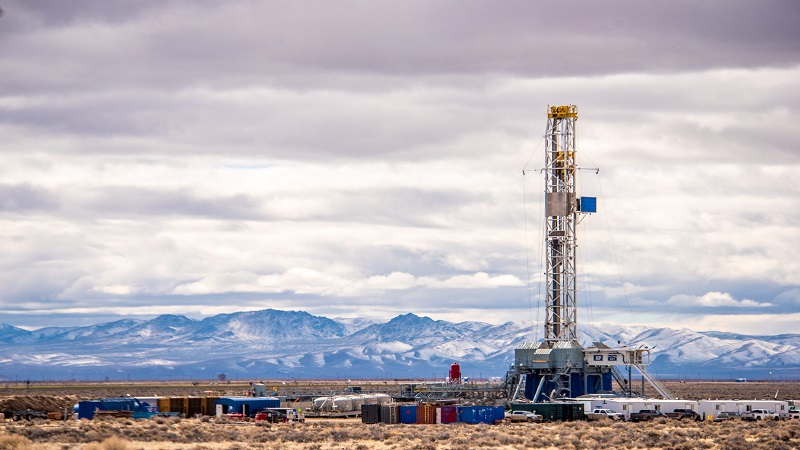
Here’s how it works: Horizontal wells are drilled deep into hot rock formations (often 8,000–15,000+ feet).
Hydraulic stimulation (similar to controlled fracking) creates a network of fractures that dramatically increases permeability.
Cold water is injected into one well, circulates through the engineered reservoir absorbing heat, and returns as hot fluid via production wells.
A binary-cycle power plant converts the heat to electricity without releasing steam or emissions.
100% of the water is reinjected, resulting in extremely low water consumption and minimal surface footprint.
Fervo’s proprietary innovations set it apart: precision directional drilling (cutting drilling times by up to 70% and well costs by ~50%), distributed fiber-optic sensing for real-time subsurface monitoring, and advanced analytics to optimize flow and heat extraction. These enable flexible operations, including in-reservoir energy storage and rapid ramping—critical for modern grids.
Proof of concept is already in: Fervo’s Project Red (3.5 MW pilot in Nevada, operational since 2023) became the first commercial EGS plant in the U.S. and has delivered two years of production data validating performance, curtailment capability, and dispatchability.
Flagship Project: Cape Station Poised for 2026 First Power
The crown jewel is Cape Station in Beaver County, Utah—the world’s largest planned EGS development at 500 MW. Phase 1 (targeting ~100 MW) is under construction and on track for first grid power later this fall (2026), with full build-out to 500 MW by 2028. The project is fully contracted and will deliver firm, round-the-clock clean power to the Western U.S. grid. Construction crews have already achieved record drilling performance, with costs and timelines improving rapidly as the team scales.
Market Opportunity and Forward-Looking Upside
The timing could not be better. Global electricity demand is exploding—driven by AI data centers, EVs, and industrial electrification—while policy tailwinds (including fast-track permitting and a new DOE geothermal office) are accelerating deployment. The broader geothermal market is projected to grow from roughly $76 billion in 2026 to over $135 billion by 2036 (CAGR ~6%), with EGS unlocking orders-of-magnitude more resource potential than conventional systems.
U.S. technical potential for EGS exceeds 100 GW by 2050 according to multiple studies, enough to power tens of millions of homes with firm, zero-carbon electricity. Fervo’s repeatable, standardized approach—coupled with rapid cost declines—positions it to capture a sizable share of that market. As the first mover at utility scale, successful execution at Cape Station could de-risk the technology for the entire sector and drive exponential project growth across the Western U.S. and beyond.
Forward-looking statements: While no guarantees exist in energy development, Fervo’s trajectory suggests substantial upside. If the company hits its Cape Station milestones and continues reducing costs, analysts and secondary-market valuations (pre-IPO estimates around $2–3 billion) imply significant re-rating potential post-listing. A successful IPO could provide the capital to accelerate its project pipeline, potentially making Fervo a multi-billion-dollar pure-play in the emerging “firm renewables” category. Risks remain—permitting, subsurface variability, and capital intensity—but the combination of proven tech, strong PPAs, and macro tailwinds paints a compelling growth story.
Energy News Beat will continue to track Fervo’s S-1 as it becomes effective and update readers on pricing and debut timing. The geothermal renaissance is here—and Fervo is leading the charge. We have reached out to Tim Latimer, CEO, for an interview on the Energy News Beat Podcast.