

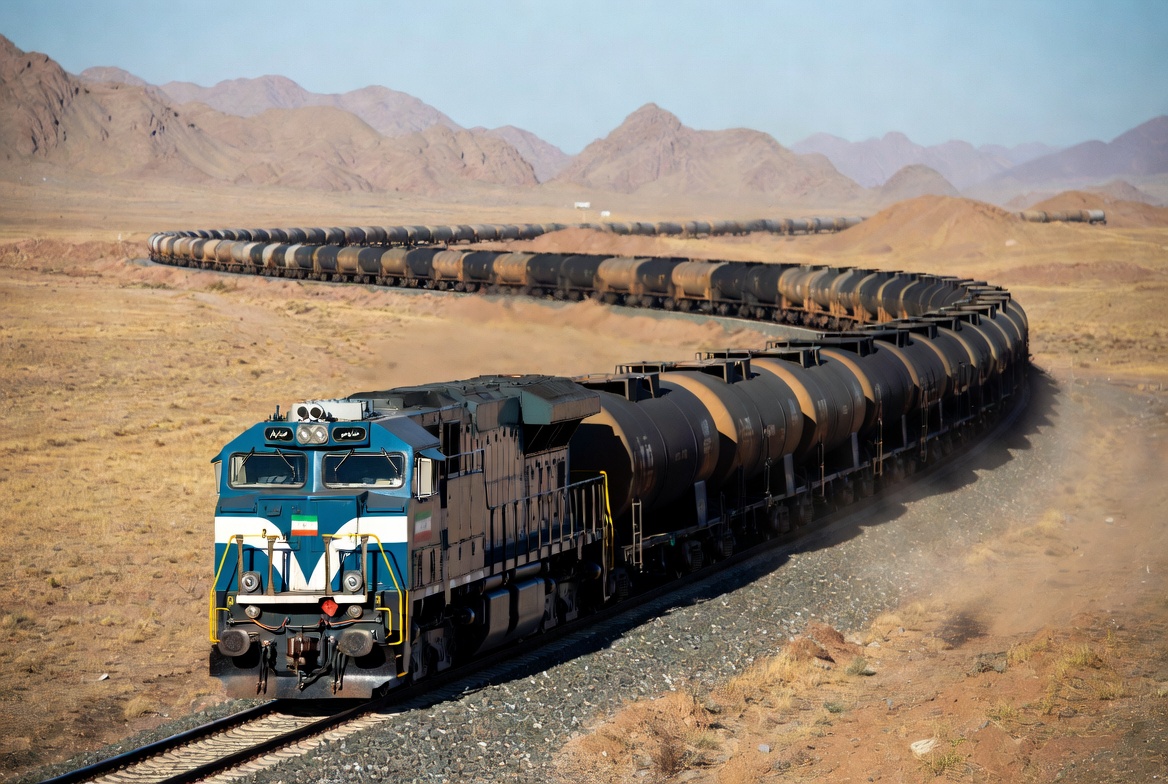
As U.S. naval pressure intensifies around Iran’s ports and the Strait of Hormuz, Tehran is accelerating use of its overland rail connection to China as a sanctions-busting “back door.” The route, part of Beijing’s Belt and Road infrastructure push, offers a faster, blockade-resistant alternative for goods — but how much can it really move, especially crude oil, and could it also help resupply Iran’s Islamic Revolutionary Guard Corps (IRGC)?
The Rail Corridor: From Xi’an to Tehran in 15 Days
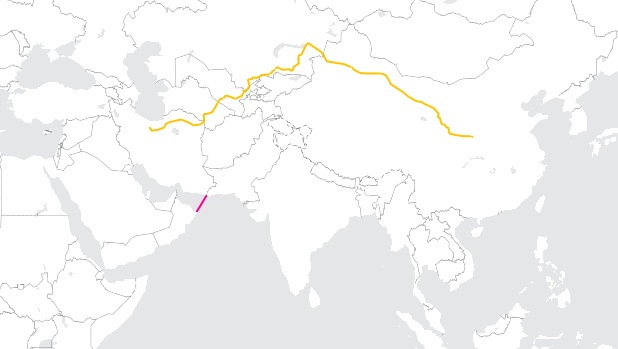
The key artery runs roughly 10,400 kilometers from central Chinese cities such as Xi’an and Yiwu through Kazakhstan and Turkmenistan into Iran, terminating at Tehran’s Aprin dry port. The Kazakhstan-Turkmenistan-Iran rail link, operational since 2014 and significantly upgraded by China’s 2025 extension, now delivers freight in about 15 days — compared with 30–40 days by sea.
Since the U.S. maritime blockade tightened in mid-April 2026, cargo train frequency on the Xi’an–Tehran route has surged from roughly one per week to one every three or four days. Freight rates for a standard 40-foot container have climbed to around $7,000, roughly 40% above normal levels, with demand outstripping available slots.
Oil by Rail vs. VLCC: Capacity Realities
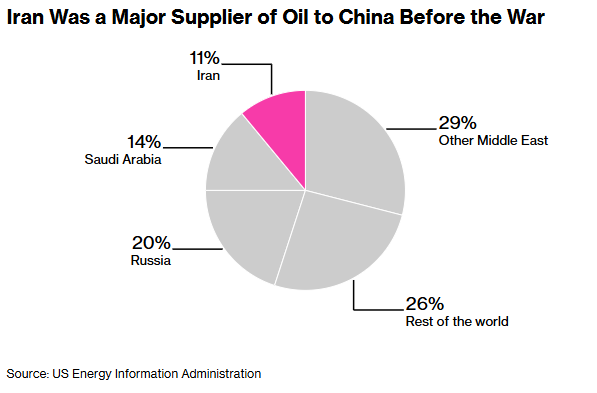
Crude oil remains Iran’s economic lifeline, with pre-blockade exports to China averaging 1.3–2 million barrels per day (bpd) at peaks.
Sea transport via Very Large Crude Carriers (VLCCs) is the gold standard for scale. A typical VLCC hauls 1.9–2.2 million barrels in a single voyage.
Rail tank cars are far smaller. A standard DOT-111 or modern DOT-117 crude tank car carries roughly 600–714 barrels (about 25,000–30,000 gallons). A typical 100- to 110-car unit train might move 60,000–70,000 barrels total.
Even optimistic long-haul configurations rarely exceed 100,000–200,000 barrels per train once weight, route constraints, and safety limits are factored in.
To match the cargo of one VLCC, Iran would need roughly 25–35 such trains. The entire corridor’s current daily throughput — dominated by general containers and non-bulk freight — is nowhere near that level. Experts are blunt: rail “can move strategically meaningful volumes, but it cannot, in the near term, substitute for tankers at scale.”
Loading and unloading infrastructure for bulk crude at both ends is limited, and the route’s bottlenecks (including border crossings and single-track sections) restrict how many specialized oil trains can run daily. Most rail traffic remains containers, petrochemical products, minerals, and high-value goods rather than raw crude.
Bottom line on oil effectiveness: The rail line offers a useful hedge for a few tens of thousands of barrels per day at most — enough to keep some refineries supplied or test markets — but it cannot replace the millions of barrels Iran normally ships by sea. Transit is faster and immune to naval interdiction, yet far more expensive per barrel than tanker rates.
Broader Trade and the “Back Door” Strategy
Beyond oil, the corridor helps Iran import consumer goods, industrial materials, food, electronics, and machinery while exporting non-crude commodities. China remains Tehran’s dominant partner, absorbing the vast majority of its sanctioned energy exports. The rail option reduces dependence on vulnerable maritime chokepoints and shortens supply chains.
Still, analysts note the route provides only limited relief compared with pre-blockade sea volumes. It forms one piece of a multi-pronged evasion strategy that also includes overland routes via Pakistan, Turkey, and the Caspian Sea.
Could Rail Help Resupply the IRGC?
Yes — and this may be the route’s most strategically significant dimension in a conflict scenario.
Freight trains are bidirectional. While oil heads east, China-origin cargo (electronics, dual-use components, machinery, chemicals, and even complete weapon systems) can flow west into Iran without exposing shipments to U.S. naval patrols. U.S. intelligence has flagged Chinese support for Iranian military capabilities, including potential transfers of MANPADS, drone parts, missile components, and other materiel via overland and indirect routes.
Rail’s containerized nature makes it relatively easy to disguise or integrate military-related goods within legitimate commercial flows. Volumes may be modest compared with sea freight, but for high-value, low-volume strategic items — precision guidance kits, advanced electronics, or raw materials for IRGC drone and missile programs — the corridor is highly effective. It is also harder for Western intelligence to monitor or interdict than tanker movements.
In short, while the rail line cannot keep Iran’s full oil revenue flowing at pre-war levels, it can sustain critical supply lines for the IRGC and the broader economy when sea routes are blocked.
Verdict: Valuable Hedge, Not a Game-Changer
The Iran–China rail “back door” is a pragmatic response to maritime pressure. It delivers speed, sanctions resistance, and redundancy for non-bulk trade and select military resupply. For crude oil, however, it remains a niche supplement at best — useful for marginal barrels and price signaling, but no substitute for VLCC-scale maritime logistics.
As the blockade continues, expect Tehran and Beijing to push rail volumes higher, invest in loading terminals, and explore hybrid road-rail options. The corridor won’t break the blockade single-handedly, but it keeps a vital lifeline open — and gives the IRGC breathing room to rearm.
Appendix: Sources and Links
- Bloomberg (May 8, 2026): “Iran Turns to China Rail Link to Try to Bypass US Blockade” – https://www.bloomberg.com/news/articles/2026-05-08/iran-turns-to-china-rail-link-to-try-to-bypass-us-blockade?srnd=phx-industries-energy
- RFE/RL: “Iran Is Using Alternative Routes To Bypass US Naval Blockade” – https://www.rferl.org/a/iran-pakistan-turkey-russia-caspian-china/33751260.html
- EIA: VLCC and tanker capacity data – https://www.eia.gov/todayinenergy/detail.php?id=17991
- Various rail tank car capacity references (AAR, Inside Energy, industry reports) – summarized from 2014–2025 data.
- Additional reporting: Crypto Briefing, Rail Freight, Mehr News, and intelligence assessments on China–Iran military links (CNN, NYT, 2026).
Energy News Beat – Independent analysis based on public sources as of May 2026.