

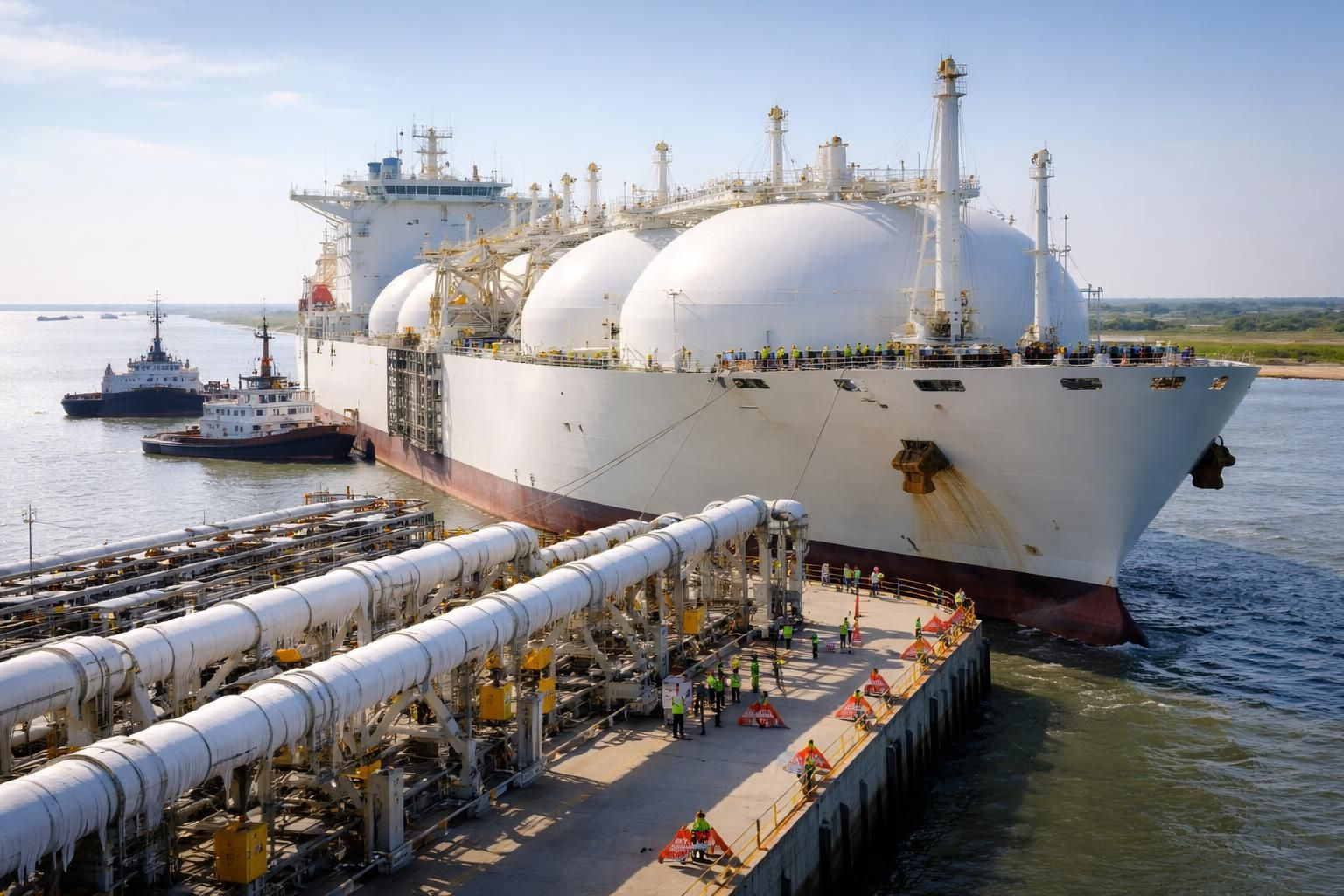
While Goldman Sachs and other analysts project a relatively swift rebound in Gulf oil output once the Strait of Hormuz reopens and the ceasefire holds, the outlook for liquefied natural gas (LNG) markets is markedly more cautious. Roughly 20% of global LNG supply—primarily from Qatar—has been disrupted by the conflict, with physical damage to liquefaction infrastructure creating long-tail recovery challenges that go well beyond simple shut-ins or tanker routing issues. Even as oil production is expected to ramp back within months, LNG faces years of constrained supply, delayed mega-projects, and persistent market tightness.
Qatar, the world’s second-largest LNG exporter, accounts for approximately 20% of global supply. Iranian strikes during the conflict damaged key facilities at Ras Laffan, taking roughly 17% of Qatar’s total capacity (about 12.8 million tonnes per annum) offline for an estimated 2–5 years, according to statements from QatarEnergy executives. Force majeure was declared on affected cargoes, and while some undamaged trains have begun partial restarts post-ceasefire, full operational recovery is projected to stretch into late 2026 or beyond. This stands in sharp contrast to the “precautionary shut-in” narrative applied to much of the oil losses.
Goldman Sachs’ earlier conflict notes acknowledged these LNG-specific headwinds, describing potential “very painful” price spikes for natural gas and warning that the much-anticipated 2027 global LNG supply glut would be meaningfully delayed. The bank highlighted that even with Hormuz reopening, the physical repair timelines at major liquefaction plants would keep the market structurally tight far longer than oil balances suggest.
Why LNG Recovery Will Be More Protracted Than Oil
At Energy News Beat, we have consistently framed both oil and LNG recoveries as far more challenging than many Wall Street base cases allow. For LNG, the hurdles are even steeper:
1. Physical Damage vs. Simple Shut-Ins
Unlike many oil fields that were throttled for precautionary or logistical reasons, Qatar’s Ras Laffan complex suffered direct strikes. Repairing cryogenic equipment, storage tanks, and associated infrastructure is capital-intensive and time-consuming. Industry consultants (Wood Mackenzie, IEA) estimate that even partial restarts will be gradual, with full pre-war rates not returning until 2027–2028 in optimistic scenarios. Historical precedents for LNG plant restarts after major disruptions (e.g., maintenance or weather events) show weeks to months of ramp-up per train—multiplied here by war damage.
2. Delayed Mega-Project Timelines
Qatar’s North Field Expansion (North Field East and North Field South phases) — the largest LNG development in history — has already seen first-cargo timelines pushed back. Pre-conflict schedules targeted significant additional volumes by 2027–2028; post-conflict assessments now point to further slippage due to supply-chain disruptions, higher insurance costs, and labor constraints in the region. This delays the long-awaited global LNG supply wave that was supposed to ease prices in the second half of the decade.
3. Tanker, Insurance, and Logistical Headwinds
Even with Hormuz open, the tanker fleet serving the Gulf has been idled or rerouted for months. Elevated war-risk insurance premiums are expected to linger into late 2026, adding $1–2 per MMBtu to delivered costs for Asian and European buyers. Congestion at loading terminals and reduced fleet availability will create bottlenecks similar to — but longer-lasting than — those affecting crude exports.
4. Global Market Implications
The U.S. has stepped up as the primary swing supplier, with export volumes hitting record levels and filling much of the European and Asian gap. However, this cannot fully offset a sustained 3–4 million tonnes-per-month shortfall from Qatar. Asian buyers (Japan, South Korea, China) have already seen demand destruction from high prices; Europe’s storage is healthy but faces winter risks if recovery slips. Fertilizer and power-generation knock-on effects could add second-order economic pressure globally. Prices spiked dramatically during the height of the conflict; ENB analysis suggests they will remain supported — and more volatile — longer than oil benchmarks.
Energy News Beat’s coverage since the outbreak — including our April 9 piece, “It Will Take Months for the Oil, Gas and LNG Markets to Stabilize” — has emphasized these structural realities. While a stable ceasefire and reopened shipping lanes are unequivocally positive, the combination of damaged liquefaction trains, delayed expansions, and lingering logistical frictions means LNG markets will normalize far more slowly than oil. Investors and buyers should not price in a quick “return to normal”; the supply shock is real, and the recovery path is measured in years, not months.
We will continue tracking tanker movements, QatarEnergy updates, U.S. export data, and analyst revisions for the latest developments.
Appendix: Sources and Links
- Reuters (April 23, 2026): Coverage of Goldman Sachs LNG notes and Qatar recovery timelines – https://www.reuters.com/business/energy/qatar-lng-restarts-partial-post-hormuz-ceasefire-2026-04-23/
- OilPrice.com (April 24, 2026): Related analysis on energy markets post-conflict (oil-focused with LNG mentions) – https://oilprice.com/Latest-Energy-News/World-News/Goldman-Sachs-Sees-Rapid-Oil-Output-Recovery-if-Iran-War-Ends.html
- Energy News Beat (April 9, 2026): “It Will Take Months for the Oil, Gas and LNG Markets to Stabilize” – https://energynewsbeat.com/big-oil-companies/it-will-take-months-for-the-oil-gas-and-lng-markets-to-stabilize/
- Energy News Beat (April 2026 series): Ongoing LNG coverage and second-order impacts – https://energynewsbeat.com/tag/lng/
- Goldman Sachs Research (March 20, 2026): “Iran Conflict: How Long, and How Bad?” (includes LNG section) – https://www.goldmansachs.com/insights/research/iran-conflict-how-long-and-how-bad.pdf
- QatarEnergy Official Statements (April 2026): Ras Laffan damage assessment and repair timelines – https://www.qatarenergy.qa/en/news
- Wood Mackenzie / IEA Reports (Q1–Q2 2026): LNG market outlooks post-conflict – https://www.woodmac.com/ and https://www.iea.org/reports
Energy News Beat delivers independent, on-the-ground energy intelligence. Subscribe for continuing coverage of the Iran conflict’s ripple effects across oil, LNG, and global energy markets.

