


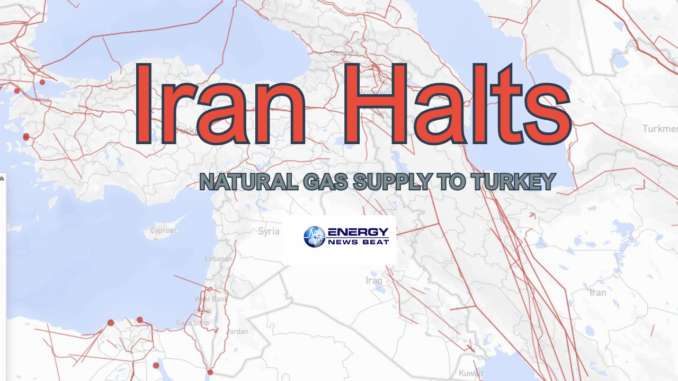
Istanbul — Iran has halted all natural gas exports to Turkey following last week’s Israeli strike on the giant South Pars gas field, Bloomberg reported Monday, citing people familiar with the matter.
The move marks the latest ripple from the March 18 attack on processing facilities at Asaluyeh, Iran’s key onshore hub for the world’s largest natural gas reserve.
The disruption comes at a sensitive time for both countries. Iran’s contract with Turkey for up to 9.6 billion cubic meters (bcm) per year expires in July 2026, and actual deliveries have been running near full capacity in recent years.
How Much Iran Usually Ships — and Turkey’s Share
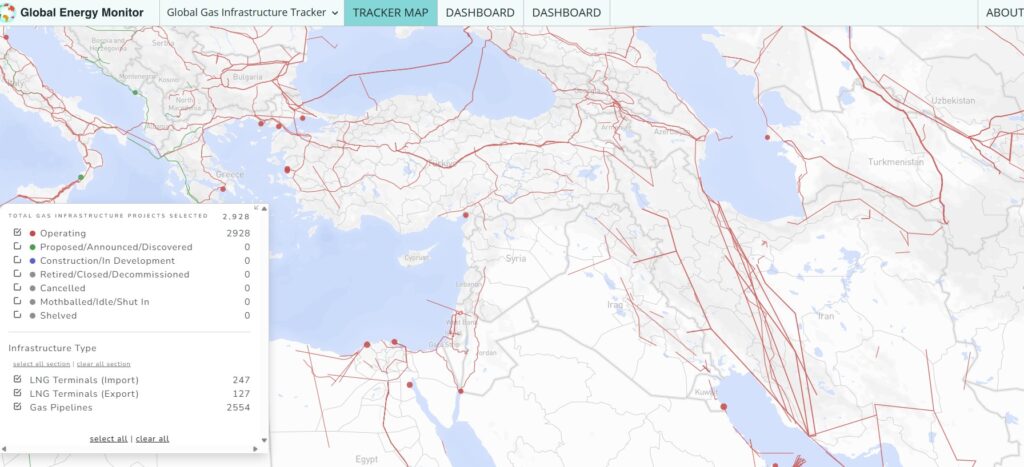
In 2025, Turkey imported 8.17 bcm of Iranian gas via the Tabriz–Ankara pipeline — a 16% increase from 7.04 bcm in 2024 and roughly 13–14% of Turkey’s total natural gas supply.
Turkey’s overall consumption hit a record 60–61 bcm last year, with imports covering the vast majority after modest domestic output from the Black Sea.
For context, Iran’s deliveries to Turkey have fluctuated: 5.4 bcm in 2023 (down sharply because of technical issues and lower Turkish winter demand after the earthquake), but they rebounded strongly in 2024–2025 as Ankara leaned on the pipeline supplier.
How Turkey Uses the Gas — and Whether It Reaches the EU
Turkish authorities and market participants confirm that Iranian pipeline gas is consumed almost entirely inside Turkey. It supports:
Electricity generation: Natural gas-fired plants accounted for roughly 23% of Turkey’s power output in 2025 (down from higher shares in prior years thanks to solar, wind, and hydro growth). Power plants alone consumed 16–17 bcm of gas last year.
Household heating and cooking: Peak winter demand drives the bulk of residential use.
Industry and petrochemicals: A steady baseload for factories and chemical plants.
Turkey does not typically re-export Iranian molecules directly to the European Union. Instead, Ankara is building a regional gas-hub model: it burns Russian and Iranian pipeline gas domestically while ramping up LNG imports (especially U.S. cargoes) and planning to re-export its own Black Sea production plus regasified LNG to southeast Europe via existing interconnectors and the Saros FSRU.
European gas prices have still jumped on the news, reflecting broader fears of supply-chain contagion from the Persian Gulf, but the direct link to EU households via Turkish re-exports of Iranian gas is negligible.
What This Means for Consumers in Turkey and the Region
Turkey: Short-term impact on consumers appears limited. Storage facilities are reported near or at full capacity (6.3 bcm total underground), seasonal demand is declining in late March, and supplies continue flowing from Russia (primary supplier) and Azerbaijan. Energy Minister Alparslan Bayraktar has repeatedly stated there is “no gas supply problem.”
If the halt drags on, however, Turkey will likely accelerate spot LNG purchases and possibly draw down storage, pushing wholesale prices higher. That could translate to modestly elevated electricity and heating bills for households and higher input costs for industry — but no blackouts or forced rationing are expected.
Broader region: The strike has already triggered power shortages elsewhere. Iraq lost roughly 3,100 megawatts of generation capacity when Iran diverted gas for domestic use — a painful hit for a neighbor that relies on Iranian supply for about one-third of its electricity.
European benchmark prices have risen sharply amid uncertainty.
Iran’s Power Generation Losses from the Strike
South Pars supplies about 70% of Iran’s total natural gas production and underpins the vast majority of its domestic energy needs — from power plants to home heating and petrochemical complexes.
The field’s output feeds roughly 80% of the country’s electricity generation capacity, which is overwhelmingly gas-fired.
The Israeli strike targeted treatment facilities linked to phases 3–6 at Asaluyeh. Iranian officials confirmed several plants were taken offline to contain fires; two refineries with a combined processing capacity of around 100 million cubic meters per day were affected, equivalent to roughly 12–14% of South Pars daily throughput.
Exact megawatt losses remain undisclosed, but analysts say the disruption is already forcing Tehran to prioritize domestic consumption, worsening chronic power shortages and blackouts across Iranian cities and industrial zones.
How Turkey Is Likely to React
Ankara’s response will be pragmatic and market-driven:Immediate: Draw on storage and maintain flows from Russia and Azerbaijan.
Medium-term: Ramp up LNG imports (Turkey has expanded FSRU and terminal capacity precisely for such shocks) and lean harder on U.S. and other spot cargoes.
Longer-term: Accelerate Black Sea gas development and renewables/nuclear rollout to reduce dependence on any single pipeline supplier. The expiring 2026 contract with Iran gives Ankara leverage to renegotiate — or simply replace the volume with diversified sources.
Diplomatically, Turkey has condemned attacks on civilian energy infrastructure while keeping channels open with all parties. As a NATO member and aspiring energy hub, Ankara is focused on stability and supply security rather than picking sides.
The South Pars strike and resulting export halt underscore a hard truth in today’s energy markets: geopolitical risk can interrupt flows faster than new infrastructure can be built. For Turkey, diversification is paying off. For Iran, the blow to its most vital energy asset will be felt for months — and possibly years — in the form of tighter domestic power supply and strained export relationships.
Sources: bloomberg.com, rferl.org, thenationalnews.com, reuters.com




Be the first to comment