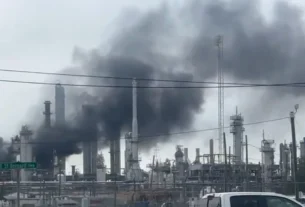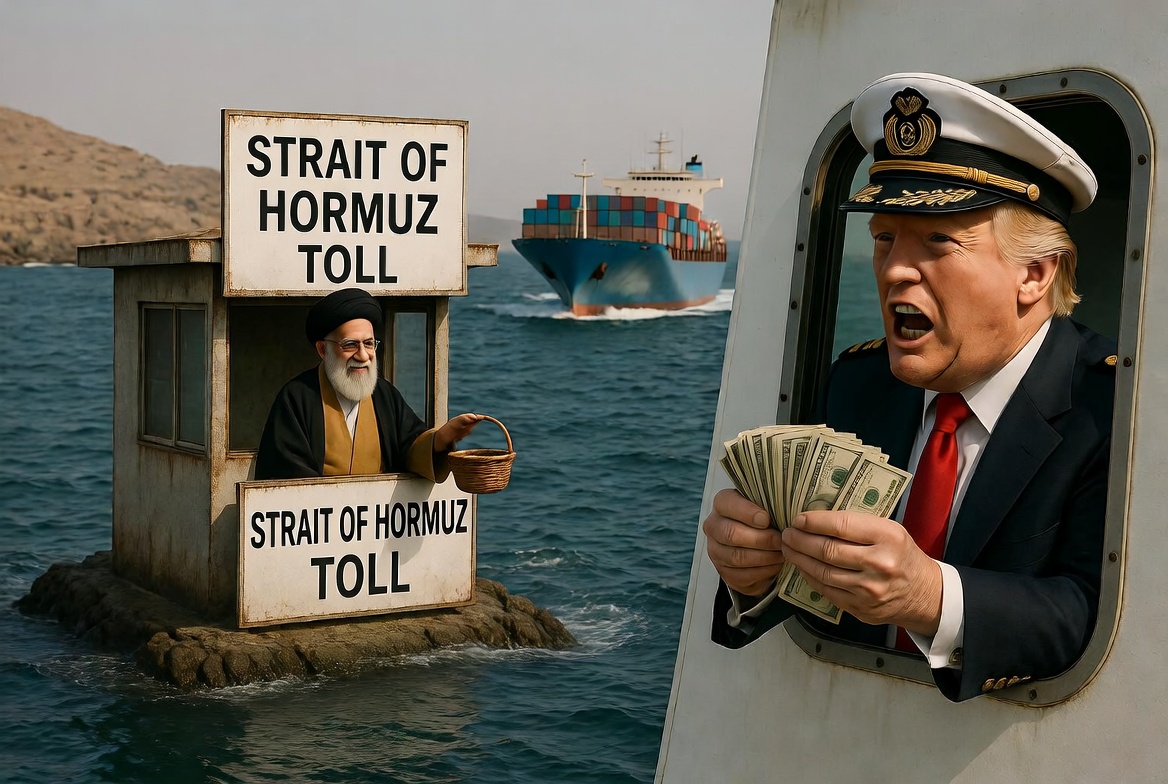
Iran is pushing ahead with legislation to formalize its “management and sovereignty” over the Strait of Hormuz, including provisions for shipping security, navigation and environmental fees, and a regional development fund — moves widely interpreted as establishing a toll-like system and de facto control. A senior Iranian lawmaker, Alireza Salimi, stated that only Iran and Oman can decide on the strait’s management, with Oman having given preliminary approval, and emphasized that “the Strait of Hormuz is more important and more valuable to the Islamic Republic of Iran than dozens of nuclear bombs.” The bill is expected to advance soon for Guardian Council review and parliamentary vote.
This development directly contradicts U.S. demands for unrestricted, toll-free passage through international waters. President Trump has repeatedly insisted the strait must remain open to all, warning Oman and others: “No, the strait’s got to be open to everybody; it’s international waters… or we’ll have to blow ’em up.” Treasury Secretary Scott Bessent reinforced that the U.S. “will not tolerate any effort to impose a tolling system,” threatening sanctions on facilitators.
Far from signaling alignment or progress toward a Trump-brokered deal, Iran’s actions — combined with ongoing IRGC operations — underscore defiance amid fragile ceasefire talks and a tentative (unconfirmed by all parties) 60-day Memorandum of Understanding aimed at reopening the strait and addressing nuclear issues.
Recent IRGC Actions and Missile Activity Show No Positive De-escalation
Despite reported diplomatic progress, the IRGC has shown no restraint. Iran coordinated selective vessel transits (claiming 25–33 ships, including tankers, under its protocols in recent 24-hour periods), attempted mine-laying, and fired drones/missiles near the strait. U.S. forces have responded defensively, sinking mine-layers and striking launch sites around Bandar Abbas.
Iran also conducted significant missile activity: a ballistic missile launch toward a U.S.-related target/base in Kuwait (May 27–28, intercepted and labeled an “egregious ceasefire violation” by CENTCOM), plus multiple barrages including reports of large salvos (with historical context of near-100 missile waves in prior exchanges) targeting Israel and regional assets as recently as Thursday, following Trump’s warnings of further strikes.
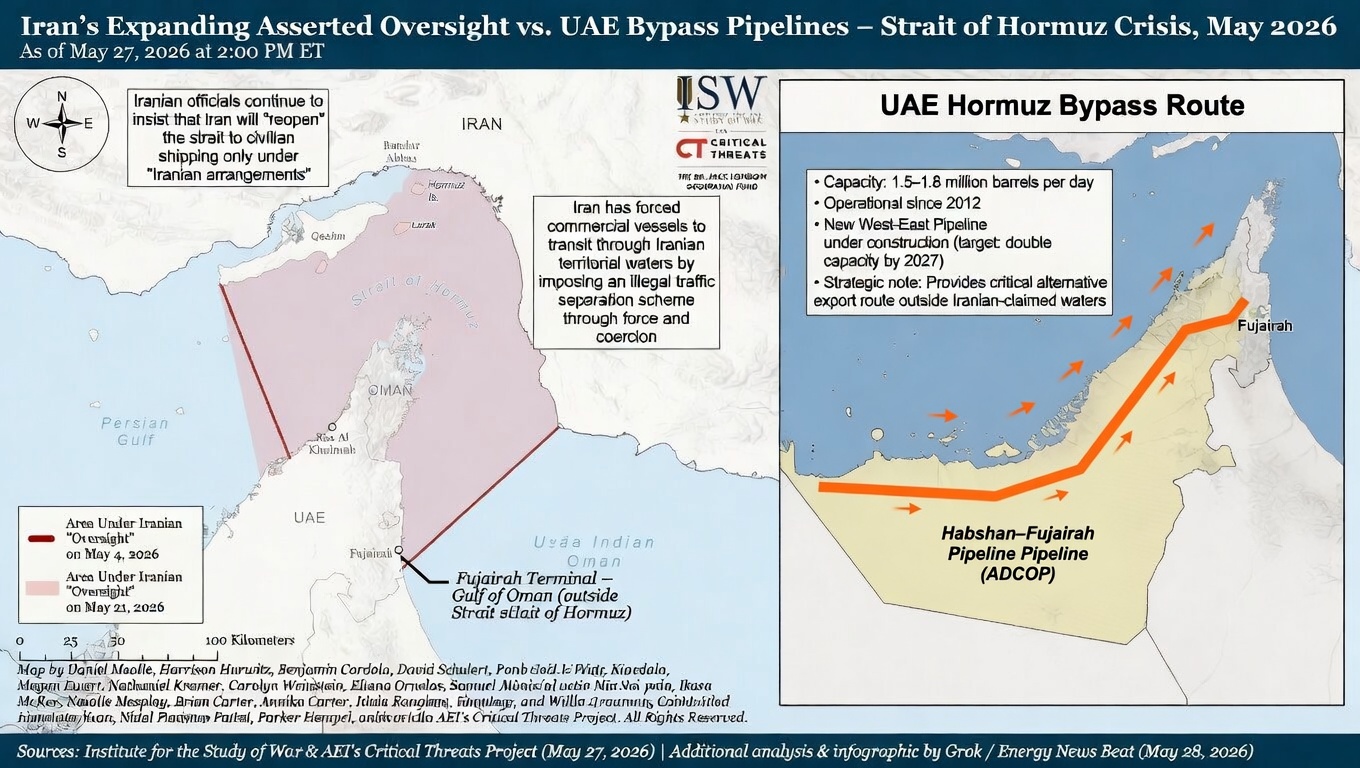
These are not signs of goodwill or a finalized deal — the IRGC continues asserting a “Persian Gulf Strait Authority,” vetting, and permission-based system, often with fees or coordination requirements in practice.
Big Oil Executives Highlight Real-World Impacts and Bypass Momentum
Chevron Chairman & CEO Mike Wirth (interviewed May 29) confirmed multiple vessel attacks this week (some unreported), with traffic through the strait now at just 10–20% of pre-conflict levels. Hundreds of ships and tens of thousands of crew remain stranded. Chevron’s chartered vessels in the Gulf will not pay any Iranian-imposed tolls, aligning with U.S. freedom-of-navigation policy. Wirth noted accelerating bypass infrastructure: UAE’s Fujairah project ~50% complete for overland routing to the Gulf of Oman/Red Sea; Saudi Arabia’s East-West pipeline at full 7 million bpd capacity rerouting to Yanbu; plus emerging Iraq/Kuwait-to-Mediterranean options. Physical shortages are already hitting Asia (rationing, shortened weeks), with U.S. distillate inventories at 2003 lows amid record exports.
ExxonMobil and Chevron leaders (Neil Chapman, Mike Wirth, Darren Woods) warned at recent conferences that Dated Brent could spike to $140–$160 within weeks as global inventories hit critically low levels after the largest supply disruption in history (~20% of seaborne crude blocked since late February, drawing ~4 mbpd, over 1 billion barrels impacted). Futures lag physical reality; upward pressure will intensify in June–July peak demand season, even if a deal emerges, because confidence, insurance, and logistics will take months to restore.
How Investors and Consumers Should Really Take the News
Investors: Treat this as elevated near-term risk, not resolution. No confirmed deal + IRGC aggression = continued supply tightness and volatility. Energy majors (Exxon, Chevron, etc.) stand to benefit from high realized prices and production growth (Chevron eyes 7–10% this year vs. 1% global demand), but prepare for a potential post-reopening glut. Hedge portfolios accordingly; watch physical premiums and inventory data over paper markets. Diversified exposure to midstream/pipelines and bypass projects (Saudi/UAE) looks strategically smart long-term. Consumers: Brace for higher gasoline, diesel, and jet fuel prices into summer — the physical crunch is real and lagging effects are hitting now. Do not assume quick relief; prolonged uncertainty could mean rationing signals in import-heavy regions and U.S. tightness on distillates. Energy costs will feed broader inflation; budget for it and support policies accelerating domestic production and infrastructure diversification.
With No Deal and No Real Positive Actions from the IRGC — Should We Expect Bombings to Start When Best for the U.S.?
Analysts and market watchers note the pattern: Iran’s moves (legislation, selective control claims, missile/drone provocations) are not de-escalatory. Trump has paused certain escort operations to test diplomacy but maintains the naval blockade and has signaled readiness for stronger action if needed. Timing of any escalated U.S./allied response would logically align with maximum leverage — e.g., when shipping pressure peaks, alliances solidify, or military positioning favors decisive effect without excessive escalation risk. Historical precedent shows such pressure tactics can force compliance, but miscalculation remains a risk in this volatile environment. Markets and energy security hinge on verifiable reopening, not rhetoric.
Bottom line:
Iran’s “traffic management” push, paired with fresh missile activity and IRGC assertions, does not indicate Trump and Tehran are on the same page. Physical oil realities dominate paper optimism. Stay vigilant — the next weeks will test whether diplomacy or decisive enforcement prevails.
- ZeroHedge original: https://www.zerohedge.com/geopolitical/iran-poised-finalize-hormuz-strait-management-plan-brushing-aside-trumps-threats
- ENB Chevron CEO article: https://energynewsbeat.co/big-oil-companies/chevron-ceo-sees-more-pipelines-built-to-bypass-strait-of-hormuz-more-unreported-attacks-in-the-strait-impact-transits/ (May 29, 2026)
- ENB Exxon/Chevron $140–160 warning: https://energynewsbeat.co/big-oil-companies/exxonmobil-and-chevron-executives-warn-of-140-to-160-oil-within-weeks/ (May 29, 2026)
- Additional context: Understanding War Iran Update (May 29/28, 2026); CNN live updates on US/IRGC strikes & Hormuz (May 25–26); Asharq Al-Awsat on Iran missile barrages to Israel (May 30 reporting); CENTCOM statements on Kuwait missile intercept (May 27–28); Reuters, NYT, ISW reports on IRGC control efforts, Persian Gulf Strait Authority, and ceasefire strains; Wikipedia summaries of 2026 events for background only (cross-verified). All facts drawn from public reporting as of May 30, 2026.
Energy News Beat will continue monitoring for verified breakthroughs or escalations.