On Friday, May 29, 2026, the California Air Resources Board (CARB) approved sweeping updates to the state’s Cap-and-Invest program (formerly Cap-and-Trade), extending California’s signature climate initiative through 2045. State regulators framed the changes as a balanced move to meet aggressive greenhouse gas reduction targets while supporting affordability and preventing industry “leakage”—the exodus of major polluters to other states.
Mainstream coverage, including reports mirrored across outlets like MSN, highlighted the program’s continuation alongside concessions such as billions in free allowances for manufacturers and oil refiners to fund decarbonization projects. Environmental groups, however, slammed the moves as a weakening of the program, arguing it hands polluters up to $3.5 billion in free credits and diverts funds from broader climate mitigation efforts.
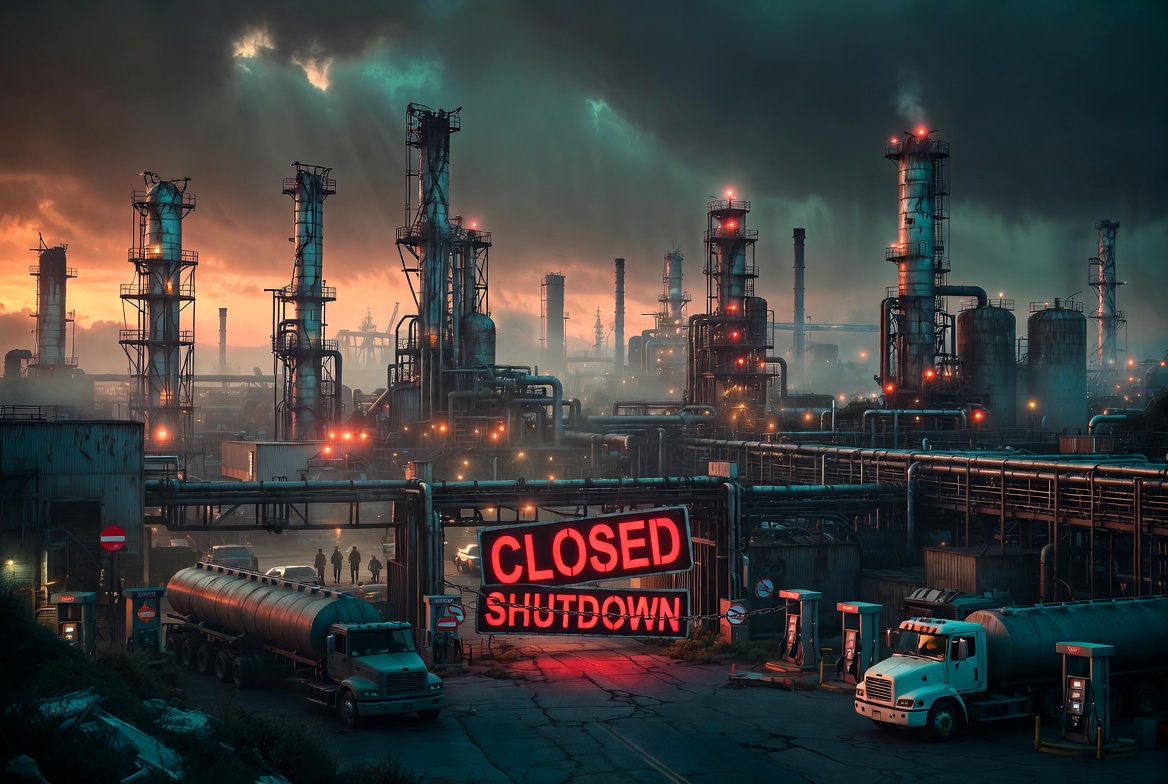
But from the perspective of California’s remaining refiners and energy experts like Ronald Stein—author, engineer, and frequent Energy News Beat guest—these “concessions” are too little, too late. California’s energy policies continue to drive the state’s last refineries toward shutdown, guaranteeing higher energy prices, fuel shortages, and a growing national security nightmare on the West Coast.
Refineries on the Brink: The Warning Letters Ignored
Between February 26 and March 9, 2026—well before Friday’s vote—Chevron, PBF Energy, and Marathon Petroleum (the three companies that together own six of California’s remaining seven operational refineries) fired off unprecedented letters to Governor Gavin Newsom and the California Air Resources Board. The messages were clear and dire: the proposed Cap-and-Invest amendments would impose massive new compliance costs through tighter emissions caps and skyrocketing allowance fees, with no meaningful negotiation from the state.
The companies warned that without changes, they would have no choice but to shutter operations and exit California entirely. Chevron called the amendments a “death knell” for its Richmond and El Segundo refineries. PBF Energy stated the rules would “inevitably drive in-state refining capacity to zero.” Marathon Petroleum echoed the alarm, projecting widespread shutdowns, fuel shortages, economic collapse, and gasoline price spikes exceeding $1 per gallon by 2030.
CARB proceeded anyway. The May 29 vote locked in the amendments despite the warnings. As Stein has repeatedly pointed out in his analyses and Energy News Beat appearances, California’s regulatory onslaught—layered on top of the state’s unique CARB-compliant fuel specifications, declining in-state crude production, and lack of interstate pipelines—has already reduced the state from more than 40 refineries in the 1990s to just seven today. Further closures now appear inevitable.
The Jet Fuel Reality Check: 13 Million Gallons a Day at Risk
California’s 145 airports—including nine international hubs and 30 military installations—consume 13 million gallons of aviation fuel every single day. Many of these facilities have direct pipelines to local refineries, making in-state production critical for a reliable supply
.As the larger refineries operated by Chevron, PBF, and Marathon begin to close or curtail operations, the state will be forced to import even more finished products—jet fuel, diesel, gasoline, and bunker fuel for ships—from foreign refineries. That includes suppliers in Asia and potentially China. Stein warns bluntly: “Having refineries in China in total control of the 13 million gallons of aviation fuel every day to run the State’s 9 international airports and 30 military airports is not a comforting feeling.”This is no longer an abstract policy debate. It is a direct threat to national security. Military bases and commercial aviation cannot afford supply disruptions or reliance on potentially adversarial foreign sources.
Infrastructure Impasse: Ports, Pipelines, and Storage Already Maxed Out
Here is where California’s energy reality collides hardest with its climate ambitions. Even with the current seven refineries operating, the state’s import infrastructure is already stretched to the breaking point.
California is an “energy island.” There are no major pipelines bringing refined products from the rest of the United States. All additional supplies arrive by tanker from foreign refineries or distant domestic sources. Ports, storage terminals, and connecting pipelines are operating at or near 100% capacity. Inventories for jet fuel, gasoline, and diesel have already hit multi-year lows following recent closures (Phillips 66 Wilmington/Carson and Valero Benicia alone removed roughly 17% of capacity in the past year).
Increased reliance on imports will not simply mean higher tanker traffic—it will mean chronic shortages, price spikes, and logistical gridlock. Refiners and midstream operators have warned that storage and pipeline constraints at key import terminals cannot absorb the surge without massive new investment—investment that California’s own policies have discouraged.
The result? Higher prices at the pump and at the airport gate, reduced reliability for trucking and shipping, and a West Coast that becomes a national security vulnerability for the entire country. Domestic military fuel supply chains will be exposed, and everyday Californians will pay the price in their wallets and their daily lives.
The Path Forward: Policy, Not Wishful Thinking
California’s leaders continue to celebrate “climate progress” while ignoring the practical consequences. Ronald Stein and the industry letters make the case plain: these policies are not saving the planet—they are condemning Californians to permanently higher energy costs, fuel insecurity, and strategic risk.
Extending Cap-and-Invest with minor carve-outs does not change the fundamental math. Without a realistic reassessment of refinery viability, pipeline infrastructure, and the state’s isolation from national supply networks, California is choosing energy poverty and vulnerability over energy security and affordability.
Energy News Beat will continue to track these developments closely. The state’s energy future—and America’s West Coast security—hangs in the balance.
I am with Ronald Stien, Professor Mische, Mike Umbro, Katy Grimes, David Blackmon, and Mike Ariza on this one. This is a huge national crisis festering.
There are seven to eight executive orders that would allow the President of the United States to invoke the Defense Production Act to keep refineries open for the military. I am checking whether those are invoked. Would the military be able to “sell” gasoline, diesel, jet fuel, and other products back to the commercial markets? I am not an attorney, so I would think it would be possible, but if not, it would limit the Federal Government’s ability to step in and save California from potentially taking down the entire Western Half of the US.
- CARB Official Release on Cap-and-Invest Updates (May 29, 2026): https://ww2.arb.ca.gov/news/carb-adopts-updates-californias-cap-and-invest-program-support-affordability-and-align-climate
- AP News / MSN coverage of CARB vote: https://www.msn.com/en-us/news/politics/california-extends-its-key-climate-program-but-critics-say-its-being-weakened/ar-AA24oces
- California Globe on refinery warning letters (Chevron, PBF, Marathon): https://californiaglobe.com/fr/marathon-chevron-pbf-warn-governor-newsom-of-widespread-refinery-shutdowns-fuel-shortages-economic-collapse/
- Ronald Stein, “The California Refinery Crisis Is A National Security Risk for America” (Heartland Institute / Eurasia Review / Energy News Beat coverage): https://heartland.org/opinion/the-california-refinery-crisis-is-a-national-security-risk-for-america/ and https://energynewsbeat.co/top-news/california-will-be-a-national-security-risk-for-the-entire-country/
- California Energy Commission / EIA data on refineries, jet fuel demand, and import reliance: https://www.energy.ca.gov/data-reports/energy-almanac/californias-petroleum-market/californias-oil-refineries
- Argus Media on soaring fuel imports and infrastructure constraints: https://www.argusmedia.com/en/news-and-insights/latest-market-news/2819382-california-fuel-imports-soar-after-refinery-closures
Energy News Beat – Unapologetically covering the real story behind America’s energy challenges.