

In a striking comment during a Fox News broadcast this morning, President Donald Trump spoke with Fox News reporter Trey for 20 minutes and outlined a bold U.S. role in securing one of the world’s most critical energy chokepoints. He stated that the United States may take over or act as the “guardian angel” of the Strait of Hormuz if necessary, ensuring open traffic while potentially collecting tolls — and even taking a 20% share of the oil passing through — to cover the costs of providing that security.
Fox News correspondent Trey Yingst directly referenced the president’s remarks, framing them in the context of ongoing U.S.-Iran dynamics and the fragile interim agreement aimed at stabilizing the region.
Context: Recent Deal, Tensions, and the Strait’s Reopening
The comments come amid a rapidly evolving situation following a U.S.-Iran memorandum of understanding (MOU) signed earlier this month. The interim deal included provisions for reopening the Strait of Hormuz to international shipping on a toll-free basis for an initial 60-day period, lifting the U.S. naval blockade of Iranian ports, and advancing talks toward a final nuclear agreement.
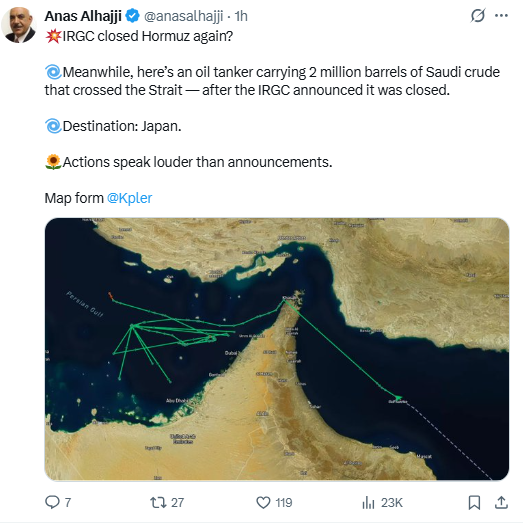
However, tensions flared again over the weekend. Iran’s military command announced the strait was closed, citing alleged ceasefire violations by Israel in Lebanon and U.S. breaches of commitments. U.S. officials, including Central Command, disputed this, stating that merchant traffic continues to flow normally under U.S. monitoring, with dozens of ships transiting daily carrying millions of barrels of oil.
President Trump responded on Truth Social, confirming no tolls would be charged during or immediately after the 60-day ceasefire period “unless they are imposed by and for the United States of America, should the deal not be completed, for services rendered as the Guardian Angel to the countries of the Middle East for purposes of both past, present, and future reimbursement of costs.”
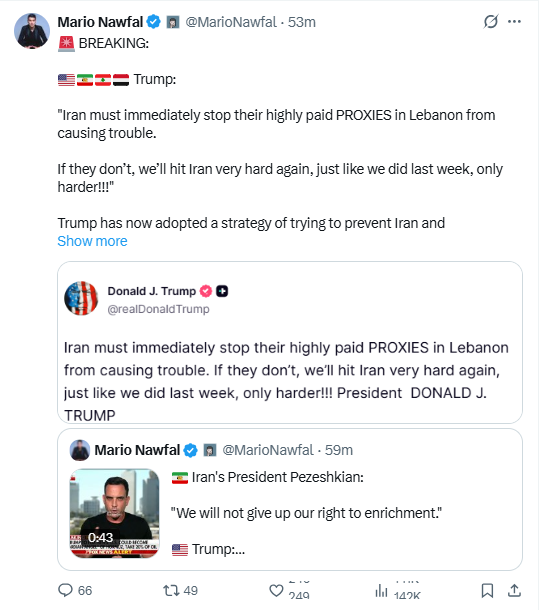
His Fox News remarks expanded on this, explicitly linking potential U.S. oversight or toll collection to the “guardian angel” role and suggesting a direct cut of oil traffic (reported as 20%) as compensation.
Technical-level talks between U.S. and Iranian negotiators (with Qatari and Pakistani mediation) are set to resume in Switzerland, with a 60-day window (extendable) for a comprehensive nuclear accord. Vice President JD Vance has been involved in related discussions.
Why This Matters for Global Energy Markets
The Strait of Hormuz is the world’s most important oil shipping route, through which approximately 20% of global oil and liquefied natural gas typically flows from major producers like Saudi Arabia, Iraq, UAE, Kuwait, and Iran.
Any disruption or new toll regime could significantly impact supply, prices, and energy security for importers in Asia, Europe, and beyond. Recent signals of reopening and progress toward a deal have already contributed to softening oil prices (with Brent crude recently around $80/barrel in some reports), boosting market sentiment.
Trump’s proposal positions the U.S. as the ultimate guarantor of free (or compensated) passage, potentially deterring future Iranian attempts to restrict flow while generating revenue to offset security costs. It builds on earlier U.S. actions like “Project Freedom” to guide ships and insurance support for maritime trade through the region.
Broader Implications and Outlook
Energy Security: A stable, open Strait under strong U.S. oversight would reduce risks of supply shocks that have driven volatility since the conflict escalated earlier in 2026.
Market Reaction: Traders are watching Switzerland’s talks closely. Any clarity on tolls, full reopening, or sanctions relief could further ease prices and support economic growth.
Geopolitical Ripple Effects: The move underscores a transactional U.S. approach — security provided in exchange for payment or strategic gains. It comes as Iran faces pressure on multiple fronts, including Lebanon-related fighting.
Risks: If the interim deal unravels or Iran resists U.S. tolls, renewed tensions or blockades could spike prices again.
President Trump’s comments signal that the U.S. intends to remain deeply involved in protecting this vital artery, framing it not just as a military necessity but as a service deserving compensation — potentially reshaping how global energy transit is secured and funded.
As Stu Turley on the Energy News Beat podcast has stated: “This will only end in peace when there are Venezulan-Style controls placed over Iranian oil and natural gas exports”. The IRGC seems incapable of understanding the word “Peace”.
- Trump Truth Social post (June 20, 2026) on tolls and “Guardian Angel” role: Referenced across Reuters, PBS, Al Jazeera, The Hill.
- Fox News coverage (June 21, 2026) featuring correspondent Trey Yingst quoting Trump on potential U.S. takeover/tolls and 20% oil share.
- PBS NewsHour (June 20, 2026): “Trump threatens to charge U.S. tolls in Strait of Hormuz if final Iran deal not reached in 60 days.”
- Reuters (June 20, 2026): “Trump says no toll on Strait of Hormuz unless US imposes one.”
- NBC News and others on Vance/Switzerland talks.
Key Context Links:
- Details on interim MOU and 60-day toll-free period.
- U.S. Central Command statements on continued traffic.
- Historical data: Strait carries ~20% of global oil (EIA and multiple analyses).
For the latest updates on oil prices, shipping data, or negotiations, stay tuned to Energy News Beat. The situation remains fluid as talks continue in Switzerland.Note: “Tray” in the query refers to Fox News correspondent Trey Yingst. This development highlights how energy geopolitics, security guarantees, and commercial arrangements are intersecting in real time.