What does this mean for the U.S. Diesel and Oil Markets?
That is no longer a theoretical risk. With the Strait of Hormuz still effectively closed to most traffic by the U.S.-Iran war and Houthi forces tightening their grip on Bab el-Mandeb, the kingdom’s last high-volume workaround—the East-West pipeline to Yanbu—is under fire. The combination threatens crude exports and the diesel, gasoline, and jet fuel that refiners turn that crude into.
Goldman Sachs said several months ago that if the Bab el-Mandeb Strait were to be closed, we would see $200 oil. I do not see that happening because of the global refining crisis that has developed. Russia has been shut down and is no longer exporting, and now Saudi Arabia is under fire
This global refinery crisis will be the single largest inflationary issue the Trump Administration faces, without the Fed or the U.S. Treasury able to affect the second-order inflation about to whomp consumers hard.
Jack Prandelli’s posts on September 11 captured the strategic bind: Ras Tanura (about 550,000 bpd) sits on the Gulf side, exposed to Hormuz; Jazan (400,000 bpd) sits on the Red Sea side, exposed to Bab el-Mandeb. Both have taken repeated strikes. The East-West pipeline was built to survive a Hormuz closure, but oil that reaches Yanbu still has to exit through Bab el-Mandeb to reach Asia—Saudi Arabia’s main customer base. If that southern strait is also contested, the remaining options are north through Suez (VLCCs cannot fit) or the long haul around Africa.
We will be catching up with Jack and The Merchant’s News next month when he gets back from meetings. We highly recommend subscribing to his great work.
The pipeline strike and confirmation


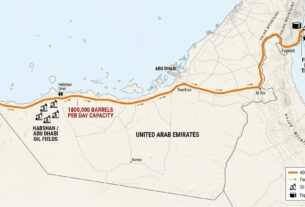
The line—Petroline—runs about 1,200 km from the Eastern Province to Yanbu. Capacity was raised to roughly 7 million bpd after NGL lines were converted to crude. Saudi Arabia has been moving about 5 million bpd west to bypass Hormuz, with a portion feeding west-coast refineries and the rest available for export. An April attack cut about 700,000 bpd; the line was restored within days. A new hit on pumping stations is more serious because those stations, not just the pipe, move the volume.
Houthi advances compound the problem. The group seized Mocha and pushed toward the Hanish Islands and Perim, putting a “direct presence on the approaches” to Bab el-Mandeb, in the UN envoy’s language. That is the second choke point coming live at once.
Unconfirmed X Post

Are tankers still loading at Yanbu?
Yes. Vessel-tracking data from Vortexa and Kpler show Yanbu crude and condensate loadings rebounding in early September after a six-month low in August. Vortexa put September-to-date loadings near 3.7 million bpd versus 3.2 million bpd in August; Kpler’s estimate was lower at about 2.9 million bpd versus 1.5 million bpd in August. Satellite assessments of Yanbu terminals as of September 10 still showed substantial estimated barrels at the South/Muajjiz and North crude terminals. Loadings have continued even after earlier pipeline incidents. The constraint is not that the port is empty; it is that the pipeline feeding it and the strait beyond it are both at risk.
Bab el-Mandeb transits of Yanbu-loaded Saudi crude have already been cut roughly in half at times after Houthi attacks on Saudi-linked shipping, though the corridor has not fully closed.
How much oil and product Saudi Arabia actually ships
Pre-war, Saudi crude exports typically ran near 6–7 million bpd, mostly via Hormuz. August 2026 was a collapse: production reported to OPEC fell 1.9 million bpd to 6.238 million bpd, the lowest since 1990. Tanker tracking put crude exports around 3.2 million bpd, a 13-year low. The IEA assessed August supply even lower, near 6 million bpd, and loadings (including dark shipping) near 3.5 million bpd. First-half 2026 crude export averages were already down versus 2025 (about 5.1 million bpd versus 6.1 million bpd).
Refined products matter as much as crude. Official 2025 statistics showed refined-product production of 991.5 million barrels and exports of more than 541 million barrels. Gasoil/diesel was the largest export stream (247.3 million barrels, 45.7%), followed by gasoline (110.5 million barrels, 20.4%) and fuel oil (75.7 million barrels). West-coast product exports later slipped 1.0 million bpd in July as Jazan went offline and Yanbu output fell. Red Sea product flows of 0.4–0.5 million bpd sit on the same vulnerable corridor as the crude.
Jazan (400,000 bpd) has been repeatedly struck and was shut down from late July, with restart dates slipping after further attacks. Ras Tanura remains the Gulf-side flagship. Together they represent a large share of Saudi refining capacity sitting in the strike zone. Lost refining capacity is not the same as lost crude; it is lost diesel, gasoline, and jet fuel that cannot be replaced overnight.
What this means for the Saudi budget
Oil still funds the state. In 2025, oil revenues were about SAR 606.5 billion, or 54.6% of total government revenue of SAR 1.11 trillion. Non-oil revenue hit a record share near 45%, but oil remained the majority. Q1 2026 oil revenue was SAR 144.7 billion of SAR 261 billion total (about 55%). Q2 oil revenue rose to SAR 185.1 billion, again about 55% of the quarter.
The 2026 budget projected total revenue of SAR 1.147 trillion, with oil estimated at about SAR 590 billion, or 54%. Higher prices help royalties and Aramco dividends, but lower export volumes cut the other way. A sustained hit to Yanbu and west-coast products would pressure both the fiscal accounts and Vision 2030 spending even as non-oil revenue grows.
Global markets and analyst viewsBrent traded in a wide Friday range after Thursday’s surge above $107–$108, settling near $104 while still on track for an 8%+ weekly gain and a close above $100 for the first time since mid-May. WTI hovered near $99–$100. The IEA said Saudi supply hit a three-decade low. Inventories have been drawing for months.
Analysts are split on the next move, not on the risk. UBS’s Giovanni Staunovo flagged near-term upside risk and high volatility, with talk of Hormuz shipping talks only moderately weighing on the tape. PVM’s Tamas Varga asked whether the deficit is structural or transitory and warned that revisiting the April peak near $126 remains possible if inventories keep drawing—while also noting demand destruction at higher prices. RBC’s Helima Croft called a full Saudi-Houthi resumption a catalyst for a high-price scenario. Commerzbank raised its year-end Brent forecast to $85 from $75 and lifted diesel and jet forecasts. The EIA raised its 2026 Brent average to about $91. Kpler raised its 12-month North Sea Dated forecast to $81, arguing the war is now the operating environment, not a spike, and that H2 balances flipped from surplus to a nearly 2 million bpd deficit. Chinese refiners pulling back have so far capped how high prompt prices go.
A confirmed multi-week cut on the East-West line would remove a large slice of the 3–4 million bpd that has been the kingdom’s Hormuz bypass. Rerouting north via SUMED and Suez is physically possible for crude but not for products at the same scale, and empty tanker ballast southbound is a binding constraint. Cape of Good Hope adds weeks and smaller parcels. That is a tighter products market, not just a tighter crude market.
Top refineries, utilization, and whether production can keep up
The world’s largest sites concentrate a lot of the spare flexibility the market does not have:
- Jamnagar complex (Reliance, India): ~1.24–1.4 million bpd, the largest single site
- Paraguana complex (PDVSA, Venezuela): ~940–955k bpd nameplate, but running near 31% of capacity
- SK Energy Ulsan (South Korea): ~840–850k bpd
- GS Caltex Yeosu (South Korea): ~800–840k bpd
- Ruwais (ADNOC, UAE): ~817–922k bpd
- Dangote (Nigeria): 650k bpd, with expansion plans
- Motiva Port Arthur (U.S.): ~656k bpd
- Marathon Garyville (U.S.): ~617k bpd
- ExxonMobil Beaumont (U.S.): ~612k bpd
- Ras Tanura (Saudi Arabia): ~550k bpd
Global utilization was around 80.8% in 2025 and is expected to grind higher toward the low-80s. That average hides the stress. U.S. refineries have been running 96–98% utilization, the busiest stretch since 2018–2019, to capture record diesel cracks. Gulf Coast plants are maxed. India has run above 100% of calendar-day capacity at times. Venezuela cannot fill the gap. Russian runs remain constrained by Ukrainian strikes. Middle East downtime jumped as Jazan and other sites went offline.
Can they keep up with demand?
Not easily on middle distillates. Spring turnarounds were deferred in the U.S., Europe, and India to chase margins. That points to a heavier Q4 maintenance slate even if some Gulf Coast work has been pushed into 2027. The IEA still sees North American October runs stepping down from August peaks. High utilization now means less room when units finally come down for repairs. New capacity (Dangote, Mexican plants, modest additions elsewhere) helps at the margin but does not replace 400,000 bpd of Jazan plus any East-West or Ras Tanura disruption in a market already drawing inventories.
U.S. diesel
U.S. retail diesel hit a record $6.0556 a gallon on September 11, according to AAA—the first print above $6. California approached $8. Prices are up more than 55% since the Iran war began and roughly 63% year over year. Distillate inventories are near multi-decade lows for the season and are forecast to fall below 100 million barrels and stay under the five-year low into 2027. Gulf Coast diesel cracks have printed extreme levels above $100/bbl. Net distillate exports have stayed high even as stocks drop. Heating-oil and harvest demand are about to rise. Analysts warn $7 nationally is possible if crude stays elevated and Russian plus Middle East product supply stays impaired. That flows into freight, food, and construction costs.
Bottom line
Saudi Arabia built a Hormuz bypass. That bypass assumed Bab el-Mandeb would stay open and that pumping stations in the desert would not become targets while refineries on both coasts were already being hit. Crude loadings at Yanbu have not stopped, but volumes are a fraction of pre-war exports; Jazan is offline; product exports from the west coast have sagged; and both maritime exits are contested. Global refiners are running hard, especially in the United States, with little spare capacity and a delayed maintenance bill coming due.
Diesel is the tightest link. The market is pricing a prolonged disruption, not a one-week headline. Whether prices grind higher from $100 or spike again depends on how fast Aramco can restore pumps, whether tankers keep clearing Bab el-Mandeb, and whether any large refinery on the top-ten list comes down harder than planned.
How we can prepare as consumers. I am seeing a global food shortage, and we just need to stock up on things to get us through several months at a time, gradually. But start today. The spike in global diesel prices will only get worse as it impacts transportation, travel, delivery, and food through agriculture.
If you have home heating oil, I recommend buying early and filling up before the price trickles down. This price is about to shoot to the moon as refineries will be picking and choosing what products to “Crack” to deliver to the markets.
To all of our great subscribers, patrons, and sponsors, we can’t do this without you. Please let me know how well supplied and prepared you are for disasters, or if this topic isn’t of interest.
Appendix: Sources and linksX posts referenced
- Jack Prandelli, “Both Of Saudi Arabia’s Chokepoints Are Now Live At Once”:


- Jack Prandelli, “Refining Capacity Is Strategic Power”:

- Rory Johnston confirmation thread quoted in replies:
Pipeline strike and choke points
- CNN: https://www.cnn.com/2026/09/11/politics/saudi-arabian-oil-pipeline-hit-by-projectiles-triggering-fires
- OilPrice.com: https://oilprice.com/Latest-Energy-News/World-News/Drone-Strikes-Hit-Saudi-Arabias-Vital-East-West-Oil-Pipeline.html
- Clash Report: https://clashreport.com/world/articles/saudi-arabia-s-main-hormuz-bypass-possibly-struck-satellite-imagery-6j6180fzzmm
- Newsweek: https://www.newsweek.com/saudi-arabias-east-west-oil-pipeline-hit-by-houthis-photos-appear-to-show-12430311
- Payne Institute: https://payneinstitute.mines.edu/emergency-flaring-detected-along-saudi-arabias-east-west-pipeline/
- Wikipedia East–West Crude Oil Pipeline: https://en.wikipedia.org/wiki/East%E2%80%93West_Crude_Oil_Pipeline
- CNN Business on Bab al-Mandeb: https://www.cnn.com/2026/09/11/business/bab-al-mandeb-strait-houthi-global-economy
- Al-Monitor: https://www.al-monitor.com/originals/2026/09/how-houthi-gains-near-bab-al-mandeb-raise-threat-saudi-oil-flows
Yanbu loadings and flows
- Reuters / Politis: https://en.politis.com.cy/news/world/1032003/hormuz-ship-traffic-drops-as-red-sea-oil-exports-rebound
- Kpler Bab el-Mandeb note: https://www.kpler.com/blog/bab-el-mandeb-saudi-crude-loadings-cut-roughly-in-half-after-houthi-attacks-on-saudi-linked-shipping—-but-the-corridor-stays-open
- Kpler explainer: https://www.kpler.com/blog/explainer-can-saudi-arabia-keep-its-red-sea-oil-exports-flowing-without-bab-el-mandeb
- Red Sea satellite loadings: https://hormuzstraittracker.com/data/red-sea
Saudi production, exports, products
- Economic Times / Bloomberg on 6.2 mbd: https://energy.economictimes.indiatimes.com/news/oil-and-gas/6-2-mbd-saudi-arabia-reports-lowest-oil-exports-since-1990/134041994
- Reuters / IEA: https://www.reuters.com/world/middle-east/saudi-oil-supply-hits-more-than-three-decade-low-after-houthi-attacks-iea-says-2026-09-11/
- Al-Monitor production slump: https://www.al-monitor.com/originals/2026/09/saudi-arabias-oil-production-slumps-lowest-36-years-war-bites
- GASTAT Oil and Gas Statistics 2025 (refined products): via stats.gov.sa Oil and Gas Statistics 2025
- Kpler west-coast products: https://www.kpler.com/blog/saudi-west-coast-product-exports-dip-below-1-0-mbd-as-middle-east-refinery-downtime-escalates
Budget
- Saudi Ministry of Finance Q1 2026 performance reports: https://www.mof.gov.sa/en/financialreport/2026/
- Okaz on 2025 actuals: https://www.okaz.com.sa/economy/na/2237232
- Jadwa Q1 2026 budget statement: https://www.jadwa.com/sites/default/files/2026-06/Q1%202026%20Budget%20statement%20-%20EN.pdf
- Ajel on Q2 2026 revenues: https://english.ajel.sa/business/a9gd0dlb7
Prices and analysts
- Reuters oil wrap: https://www.reuters.com/business/energy/oil-prices-set-end-week-over-100-first-time-nearly-4-months-2026-09-11/
- CNBC: https://www.cnbc.com/2026/09/11/oil-price-today-iran-brent-wti-trump.html
- Kpler forecast note: https://www.kpler.com/blog/higher-floor-hard-ceiling-why-we-have-raised-our-crude-forecast-to-81-bbl
U.S. diesel
- CNN: https://www.cnn.com/2026/09/11/business/6-dollar-diesel-effects
- Bloomberg / Yahoo: https://finance.yahoo.com/energy/articles/us-diesel-prices-rise-past-073731620.html
- EIA STEO petroleum products: https://eia.gov/outlooks/steo/report/petro_prod.php
- Rigzone: https://www.rigzone.com/news/usa_diesel_hits_6_per_gallon_for_first_time_ever-11-sep-2026-184594-article/
Refineries, utilization, turnarounds
- OPEC World Oil Outlook capacity/utilization tables
- US utilization: https://eco3min.fr/en/us-refinery-utilization-rate-dataset/
- Gibson turnaround note: https://www.gibsons.co.uk/report/no-margin-for-error/
- Kpler refining margins H2: https://www.kpler.com/blog/refining-margins-to-remain-supported-through-h2-as-product-supply-lags-crude-flows
- Jazan strike coverage: https://www.usnews.com/news/world/articles/2026-08-08/yemens-houthis-say-they-attacked-saudi-aramco-jazan-refinery-fire-extinguished ; https://oilprice.com/Latest-Energy-News/World-News/Saudi-Aramco-Shuts-400000-Bpd-Refinery-After-Houthi-Strike.html
All figures are as reported by the cited outlets and official releases as of September 11, 2026. Damage assessments and flow rates can change quickly; official Saudi confirmation of pipeline throughput remains limited.