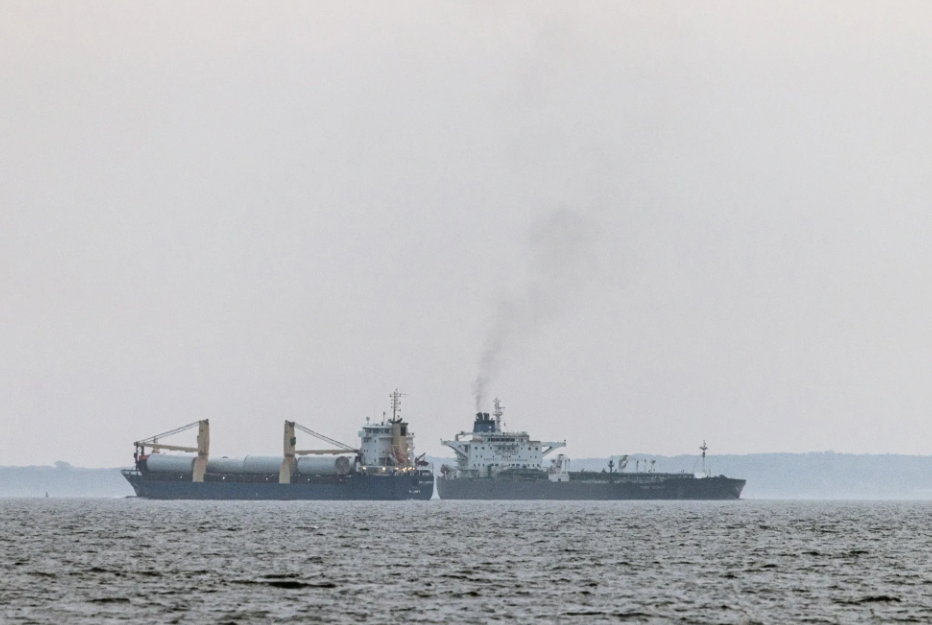
Tanker traffic through the Strait of Hormuz has sunk to its lowest level in more than two months as attacks and threats intensify, leaving the world’s most critical oil chokepoint effectively stalled despite intermittent diplomatic noise from Washington. Ship-tracking data show vessel movements—including commodity carriers—plunged after a brief mid-June to early-July uptick tied to a short-lived U.S.-Iran understanding that has since collapsed. As of early August 2026, traffic remains subdued: owners are switching to dark mode, aborting transits, or simply staying away.
This weekend alone, the VLCC Egypt Prosperity aborted its exit from the Persian Gulf after radio threats and reports of nearby explosions. Iran continues to assert control over vessels in the strait, while Iran-aligned Houthis threaten Saudi-linked shipments through the Red Sea and Bab el-Mandeb. Security analysts describe the combined Gulf and Red Sea threat environment as the worst since the Iran conflict began. Matthew Wright of Kpler told the BBC: “In terms of threat to the trade of crude, we’re at the worst period that we’ve been in since this crisis began.”
Mixed Signals Cloud the Picture
The conflict is generating sharply conflicting narratives. U.S. officials and President Trump have spoken of renewed talks, safe corridors, and de-escalation efforts—language that has periodically knocked oil prices lower (recent sessions saw WTI and Brent drop roughly 5%). Yet Iranian voices reject the framing. Tehran University Professor Mohammad Marandi stated flatly that there has been zero communication between Iran and the United States, no begging for talks, and no secret deals. Iran, he said, maintains absolute supervision over every ship in Hormuz: full monitoring from end to end, mandatory consent, and fees. Oman discussions concern only management of the waterway under Iranian oversight; there will be no independent corridors or dilution of control. Iran also continues strikes and rejects any return to prior nuclear arrangements without broader demands on Yemen, Gaza, and frozen assets.
Meanwhile, Decode Conflict analysis highlights Iran’s parallel strategy: building overland corridors through Iraq, Pakistan, Afghanistan, and toward the Caspian/Russia/China axis. These routes primarily move refined products, diesel, gasoline, and limited crude—generating cash, enabling blending/relabeling as non-Iranian oil, and reducing pure dependence on vulnerable ports. They cannot replace VLCC-scale crude exports to Asia, but they keep revenue flowing and complicate enforcement.
The net result is paralysis at sea while diplomatic messaging diverges: announcements of talks coexist with aborted tanker passages, dark-mode transits, and escalating Houthi activity.
Three Chokepoints Under Pressure
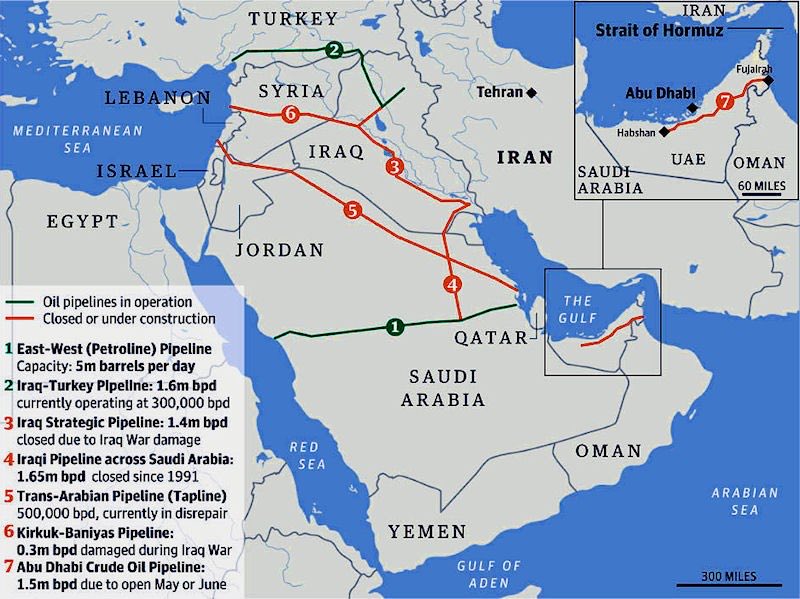
What most observers initially framed as a Hormuz story has expanded. Saudi Arabia shifted exports via its East-West Pipeline to the Red Sea when Hormuz became unreliable. Houthi threats then hit Bab el-Mandeb. A July 30 drone strike near Suez added a third disruption. As Wayne DuPree noted, three major maritime escape routes are now compromised, pushing interest in overland alternatives such as Israel’s proposed Eilat-Ashkelon connection for Saudi crude that would bypass all three waterways.
Analysts warn that simultaneous pressure on Hormuz (historically ~20% of global oil/gas trade), Bab el-Mandeb (~5–6 million b/d of crude/condensate in recent quarters), and Suez/SUMED creates compounding risks. Full or effective closure scenarios have produced forecasts of oil prices climbing above $115–$120, with some Houthi-linked statements invoking $200 in a severe shock. Even without total blockades, the dual (now triple) threat tightens available barrels, raises freight and insurance costs, and lengthens delivery times—especially for Asian importers. The Red Sea previously acted as a relief valve for Hormuz disruptions; its impairment removes that buffer.
The Cape Detour and Mounting Costs
With Bab el-Mandeb under threat, at least six empty Saudi oil tankers recently turned away in the Arabian Sea and headed around the African continent via the Cape of Good Hope—highly unusual for Middle East-loaded vessels. Voyages that once took roughly 24 days can stretch to 56 days. The longer route adds weeks of steaming, burns significantly more fuel, and elevates insurance premiums, with historical analyses of similar Cape detours showing incremental costs approaching or exceeding $1 million per voyage for certain tanker classes (fuel alone can drive the bulk of the increase). Multiple such voyages quickly accumulate into millions in extra expense while also tightening global tanker availability.
Dark-mode transits have surged at Bab el-Mandeb as operators try to slip through, but overall crude flows to Asia via that route have fallen to multi-month lows. Operators face a choice between risking attacks or absorbing the Cape penalty—both of which feed higher delivered costs into the physical market even as paper prices react to every diplomatic headline.
Outlook
Physical market signals remain warning signs that price action has sometimes ignored. Tanker traffic at Hormuz is stalled at a two-month low. Security conditions across the three key chokepoints are deteriorating. Iran’s overland workarounds and insistence on full Hormuz control sit alongside U.S. talk of corridors and peace. Until traffic normalizes and the multi-strait threat recedes, upward pressure on freight, insurance, and ultimately crude prices is the logical consequence of longer voyages and constrained flows. Energy markets are watching whether any genuine safe-lane arrangement materializes—or whether the current standoff simply hardens.
Appendix: Sources and Links
- OilPrice.com – “Hormuz Tanker Traffic Stalls at Two-Month Low as Attacks Escalate” by Charles Kennedy, Aug 4, 2026:
https://oilprice.com/Latest-Energy-News/World-News/Hormuz-Tanker-Traffic-Stalls-at-Two-Month-Low-as-Attacks-Escalate.html - X / Decode Conflict (
@DecodeConflict
) post on Iran’s overland oil corridors, Aug 4, 2026:
https://x.com/DecodeConflict/status/2084616508026868111 - X / Mark (
@Mark4XX
) post summarizing Tehran University Professor Mohammad Marandi’s assessment of zero U.S.-Iran contact and Iranian control of Hormuz, Aug 4, 2026:
https://x.com/Mark4XX/status/2084653034164949151 - X / Wayne DuPree (
@RealWayneDupree
) post on the three chokepoints (Hormuz, Bab el-Mandeb, Suez) and pipeline alternatives, Aug 3, 2026:
https://x.com/RealWayneDupree/status/2084293970327183708 - BBC – “Threat to oil tankers in Middle East worst since start of Iran war, analysts say” (Matthew Wright/Kpler and other analyst quotes):
https://www.bbc.com/news/articles/cjrv0dy2e90o - OilPrice.com – “Six Saudi Oil Tankers Reroute Around Africa to Dodge Houthi Threat” by Tsvetana Paraskova, July 31, 2026:
https://oilprice.com/Latest-Energy-News/World-News/Six-Saudi-Oil-Tankers-Reroute-Around-Africa-to-Dodge-Houthi-Threat.html - Related reporting and analyst commentary on dual/triple chokepoint risks, price scenarios ($115–$120+ or higher), and Cape of Good Hope cost impacts drawn from contemporaneous coverage (Reuters, Al Jazeera, Oil & Gas Journal, gCaptain historical benchmarks on Cape detours adding ~$1 million+ per voyage, EIA chokepoint data, and vessel-tracking summaries via Bloomberg/Kpler referenced in the above).