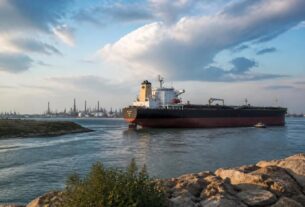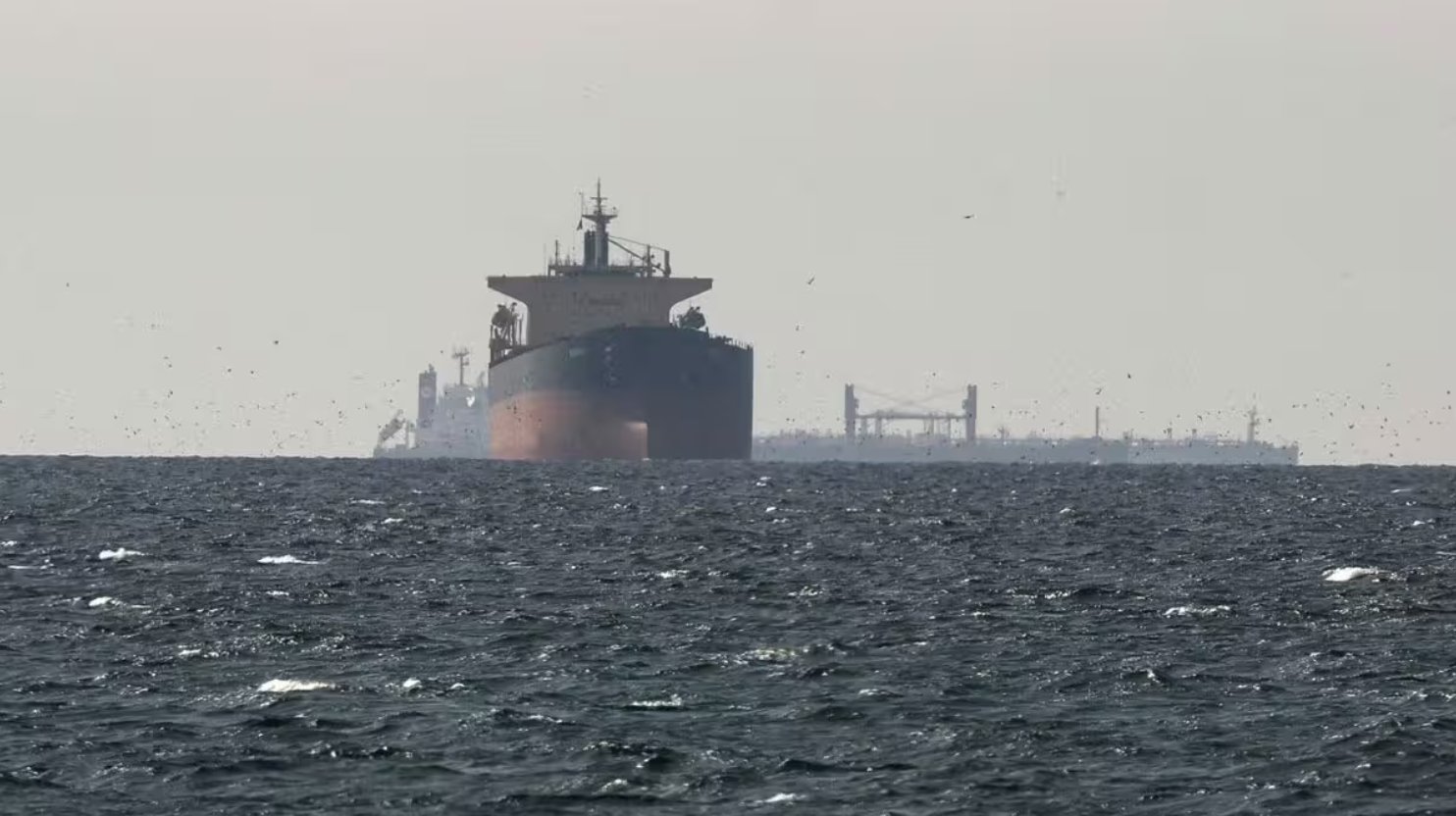
In a stark illustration of mounting pressure on Iran’s oil sector amid the U.S. naval blockade of its ports, Tehran has reactivated a 30-year-old Very Large Crude Carrier (VLCC) that had been languishing in retirement off Kharg Island. The vessel, NASHA (IMO 9079107), built in 1996 and capable of holding approximately 2 million barrels of crude, is now being towed into service as floating storage.
This move, highlighted in real-time analysis by maritime and intelligence observers, is not a bold strategic pivot. It is a desperate stopgap. As one detailed X post by Tony Seruga (@TonySeruga
) put it on April 24, 2026: “Iran just exhumed a rusting 1996-built VLCC from her long retirement off Kharg Island… NASHA is not a strategy. NASHA is what you do when you have run out of strategy.” The post includes satellite and tracking imagery showing the vessel’s slow progress and the broader context of blocked exports.
The Blockade’s Bite: Storage Crisis at Kharg Island
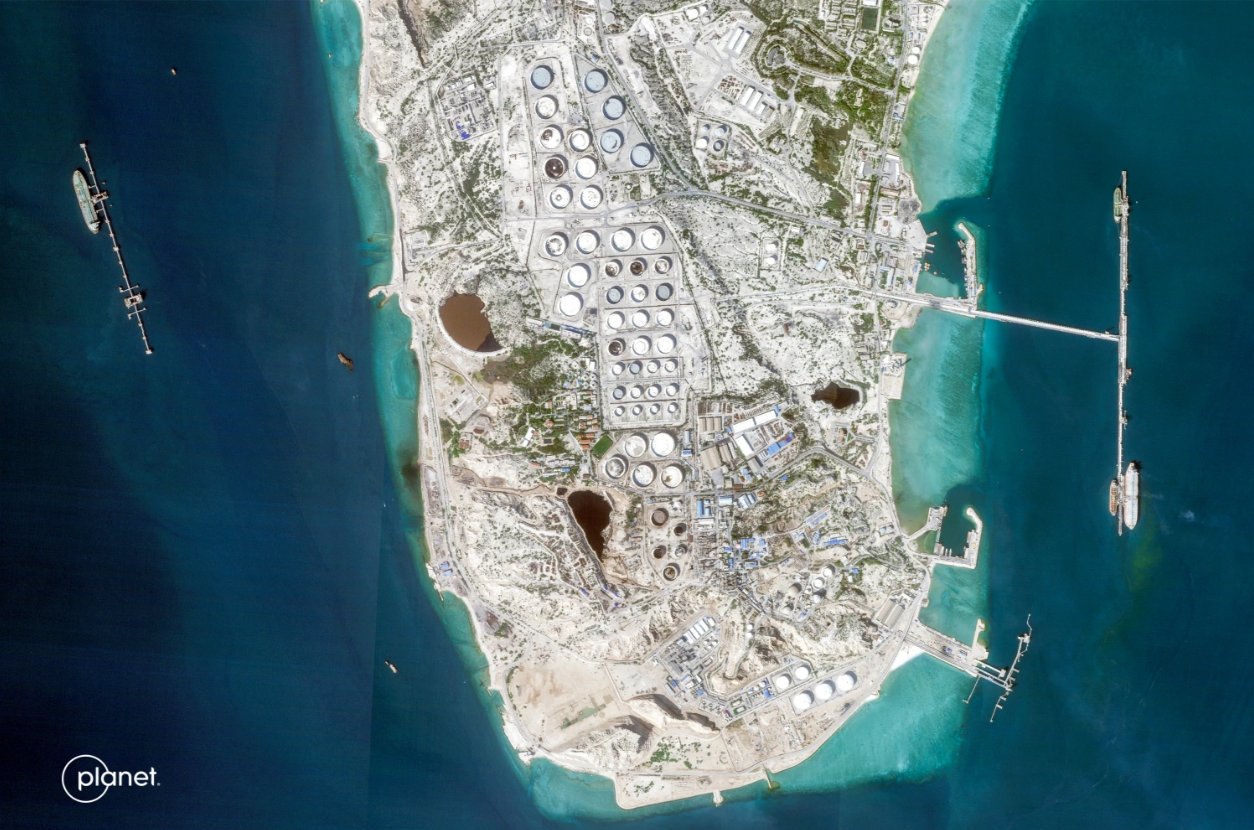
Kharg Island handles roughly 90% of Iran’s crude exports and serves as the country’s primary loading terminal in the Persian Gulf. Prior to the U.S. naval blockade enforced since April 13, 2026, Iran was exporting an average of 1.5–2.15 million barrels per day (bpd) of crude, with recent pre-blockade surges pushing monthly figures higher as Tehran accelerated shipments.
With exports now severely curtailed—U.S. forces have boarded and turned back multiple Iran-linked VLCCs, while ghost-fleet evasion has been limited—net inflows into onshore storage are running at approximately 1.0–1.1 million bpd. Spare onshore storage capacity at Kharg was estimated at around 13 million barrels. At current inflow rates, that buffer fills in roughly 12–13 days.
NASHA buys Iran roughly 48 hours of additional floating storage—equivalent to about two days of unchecked production at current rates. Loading a VLCC at Kharg normally takes 1–2 days under ideal conditions, but the vessel’s age, reactivation status, and the broader logistical strain suggest slower operations.
Running Low: Iran’s Limited Options
Iran’s upstream production has not slowed. The country produces approximately 3.3 million bpd of crude (plus condensates), but with exports choked, the crude has nowhere to go except tanks or tankers.
Options currently available to Tehran appear increasingly narrow:
Ghost fleet evasion: Iran has relied on a shadow fleet of older, often AIS-darkened tankers to reach buyers like China. Since the conflict escalated, dozens of laden tankers have attempted (and some have managed) to slip through the Strait of Hormuz or conduct ship-to-ship transfers off Malaysia. However, U.S. Navy interdictions have disrupted several high-profile voyages, and tracking firms report only limited success in absorbing daily volumes.
Domestic consumption or refining: Iran’s refineries can absorb only a fraction of output. Excess crude cannot simply be “turned off” without consequences.
Diplomatic maneuvering: Ceasefire talks continue, with the market pricing in some form of de-escalation. But as of April 24, the blockade holds.
The regime’s propagandists may frame NASHA as defiance, but the reality is logistical exhaustion.
The Hidden Cost: Shutting In Wells and Reservoir Damage
Once storage is full, Iran faces an unpalatable choice: shut in wells or risk overflows and safety incidents. Prolonged shut-ins in Iran’s high-permeability carbonate reservoirs (such as the Asmari and Bangestan formations) trigger multiple damage mechanisms, according to petroleum engineering literature:
Water coning through fractures
Fines migration choking pore throats
Formation compaction under rising effective stress
Clay swelling from salinity shifts
The result? Permanent capacity loss estimated at 300,000–500,000 bpd, with recovery taking months or years.
These are not easily reversible “valves.” Iran sits on the world’s third-largest proven reserves, yet physics does not negotiate with sanctions or ideology.
Are We Seeing the End of Their Rope?
Not quite the end—but the rope is fraying rapidly. Oil revenue remains the lifeblood of the Iranian regime. With storage saturation imminent (some analysts point to April 26 as a critical date), the pressure is intensifying.
Ghost ships and reactivated relics like NASHA provide temporary relief, but they cannot replace steady exports. The U.S. blockade has already demonstrated limits to shadow-fleet workarounds, and satellite oversight makes large-scale evasion difficult. Whether this forces meaningful concessions or a ceasefire remains to be seen, but the economic and technical constraints are mounting.
How Would the Trump Administration Roll Out Venezuelan-Style Controls—Without Boots on Kharg Island?
The Trump administration has drawn explicit parallels to its Venezuela playbook. In Venezuela, the U.S. imposed a “total and complete blockade” of sanctioned oil tankers, using naval assets for interdictions, seizures in international waters, and enforcement that crippled illicit exports without a full-scale ground occupation.
For Iran, the model translates directly to maritime enforcement:
Naval interdiction at sea: U.S. Navy and allied forces monitor, and board suspect vessels in the Persian Gulf, Arabian Sea, and beyond—exactly as seen with recent boardings of tankers like Tifani, Majestic X, and others. No need for troops on Kharg Island; the choke point is the tanker routes and Strait of Hormuz approaches.
Secondary sanctions and designations: Target insurers, ship owners, and buyers (primarily China) with financial penalties, while using satellite and intelligence to track “dark” transits.
Targeted seizures: As in Venezuela, seize or redirect sanctioned tankers carrying Iranian crude, turning them into floating evidence or liabilities for owners.
No occupation required: The strategy relies on sea power, not land forces. Kharg Island remains Iranian territory; the pressure is applied downstream in the supply chain.
This approach has already shown results in Venezuela and is now being scaled to Iran. It avoids the political and military costs of boots-on-the-ground operations while directly attacking the revenue stream that sustains the regime.
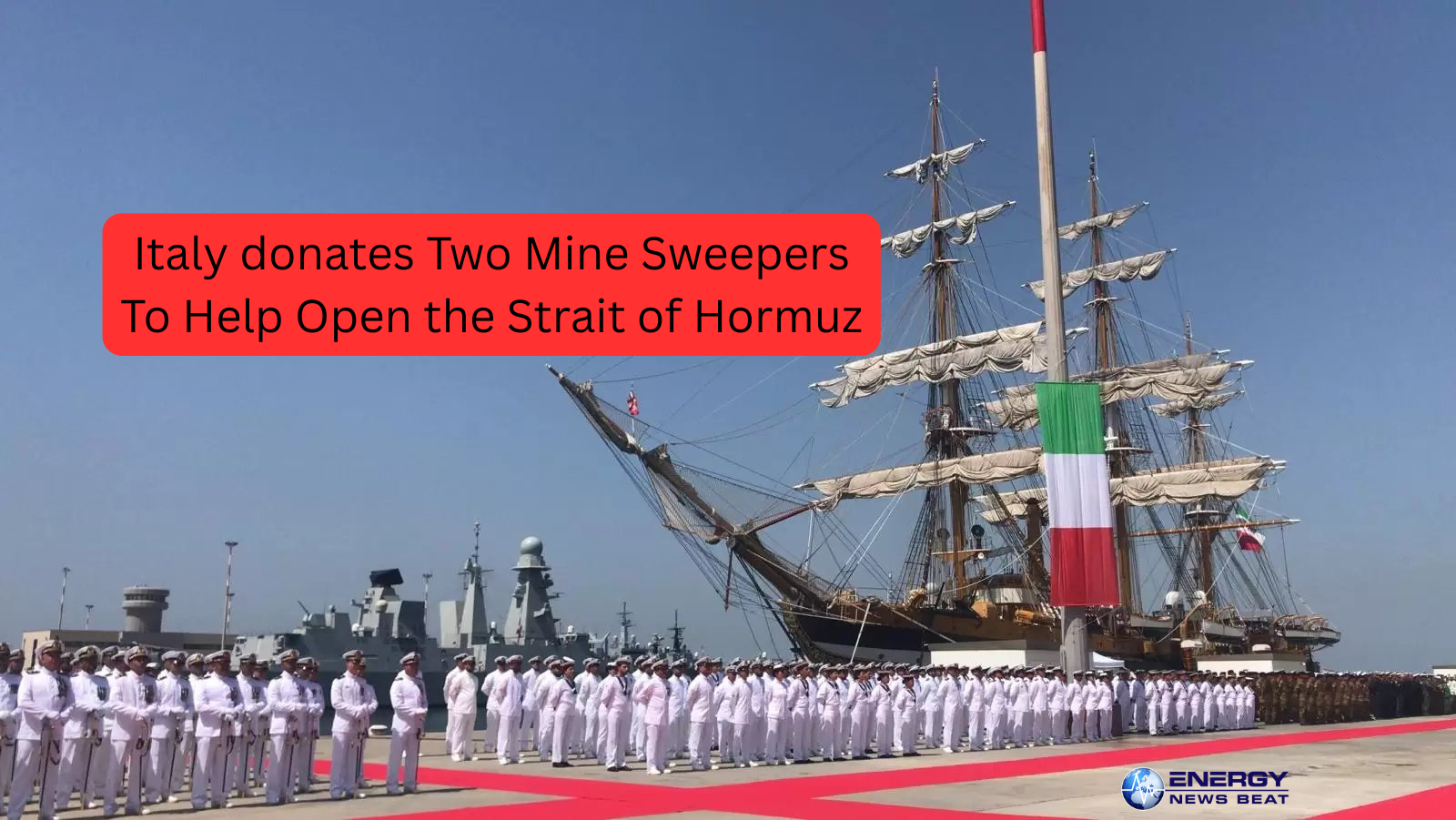
Fear Not: Italy has signaled that it is sending two mine sweepers. Some pictures are just funny.
Bottom Line
NASHA is a visible symbol of desperation: a 30-year-old “corpse” pressed back into service to buy 48 hours before the wells face shutdown. Iran’s options are dwindling as storage fills, ghost-fleet evasion hits limits, and reservoir physics imposes long-term costs. The Trump administration’s Venezuelan-style maritime controls—enforced from the sea, not the shore—offer a template for sustained pressure without territorial entanglement.The clock is ticking. Reservoir physics doesn’t care about ideology. Tick tock.
Appendix: Sources and LinksAll sources referenced in this article are listed below with direct links for transparency and further reading. Primary data draws from real-time maritime tracking, official statements, and independent analysis as of April 24, 2026.
- Tony Seruga X Post (April 24, 2026) – Detailed analysis of NASHA and Kharg situation: https://x.com/TonySeruga/status/2047663022412571093
- MarineTraffic – NASHA vessel details: https://www.marinetraffic.com/en/ais/details/ships/shipid:768205/mmsi:422075400/imo:9079107/vessel:NASHA
- VesselFinder – NASHA specs: https://www.vesselfinder.com/vessels/details/9079107
- Caliber.az – Iran reactivates 30-year-old VLCC: https://caliber.az/en/post/iran-reactivates-30-year-old-vlcc-carrier
- Gulf News – Iran scrambles for storage as Kharg nears capacity: https://gulfnews.com/business/energy/iran-scrambles-to-store-more-oil-as-kharg-island-nears-capacity-under-blockade-pressure-1.500517585
- United Against Nuclear Iran – Iran War Shipping Updates (April 2026): https://www.unitedagainstnucleariran.com/blog/iran-war-shipping-update-april-21-2026
- gCaptain – Iran tankers go dark past U.S. blockade: https://gcaptain.com/iran-tankers-go-dark-to-sail-past-us-blockade-laden-with-oil/
- Wall Street Journal / Vortexa data references via multiple reports (export volumes).
- Financial Times / Scott Bessent statements on storage and shut-ins.
- PBS / AP / Axios – Trump administration Venezuela sanctions easing and Iran parallels: https://www.pbs.org/newshour/world/u-s-eases-sanctions-on-venezuelan-oil-as-trump-seeks-to-boost-world-oil-supply-during-iran-war
- Additional context from Reuters, EIA, and Society of Petroleum Engineers literature on reservoir damage (cited in expert analyses).
Energy News Beat will continue monitoring developments at Kharg Island, NASHA’s movements, and the evolving blockade. Stay tuned for updates.