
Less than a month ago, the dominant story in oil markets was a looming glut. Analysts pointed to recovering tanker traffic through the Strait of Hormuz after a brief U.S.-Iran ceasefire, rising non-OPEC supply, and expectations of softer prices. That narrative has been obliterated. Missiles are flying again, key chokepoints are effectively blocked, refined-product markets are in crisis, and physical tightness is on full display—even as global demand has only contracted by about 5%.
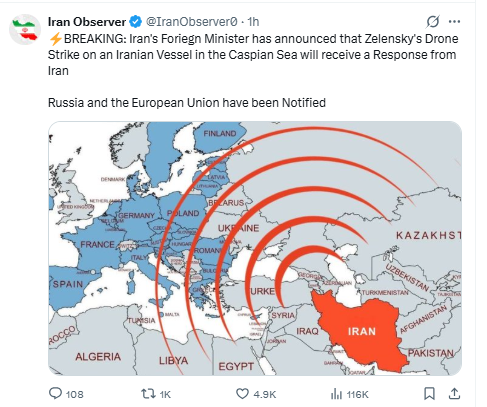
An Unconfirmed X Post stating that Iran will be attacking Ukraine.
Brent crude topped $100 per barrel this week on reports of Houthi strikes against two Saudi tankers in the Bab el-Mandeb Strait. Saudi Arabia had been routing significant volumes through the Red Sea as an alternative to the Iranian-blockaded Strait of Hormuz. Tankers that had been heading toward the Red Sea promptly made U-turns, opting for longer, far more expensive routes around Africa. The Strait of Hormuz, which normally handles roughly 20 million barrels per day, has slowed to a trickle. Bab el-Mandeb had been moving an estimated 4–5 million barrels per day of Saudi crude in recent weeks; that flow now appears nearly shut. On top of this, Ukrainian drone strikes on the Caspian Pipeline Consortium terminus at Novorossiysk on the Black Sea forced Kazakhstan to suspend most of its oil exports—removing another 1.7 million barrels per day.
The refined-products side is even more strained. Middle Eastern refineries have been hit or forced into precautionary shutdowns by the broader conflict, while Ukrainian drones continue to target Russian refining capacity, prompting a temporary Russian diesel export ban. Global refining capacity was already relatively tight; these disruptions leave far fewer mitigation options for gasoline and especially diesel than for crude itself. The result: refining margins and crack spreads have hit all-time highs. The benchmark 3-2-1 crack spread surged above $60–$65 per barrel in mid-July, driven by diesel cracks reaching record levels near $84 per barrel and gasoline cracks at four-year highs. Limited global refining capacity means extra crude barrels cannot quickly translate into additional fuel.
Demand has responded exactly as expected in a tight physical market. IEA data show global crude demand fell close to 5% in the second quarter on the price spike from the Middle East war. Europe’s diesel consumption dropped 5.7% in May; China’s diesel use fell 10% and gasoline 5% in the same month. Commercial inventories are drawing down, and large strategic stock releases earlier in the conflict have depleted buffers. The IEA notes OECD countries still hold over 1 billion barrels of government-controlled emergency stocks, but “there is no room for complacency.” The World Bank has already cut its 2026 global growth forecast to 1.3% from 2.9% last year, with recession risks rising if energy supply chains remain fractured.
Layered on top of the physical constraints is a sharp escalation in shipping and insurance costs. Major marine insurers in the Lloyd’s of London market have notified brokers that they are suspending war-risk coverage for Saudi-linked vessels in the Red Sea—including ships flying other flags or those that have previously called at Saudi ports. Some are preparing to cancel existing cargo insurance. Saudi Arabia has effectively joined the high-risk list alongside the U.S., UK, and Israel. War-risk premiums for southern Red Sea voyages have more than doubled in places, with quotes as high as 3% of vessel value for certain Saudi-linked sailings near Yemeni territory. This hits up to 5 million barrels per day of Saudi Red Sea exports via ports such as Yanbu and forces further costly rerouting or “dark” sailing with AIS disabled.
Tanker freight rates have responded in kind. Longer voyages around the Cape of Good Hope, higher insurance, and nervousness about Black Sea and Red Sea risks have pushed VLCC and other crude tanker earnings sharply higher. Rates that were already elevated from earlier disruptions and sanctions have surged further as effective capacity is removed from the market by risk avoidance. In short, the “glut” exists mainly in outdated spreadsheets; the physical market, freight market, and insurance market are all screaming shortage and risk premium.
Premarket Outlook for Monday, July 27
Markets closed Friday with WTI crude near $89–$90 per barrel (September contract around $89.31 after earlier volatility that saw highs above $92) and Brent in the mid-to-high $90s after the brief foray above $100 earlier in the week. Over the weekend, the combination of confirmed Houthi strikes, the Lloyd’s insurance suspension for Saudi-linked tonnage, continued Black Sea risks, and record refining margins leaves little room for a soft open. Premarket futures are likely to open higher on any fresh headlines of tanker diversions, further insurance withdrawals, or additional strikes. The risk skew remains firmly to the upside until clear de-escalation appears on at least one of the three fronts—Hormuz, Bab el-Mandeb, or the Black Sea/Russian refining complex. Demand destruction will intensify if prices push sustainably higher, but the immediate physical and logistical constraints suggest the market remains tight heading into the new week.
The comforting glut story of early summer has been replaced by a multi-front energy stranglehold. Refining capacity shortages, sky-high crack spreads, crippled chokepoints, and now the effective withdrawal of insurance for key Saudi export routes have rewritten the balance sheet. Prices, freights, and margins are reflecting reality, not models.
Appendix: Sources and Links
- Irina Slav, “Oil Market’s Glut Narrative Just Blew Up,” OilPrice.com, July 26, 2026: https://oilprice.com/Energy/Crude-Oil/Oil-Markets-Glut-Narrative-Just-Blew-Up.html
- Related OilPrice reporting on Houthi strikes, Kazakh exports, and prior glut warnings: https://oilprice.com/Latest-Energy-News/World-News/Two-Saudi-Oil-Tankers-Targeted-as-Houthi-Blockade-Disrupts-Red-Sea-Shipping.html; https://oilprice.com/Energy/Crude-Oil/Kazakhstan-Suspends-Major-Oil-Exports-as-Black-Sea-Risks-Escalate.html; https://oilprice.com/Energy/Crude-Oil/Oil-Glut-Calls-May-Be-Getting-Ahead-of-Reality.html
- Marine insurers (Lloyd’s market) suspend war-risk cover for Saudi-linked ships: https://en.ypagency.net/400063; related coverage of premium spikes: https://www.insurancejournal.com/news/international/2026/07/23/878788.htm; https://www.reuters.com/legal/litigation/red-sea-war-insurance-costs-rise-after-houthi-blockade-sources-say-2026-07-20/
- Record crack spreads/refining margins: https://rbnenergy.com/daily-posts/analyst-insight/crack-spreads-soar-record-highs-despite-higher-crude-prices; https://finance.yahoo.com/markets/article/gas-and-diesel-prices-likely-to-stay-elevated-as-oil-refining-margins-hit-a-record-high-194000714.html; https://www.forbes.com/sites/garthfriesen/2026/07/23/refining-stocks-soar-as-crack-spread-hits-record-high-in-2026/
- Refinery hits (Middle East and Russia): https://www.reuters.com/business/energy/iran-ukraine-wars-deliver-worst-hit-years-oil-refining-output-2026-05-13/; Ukrainian strike tallies and ongoing Russian refining impacts
- Latest price references (WTI/Brent closes and ranges around July 24–25): CNBC, Yahoo Finance, Investing.com, MarketWatch, Barchart data for CL and Brent contracts
- Tanker freight and VLCC rate context amid disruptions: Fearnleys/Fearnpulse weekly reports; earlier VLCC strength commentary reflecting longer routes and risk
- IEA demand, stocks, and security comments; World Bank growth revision (as cited in the primary OilPrice article and supporting Reuters/WSJ references therein)