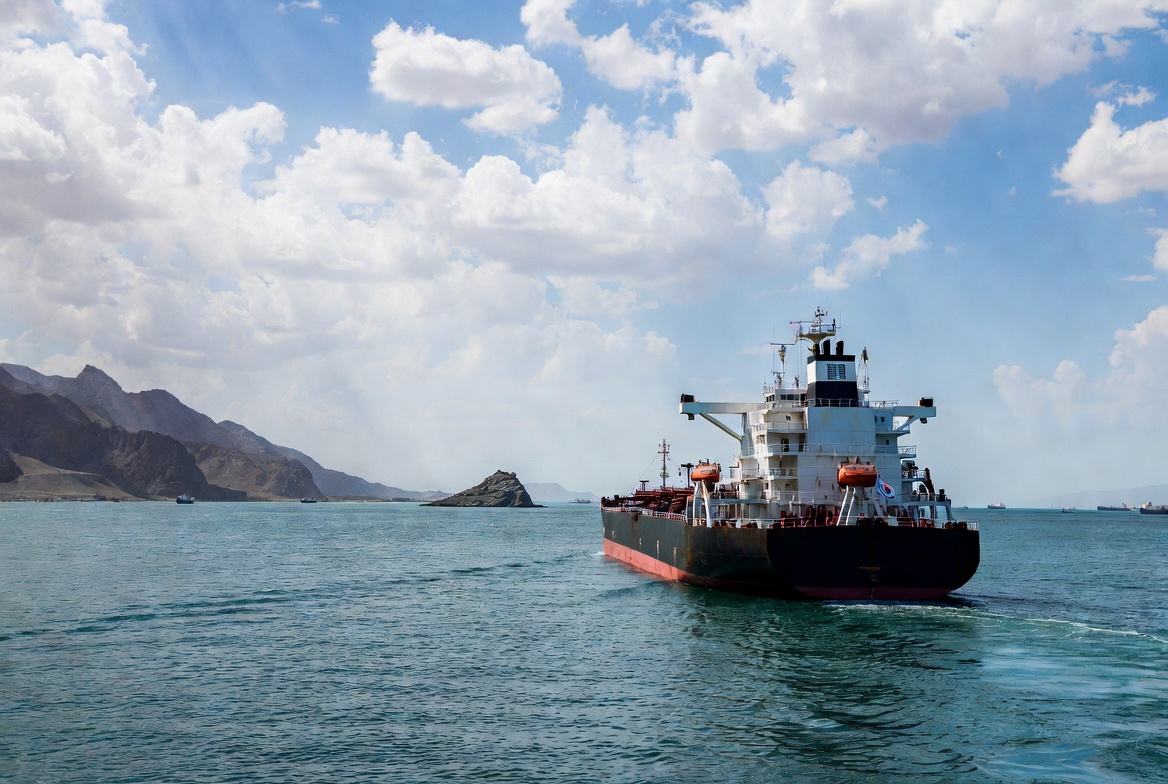
A South Korean-flagged Very Large Crude Carrier (VLCC) is making headlines today as it navigates the strategically vital Strait of Hormuz, marking the first such transit by a vessel from the East Asian nation since the onset of the 2026 Iran-related conflict and maritime disruptions.
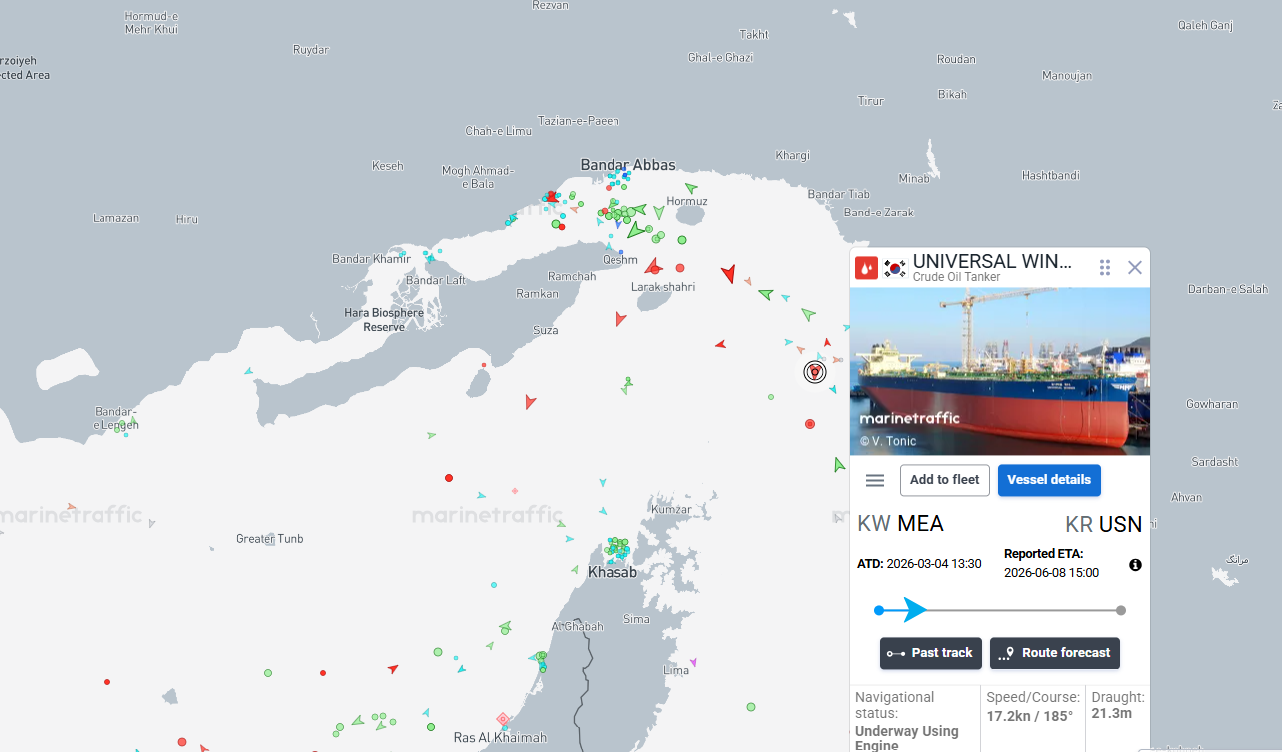
The Universal Winner (IMO 9837602, MMSI 440274000), operated by Seoul-based HMM Co., is currently transiting the strait. Ship-tracking data from MarineTraffic shows the vessel on the eastern side of the waterway, south of Iran’s Larak Island, heading toward the Gulf of Oman en route to Ulsan, South Korea.
It is laden with approximately 2 million barrels of Kuwaiti crude loaded at Mina Al Ahmadi. South Korean Foreign Minister Cho Hyun confirmed during a National Assembly session that the tanker is passing “under an agreement with the Iranian side” via a Tehran-approved route. The vessel began its careful transit on May 19–20 after being stranded for over two months.
This movement follows (or coincides with) two Chinese supertankers also exiting with roughly 4 million barrels of Middle East crude (including Iraqi oil). Together, the three supertankers are delivering about 6 million barrels to Asian markets. Iran’s Islamic Revolutionary Guard Corps (IRGC) Navy reported coordinating security for 26 vessels (tankers and container ships) transiting in the past 24 hours.
Why This Matters: The Strait of Hormuz Remains the World’s Critical Oil Chokepoint
The Strait of Hormuz is the narrow waterway between Iran and Oman through which roughly 20 million barrels per day of crude oil, condensate, and products normally flow — representing about 25% of global seaborne oil trade. Pre-crisis daily traffic typically ranged from 80 to over 130 vessels.
Key pre-crisis traffic patterns (based on 2024–early 2025 data):
Top exporters: Saudi Arabia (~38% of crude/condensate flows), followed by Iraq, Iran, Kuwait, UAE, and Qatar (major LNG exporter).
Cargo types: Primarily crude oil and condensate; significant LNG from Qatar; some oil products and general cargo.
Destinations: Heavily Asia-focused — China, India, Japan, and South Korea accounted for the large majority (~67–69% or more) of flows. Overall, ~82–84% of Hormuz crude/condensate went to Asian markets.
Since the escalation around late February 2026 (following reported US/Israel strikes on Iran), traffic plummeted 70–95% on many days. Dozens of vessels were stranded for months, and attacks on shipping were reported. Iranian exports continued at reduced levels, often via higher-risk or “dark” tankers primarily destined for China.
Recent weeks have shown a modest rebound, with coordinated or Iran-approved transits increasing (e.g., 54 ships May 11–17). Today’s movements by the South Korean and Chinese vessels represent a notable development and potential signal of negotiated or selective easing under IRGC coordination.
Iran’s Retaliation Warnings Add to the Geopolitical Tension
In a parallel development, Iran has warned that any renewed US or Israeli attacks would trigger retaliation “beyond the Middle East.” Iranian officials and the IRGC have signaled asymmetric responses, raising concerns about escalation risks to global energy infrastructure and shipping.
These statements come amid ongoing volatility following the earlier phase of conflict and a reported ceasefire period. Energy markets remain sensitive to any disruption in Hormuz flows, given limited bypass options for most Gulf producers.
US Homeland Security Concerns: Sleeper Cell Risks and Border Encounters
US authorities have long assessed Iran as the primary state sponsor of terrorism, with ongoing plots targeting dissidents and officials on American soil. Amid the current tensions, federal alerts have warned law enforcement about potential encoded communications that could serve as triggers for “sleeper assets.”There has been a documented sharp rise in Iranian nationals encountered at the US southern border in recent years (thousands documented, with a significant increase from prior periods). Some were on security watchlists. “Gotaways” add to the uncertainty. ICE has conducted arrests of Iranian nationals flagged as potential risks.
While politicians and some reports have highlighted risks of Iranian sleeper cells potentially linked to unvetted border crossers or existing networks, there is no public confirmation of Iran systematically “opening new sleeper cells” from recent illegal entries as an organized program. The threat is framed within broader DHS and FBI assessments of Iran’s covert activities, diaspora networks, and potential for retaliation via proxies, lone actors, or pre-positioned assets. Heightened monitoring is underway.
Energy Market Implications
Successful, repeated transits like today’s could ease some supply concerns for Asian refiners (especially South Korea and China) and support a gradual normalization of flows. However, the situation remains fragile and dependent on continued coordination, security assurances, and de-escalation.
Insurance rates, freight costs, and oil price volatility will likely stay elevated until sustained, broad traffic resumes. South Korea, heavily reliant on seaborne crude imports, has a particular interest in safe passage.
Bottom line: The Universal Winner’s transit is a small but symbolically important step. It demonstrates that limited, coordinated movements are possible under current conditions and may foreshadow further easing — provided geopolitical tensions do not reignite.
Energy News Beat will continue monitoring MarineTraffic, official statements, and market data in real time.
- Primary Bloomberg article on the tanker: https://www.bloomberg.com/news/articles/2026-05-20/south-korean-chinese-supertankers-attempt-strait-of-hormuz-exit (and related reporting)
- Bloomberg article on Iran retaliation threats: https://www.bloomberg.com/news/articles/2026-05-20/iran-says-us-attacks-would-trigger-retaliation-beyond-middle-east
- MarineTraffic – Universal Winner (shipid:5835738): https://www.marinetraffic.com/en/ais/home/shipid:5835738/zoom:9 (and details: https://www.marinetraffic.com/en/ais/details/ships/shipid:5835738)
- Additional reporting confirming transit and Cho Hyun statements: Korea JoongAng Daily, Korea Times, Al Arabiya, GCAPtain, and others (May 20, 2026)
- Strait of Hormuz traffic statistics and context: EIA (pre-crisis flows and destinations); Al Jazeera, Argus Media, Windward, Kpler, and Lloyd’s List Intelligence reporting on 2026 crisis reductions and recent rebounds
- IRGC / recent transits: Reports citing IRGC Navy coordination (May 20, 2026)
- Sleeper cell / border concerns: DHS Homeland Threat Assessment; various congressional statements and media reporting on Iranian encounters and alerts (2025–2026)
- General background: Britannica, Statista, Vortexa data references
All information was synthesized from open-source reporting as of May 20, 2026. Real-time ship positions can change; verify directly via MarineTraffic or official channels for latest updates.For the latest energy market analysis, tanker tracking, and geopolitical developments, stay tuned to Energy News Beat.