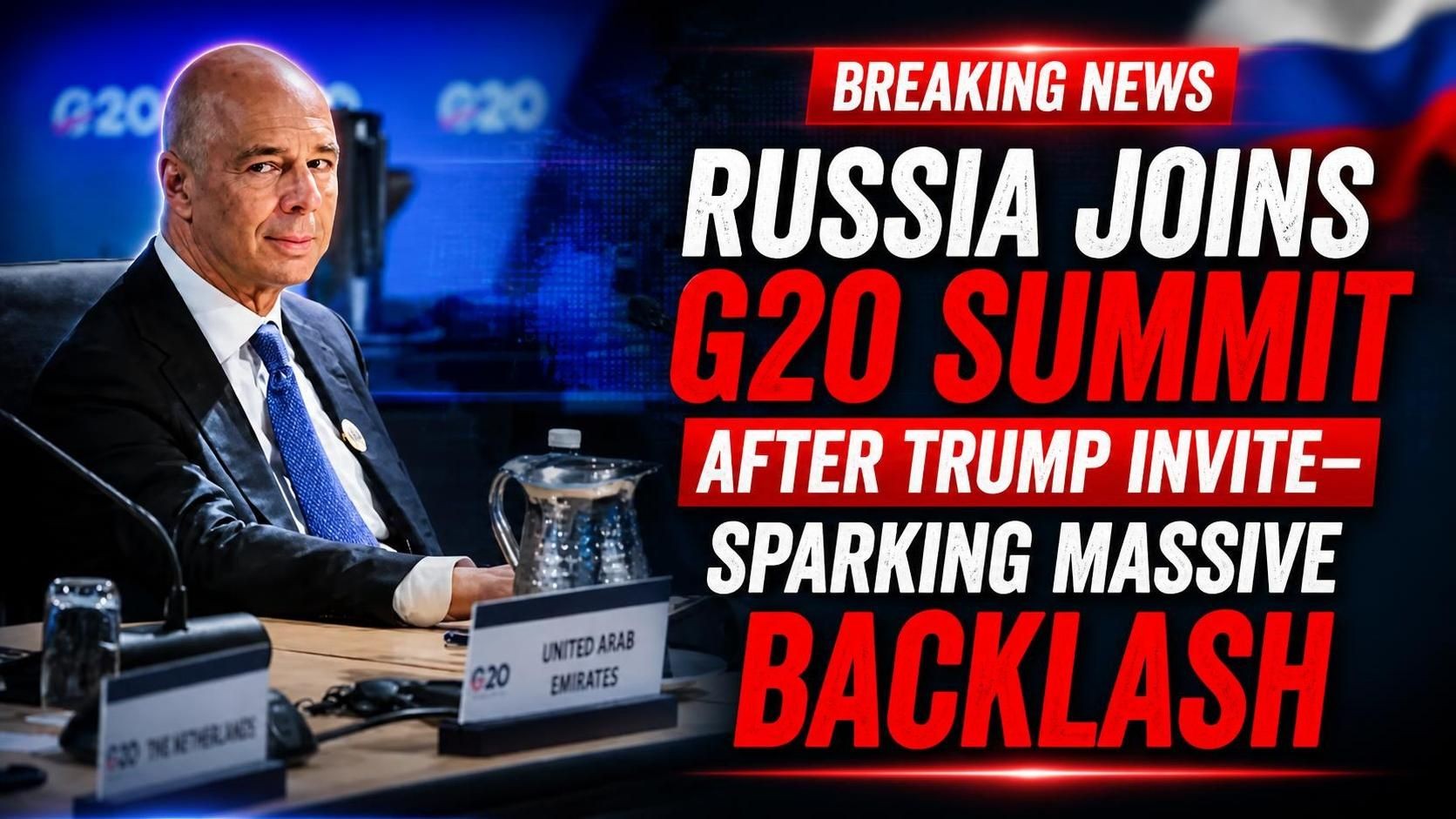
European attendees openly scorned the presence of Russian Finance Minister Anton Siluanov, who attended at the invitation of the Trump administration—the first in-person Russian participation since the 2022 invasion of Ukraine. German Vice Chancellor and Finance Minister Lars Klingbeil called the signal “quite troubling” and insisted “you cannot simply return to normality.” European officials refused to appear in the traditional group photo with Siluanov; the photo was taken without him. U.S. Treasury Secretary Scott Bessent instead posed separately with the Russian official.
The invitation was not announced in advance. Trump later defended it simply: “We like getting along with everybody.” Bessent held a bilateral with Siluanov focused on Trump’s Ukraine peace plan and financial cooperation; U.S. officials made clear there would be no sanctions relief while the war continues. Poland’s finance minister said he does not trust Russia. The EU warned against “normalising” Moscow’s presence.
This was the G20 Finance Ministers and Central Bank Governors meeting (August 31–September 1, 2026) under the U.S. presidency. The leaders’ summit is scheduled for Miami in December. The U.S. agenda deliberately narrowed the focus: strong economic growth, private-sector engagement, productivity, global imbalances, financial literacy, sovereign debt, digital assets, and financial-sector modernization. Regulatory burdens, affordable energy, and new technologies featured prominently. There was no emphasis on net-zero or climate mandates.
Discussions highlighted energy-trade disruptions, safe navigation through the Strait of Hormuz (amid the Iran conflict), and the need for abundant, affordable energy to sustain growth. A chair’s statement backed by all members except China called out “excessive and persistent imbalances” and “non-market policies” that constrain domestic consumption and over-rely on exports—language widely understood as aimed at China’s surplus. China blocked consensus on sections covering energy trade, imbalances, IMF surveillance, and sovereign debt. Private-sector participants joined sessions for the first time.
Canada ranks roughly 10th–11th among G20 country members by nominal GDP (behind the United States, China, Germany, Japan, the United Kingdom, India, France, Italy, and Russia in recent IMF and World Bank figures). It is a G7 member and significant energy producer, yet its relative weight has not grown with the group’s rising Asian members.
Stu Turley of Energy News Beat has repeatedly described new trading blocs coalescing around energy realism and growth: Russia, China, India, Japan, Saudi Arabia, the UAE, and the United States. In contrast, he has argued the UK, EU, and Canada are locked into net-zero policies that drive high energy costs, deindustrialization, and fiscal strain. The Asheville backlash from European attendees illustrated the political resistance to any U.S.–Russia–China alignment that could sideline that path.
GDP and GDP Per Capita: 20-Year Trends
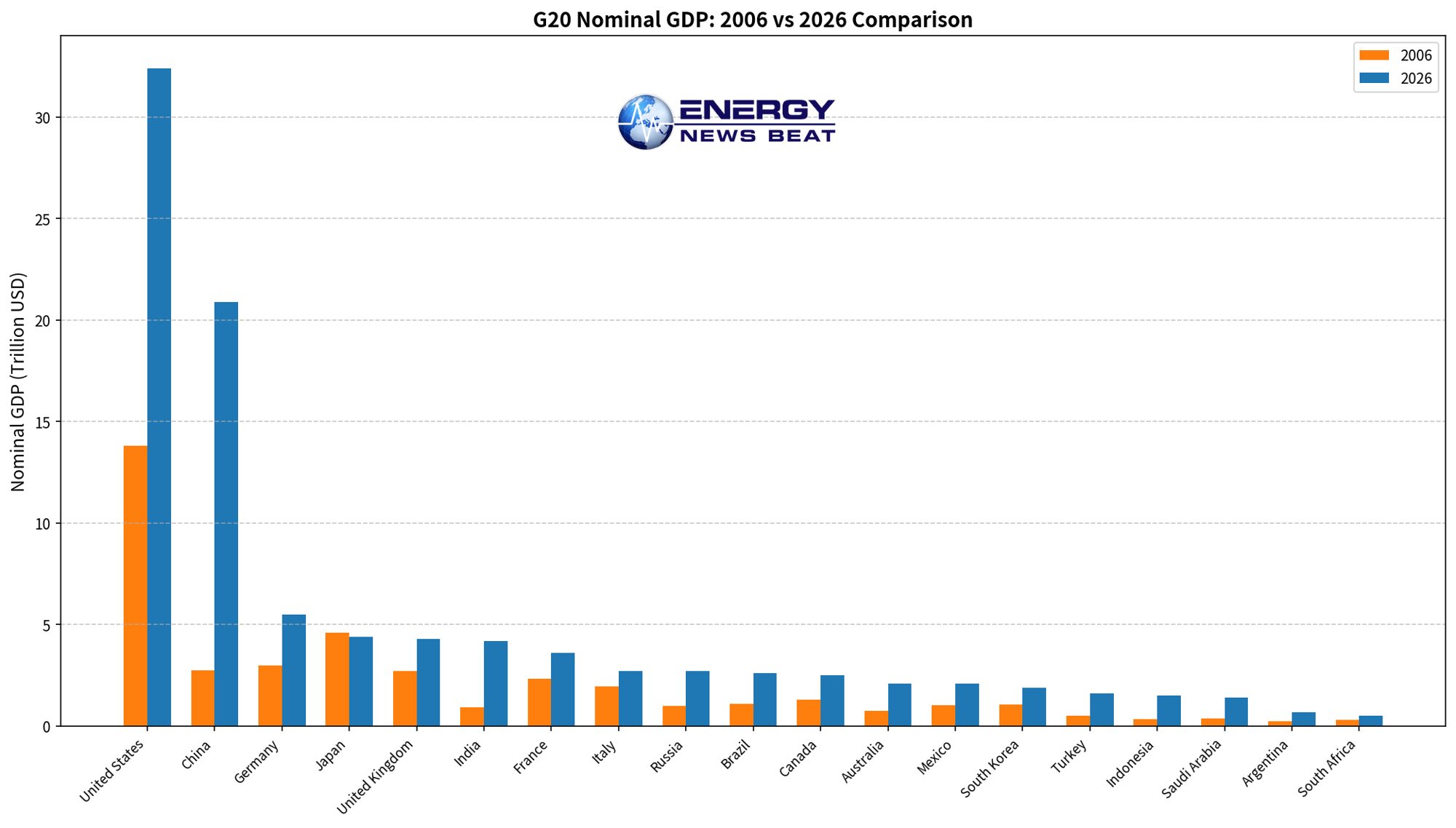
Nominal GDP data (current USD) show a decisive shift toward Asia and energy-abundant economies since 2006.
Approximate 2006 figures (World Bank/IMF-era data): United States $13.8 trillion, Japan $4.6T, Germany $3.0T, China $2.75T, United Kingdom $2.71T, France $2.32T, Italy $1.95T, Canada $1.32T, Brazil $1.11T, South Korea $1.05T, Mexico $1.02T, Russia $0.99T, India $0.94T, Australia $0.75T, Saudi Arabia $0.38T, Indonesia $0.36T, South Africa $0.30T, Argentina $0.23T.
By 2025–2026 estimates: United States $30–32T, China $19–21T, Germany ~$5T, Japan ~$4.4T, United Kingdom ~$4T, India ~$4T, France ~$3.4T, Russia ~$2.5–2.6T, Italy ~$2.5T, Canada ~$2.3–2.5T. China multiplied roughly sevenfold; India more than fourfold; the United States more than doubled. Canada, Germany, France, Italy, and the UK roughly doubled or less—losing relative share as Asia and parts of the energy-exporting world expanded faster. Russia’s figures remain volatile due to sanctions and commodity prices but have recovered in nominal terms.
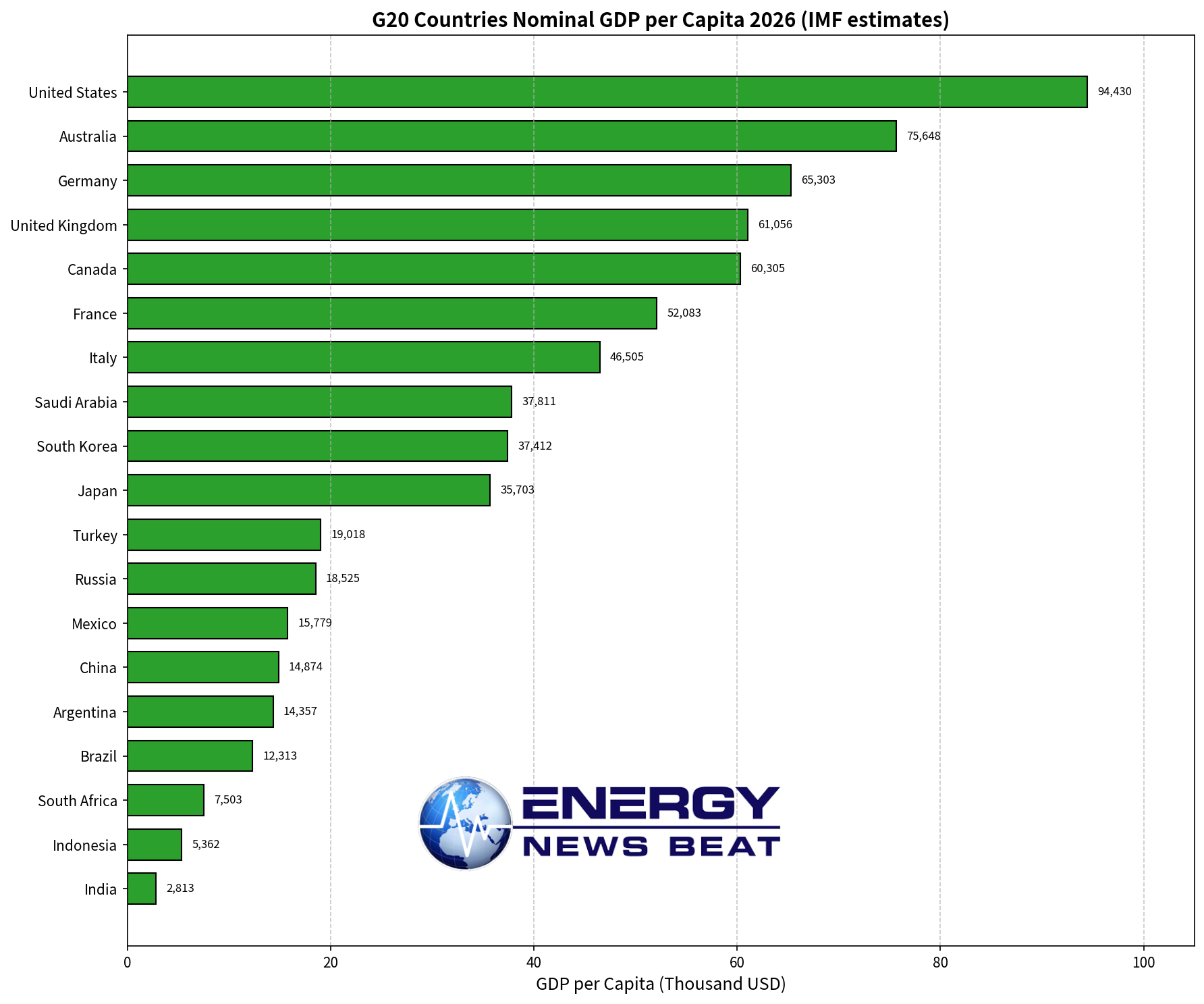
GDP per capita tells a complementary story.
Advanced G20 members started from a high base. The United States has pulled further ahead. Canada, the UK, Germany, and France remain high-income but have seen slower per-capita gains amid high energy prices, regulatory costs, and industrial relocation. China and India started far lower and recorded the steepest percentage increases, lifting hundreds of millions even if absolute levels remain well below Western peers. Energy exporters such as Saudi Arabia have maintained or grown per-capita wealth tied to hydrocarbons. Persistent high energy costs in net-zero-focused jurisdictions have coincided with manufacturing outflows and fiscal pressure—the exact dynamic Turley and others on the Energy News Beat channel have highlighted.
The Asheville meeting did not resolve the Ukraine war or paper over policy differences. It did, however, make the emerging geometry visible: a U.S. host willing to put Russia back at the table, a growth-and-energy agenda that sidelines climate orthodoxy, Chinese resistance on imbalances, and European discomfort at the prospect of a stronger U.S.–Russia–China relationship. Whether that geometry hardens into durable trading blocs will depend on energy prices, peace negotiations, and whether high-cost industrial policies in Europe, the UK, and Canada prove sustainable. The numbers over the last 20 years already show where the momentum has been.
Appendix: Sources and Links
At Energy News Beat, we Make Appendices Great Again
- New Republic: “Russia Joins G20 Summit After Trump Invite—Sparking Massive Backlash” – https://newrepublic.com/post/214936/russia-joins-g20-summit-trump-invite-backlash
- Reuters: “US irks G20 ministers by bringing back Russia, barring journalists” – https://www.reuters.com/world/china/g20-host-us-pushes-growth-agenda-allay-debt-market-concerns-2026-08-31/
- Politico: “Trump welcomes Russia back to the G20. Europe isn’t having it.” – https://www.politico.com/news/2026/08/31/bessent-welcomes-russia-back-to-g20-as-europe-pushes-back-01058296
- U.S. Department of the Treasury: G20 Chair’s Statement, September 1, 2026 – https://home.treasury.gov/news/press-releases/sb0620
- CNBC: “A surprise seat for Russia at the G20 table” – https://www.cnbc.com/2026/09/01/russia-g20-seat.html
- National Review: “Why Did Trump Invite the Russians to the G-20 Summit in Asheville?” – https://www.nationalreview.com/the-morning-jolt/why-did-trump-invite-the-russians-to-the-g-20-summit-in-asheville/
- Energy News Beat / Stu Turley discussions on trading blocs and net-zero divergence (podcast episodes and site coverage) – https://energynewsbeat.co/ and related YouTube/podcast archives referencing Japan, India, Saudi Arabia, Gulf states, United States, Russia versus net-zero jurisdictions
- Trading Economics G20 GDP tables – https://tradingeconomics.com/country-list/gdp
- IMF/World Bank-derived rankings and historical series (2006 and 2025–2026 vintages) compiled via public databases and secondary reports including History Said G20 GDP 2025, WhatIsGDP.com G20 2026, and World Bank indicator pages
- Wikipedia G20 member data and historical GDP lists – https://en.wikipedia.org/wiki/G20
- Additional contemporaneous reporting: Brussels Signal, EUnews, Gulf News, Reuters follow-ups on China blocking consensus and energy/Hormuz language.