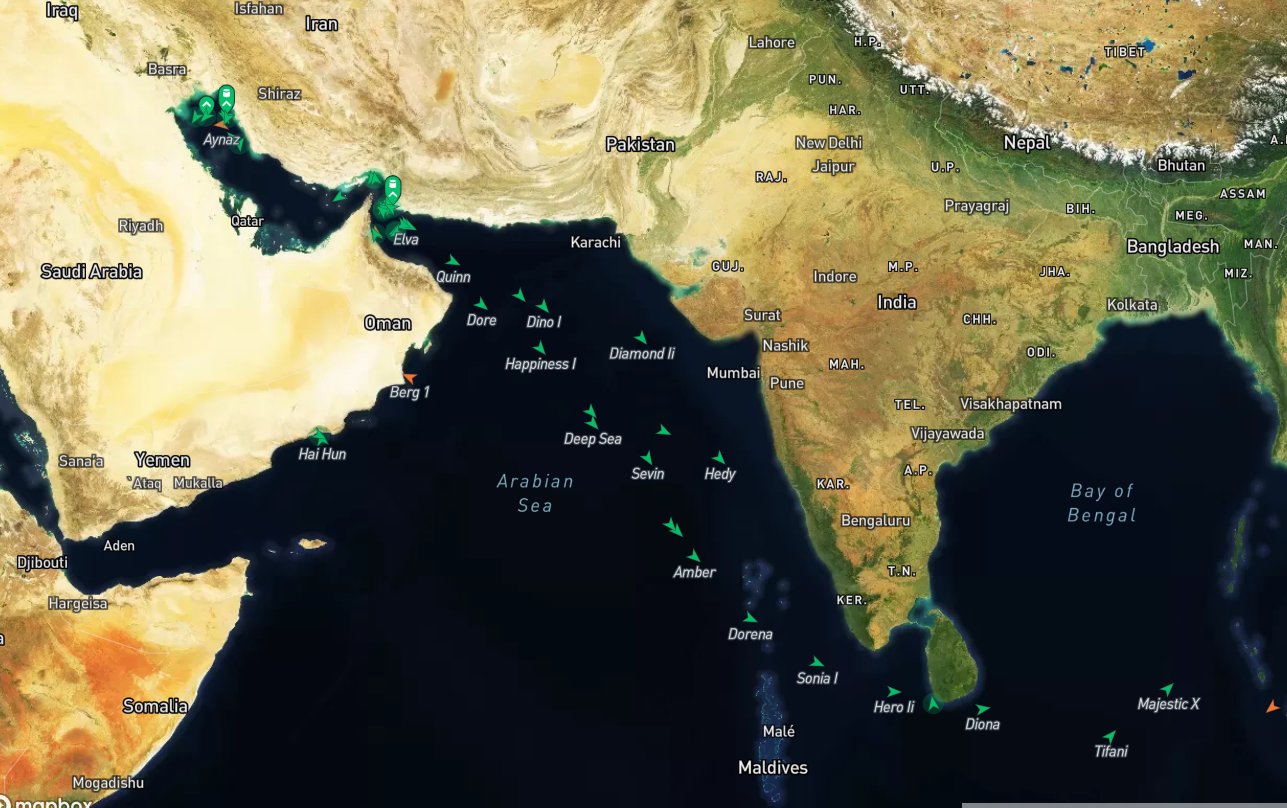
In a striking development reported today by energy expert Dr. Anas Alhajji, more than 30 oil tankers carrying Iranian crude—with their AIS transponders visibly active—are currently heading to Asia. These vessels are loaded with over 50 million barrels of crude oil, according to shipping data from Kpler.
This visible convoy marks a significant shift following the recent U.S.-Iran preliminary agreement and the associated sanctions relief.
The Shipment and Its Context
The tankers, tracked openly rather than operating in the traditional “ghost fleet” mode used to evade sanctions, represent one of the largest single movements of Iranian crude in recent months. The map shared by Alhajji (sourced from Kpler) shows their eastward trajectory toward Asian markets.
This comes shortly after a fragile ceasefire and memorandum of understanding (MoU) between the United States and Iran, signed around June 17, 2026, which included commitments to reopen the Strait of Hormuz and ease restrictions on Iranian oil flows.
Revenue Potential for Iran
At current market levels, this single shipment could generate substantial revenue for Iran.
Volume: Over 50 million barrels.
Current pricing: Brent crude trades around $78 per barrel (as of June 22–23, 2026). Iranian grades (e.g., Iran Heavy ~$75–76/bbl and Iran Light ~$77–78/bbl in recent assessments) are now trading much closer to benchmarks.
With the new waivers removing many previous barriers, Iranian oil can access broader markets and fetch prices nearer to global benchmarks (minimal or no deep discount in the current environment).
Estimated gross revenue: Approximately $3.75–3.9 billion for the 50+ million barrels at realized prices around $75–78/bbl.
This figure represents a major windfall for Tehran, whose oil revenues have been severely constrained by the earlier naval blockade and sanctions during the 2026 conflict. Ongoing exports under the waiver framework could multiply this impact significantly in the coming weeks and months.
U.S. Treasury Sanctions Waiver on Iranian Oil
The movement is enabled by recent U.S. policy changes. As part of the preliminary U.S.-Iran deal/MoU:
The U.S. Treasury has issued a 60-day general license/waiver (effective through approximately August 21, 2026) authorizing the production, delivery, and sale of Iranian crude oil, petroleum products, and derivatives.
This includes associated services such as banking transactions, insurance, and transportation.
The waiver is explicitly tied to progress on issues like IAEA nuclear inspections, reopening the Strait of Hormuz for safe transit, and broader de-escalation talks. A full termination of sanctions is envisioned in a final agreement to be negotiated over the 60-day period.
This temporary relief allows Iranian oil to move more openly and efficiently, reducing reliance on shadow fleet tactics and high-risk ship-to-ship transfers.
Key Customers: Asia Leads the Way
The primary destination for this cargo—and historically for most Iranian crude—is Asia, particularly:
China: The dominant buyer of Iranian oil for years, often through independent refiners (“teapots”). China has absorbed the majority of Iran’s sanctioned exports, frequently via indirect routing.
Other Asian markets, including potential buyers in India and Southeast Asia.
With AIS transponders on and sanctions eased, deliveries can occur more directly and transparently, benefiting buyers seeking reliable, competitively priced crude amid recovering global supply chains.
Impacts on the Global Oil Market
This development has several notable effects:
Supply increase and price relief: The addition of 50+ million barrels (plus expected follow-on cargoes) contributes to easing the tight supply conditions created by the earlier Strait of Hormuz disruptions. Brent prices have already declined sharply from conflict peaks (above $100 in some periods) to the current ~$78 level.
Geopolitical risk premium reduction: Open flows signal de-escalation, lowering the “war premium” embedded in prices and supporting global economic stability.
Benefits for Asian economies: Major importers gain access to additional volumes, helping moderate energy costs and supporting refining margins.
OPEC+ dynamics: Increased Iranian supply adds competitive pressure, potentially influencing production decisions by other members.
Broader market sentiment: It reinforces the narrative of returning normalcy to Middle East oil flows, which account for a significant portion of global seaborne crude trade.
While positive for supply and prices in the near term, sustained Iranian exports will depend on the durability of the ceasefire and progress toward a final deal.
Conclusion
The sight of over 30 Iranian tankers heading openly to Asia with 50+ million barrels of crude underscores the rapid shift enabled by the U.S.-Iran preliminary agreement and Treasury waivers. For Iran, this represents critical revenue recovery. For global markets, it adds meaningful supply at a time of easing tensions.
Energy analysts and traders will closely monitor Kpler, Vortexa, and other tracking data for discharge volumes in Asia and any acceleration in loadings from Iranian terminals.
- Original X post by Dr. Anas Alhajji (June 23, 2026): https://x.com/anasalhajji/status/2069209489619014119
- New York Times: “U.S. Will Waive Oil Sanctions That Have Long Crimped Iran” (June 17, 2026) – https://www.nytimes.com/2026/06/17/world/europe/us-iran-oil-sanctions.html
- Trading Economics – Brent Crude Oil Price (as of June 23, 2026): https://tradingeconomics.com/commodity/brent-crude-oil
- Oilprice.com / related assessments on Iranian crude pricing differentials.
- Reuters and other reporting on tanker movements and the U.S.-Iran MoU (multiple articles from June 17–22, 2026, covering the 60-day waiver framework).
- Kpler shipping data (referenced via Alhajji post and related industry reports).
This article is prepared for the Energy News Beat Channel. All estimates are based on publicly available data as of June 23, 2026, and are subject to real-time market and shipping developments.