In a major escalation of the ongoing U.S.-Iran conflict, President Donald Trump has signaled that U.S. forces will strike Iran “VERY HARD TONIGHT” and, in the near future, take control of Iran’s critical oil infrastructure, including Kharg Island. This development draws direct parallels to the administration’s approach in Venezuela and aligns with commentary from energy analysts like Stu Turley of the Energy News Beat podcast.
Fox News Chief Foreign Correspondent Trey Yingst broke the news on X (formerly Twitter) earlier today, reporting: “NEW: U.S. strikes will target Iran again tonight and later take Kharg Island, according to President Trump.”
Trump’s Statement on Truth Social and Kharg Island
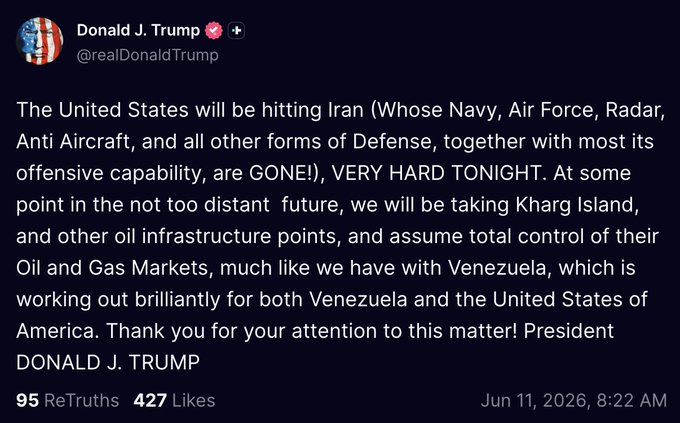
President Trump posted on Truth Social that the United States will hit Iran hard tonight following recent airstrikes. He further stated that “at some point in the not too distant future, we will be taking Kharg Island and other oil infrastructure points and assume total control of their Oil and Gas Markets.”
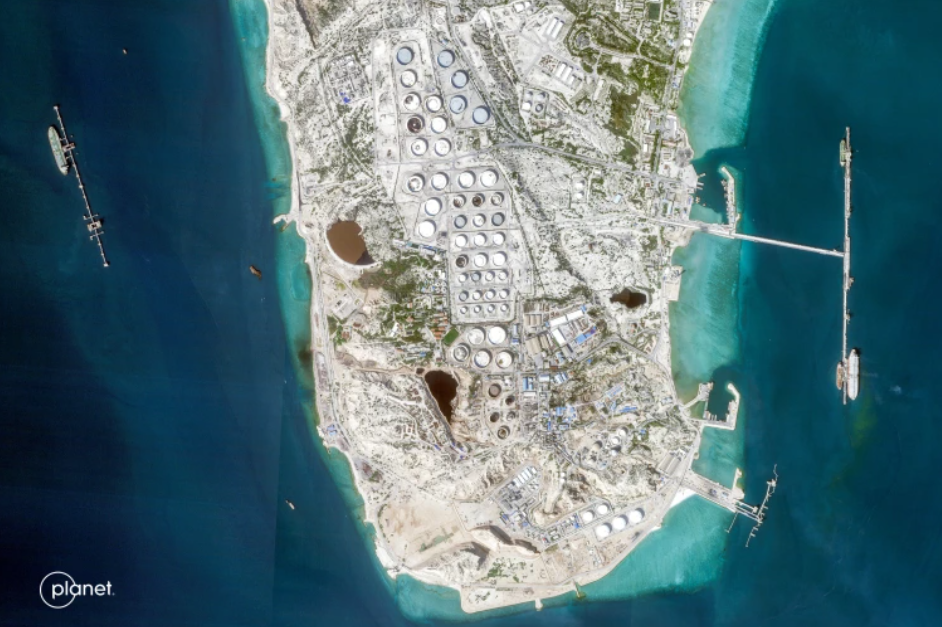
Kharg Island is Iran’s primary oil export terminal in the Persian Gulf, handling approximately 90% of the country’s crude oil exports. It has been a repeated target of U.S. strikes on military infrastructure in recent months, while oil facilities have largely been spared so far.
Trump’s language explicitly references the administration’s recent actions in Venezuela, where U.S. forces captured Nicolás Maduro, and the U.S. has taken a leading role in overseeing oil production and revenues. In Venezuela, American companies were positioned to repair infrastructure, and oil sales proceeds were directed under U.S. oversight to benefit both nations.
Venezuelan-Style Controls: Stu Turley’s Analysis on Energy News Beat
Energy News Beat host Stu Turley has repeatedly argued that “Venezuelan-style controls” represent the clearest path to a decisive outcome in the Iran conflict. In recent podcast episodes and Substack analysis, Turley emphasized that without such controls—effectively cutting off the Islamic Revolutionary Guard Corps (IRGC) from oil revenues—Iran will continue funding proxy groups like the Houthis and destabilizing the region.
Turley noted that seizing or controlling Kharg Island and implementing similar oversight mechanisms could starve the regime of funds while potentially allowing for a transition that benefits the Iranian people and stabilizes global energy flows. This approach mirrors the post-Maduro strategy in Venezuela, where oil infrastructure repair and revenue control were central to U.S. objectives.
Why this matters:
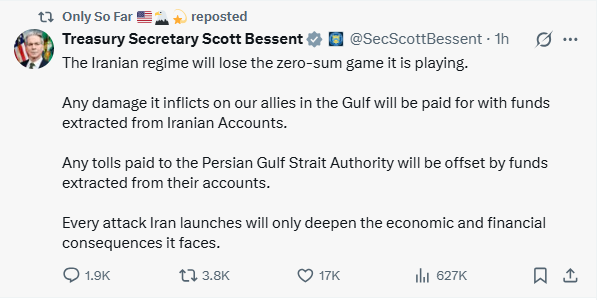
Secretary Scott Bessent just posted on X, “Any damage it inflicts on our allies in the Gulf will be paid for with funds extracted from Iranian Accounts.
Market Reaction to Strikes on Iran and Kharg Island Threats
Markets are highly sensitive to developments involving Iranian oil infrastructure and the Strait of Hormuz (through which ~20% of global seaborne oil typically flows). Previous rounds of U.S. strikes on Iranian targets, including military sites on Kharg Island, have triggered sharp moves in energy prices:
Oil prices typically surge on escalation fears due to supply disruption risks. Historical reactions in this conflict have seen Brent crude rise $5–15+ per barrel in short order when strikes intensify or Hormuz/Kharg threats emerge.
As of June 11, 2026, WTI crude futures are trading around $89–91 per barrel, with Brent in the mid-$90s range amid ongoing volatility and a persistent risk premium.
Stocks often react mixed-to-negative on broader risk-off sentiment, while safe-haven assets like gold rise.
Analysts at firms like Barclays and Eurasia Group have warned of potential spikes toward $100+ for Brent if Iranian exports face sustained disruption or if the Strait of Hormuz remains heavily restricted.
A successful U.S. move to control Kharg Island and Iranian oil infrastructure could eventually increase global supply (by redirecting or restarting exports under new management), but the short-term effect is almost certainly higher prices and heightened volatility as markets price in uncertainty.
Broader Implications
President Trump’s strategy combines maximum pressure with the threat of decisive action on Iran’s economic lifeline. By targeting military capabilities tonight and signaling future control of oil assets, the administration aims to force negotiations or regime concessions while preventing further proxy attacks.
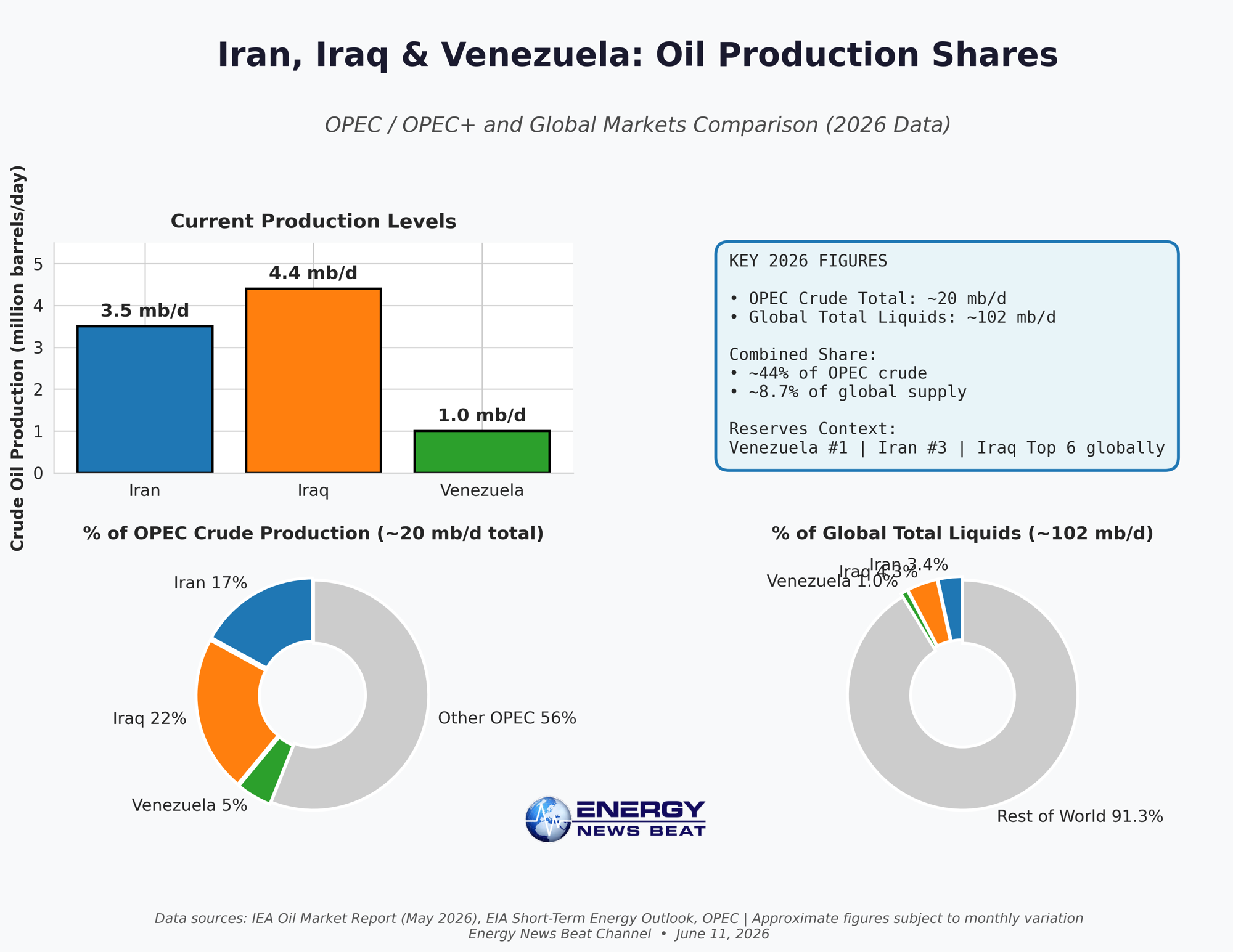
The oil markets just changed again, and let’s not forget that the U.S. still controls the money from Iraq through a different monetary setup, and it would not surprise me if it has shifted toward Venezuelan-style controls to move it away from the Fed. As shown above, the combined oil output from Iran, Iraq, and Venezuela has been about 44% and is now potentially under the United States’ financial controls. One thing to note is that the Iraq system is funneled through the Fed, and it is a privately held organization missing trillions of dollars, and some have indicated it may be a slush fund for foreign countries. The Venezuelan controls implemented by Secretary Scott Bessent appear to be working and helping Venezuela, so this may be a great path forward.
Energy markets remain on edge. Any confirmed move toward “Venezuelan-style” controls on Iranian oil could reshape global supply dynamics, reduce funding for Iran’s proxies, and create new opportunities for Western energy companies—much like the post-conflict plans unfolding in Venezuela. With Secretary Scott Bessent’s comments about the damage caused in the Gulf, I am very hopeful. I would rather pay for damages caused by Iran’s IRGC than allow them to give it to the Houthis or other proxy fighters.
The situation remains fluid. Tonight’s strikes and any follow-up developments on Kharg Island will be closely watched by traders, policymakers, and energy executives worldwide.
We will be covering this story on the Energy News Beat Stand Up today.
Appendix: Sources and Links
- Trey Yingst X Post (primary breaking report): https://x.com/TreyYingst/status/2065053042106347755
- Trump Truth Social statements (via news reporting): Referenced in CNBC (June 11, 2026) – https://www.cnbc.com/2026/06/11/trump-says-us-will-seize-kharg-island-and-other-oil-infrastructure-points.html
- Energy News Beat / Stu Turley on Venezuelan-style controls:
- Substack: “Reporting from the Strait of Hormuz” – https://theenergynewsbeat.substack.com/p/reporting-from-the-strait-of-hormuz
- Podcast episodes discussing Iran controls and Kharg Island (available on Apple Podcasts, Spotify, and energynewsbeat.co)
- Kharg Island background and strikes:
- CFR: https://www.cfr.org/articles/kharg-island-irans-oil-lifeline-and-a-tempting-u-s-target
- Wikipedia summary of 2026 events and prior strikes
- Venezuela oil control precedent: NYT, BBC, and Al Jazeera reporting (Jan 2026) on U.S. oversight and oil revenue handling post-Maduro.
- Market reaction analysis: Reuters, Barclays, Eurasia Group commentary on prior Iran strike impacts (various 2026 dates).
- Current oil prices: CME Group and Oilprice.com futures data (June 11, 2026).
- Additional context: CNN live updates and FT reporting on Trump’s June 11 statements.
Energy News Beat Channel – Delivering real-time analysis on energy markets, geopolitics, and the global oil & gas industry.