

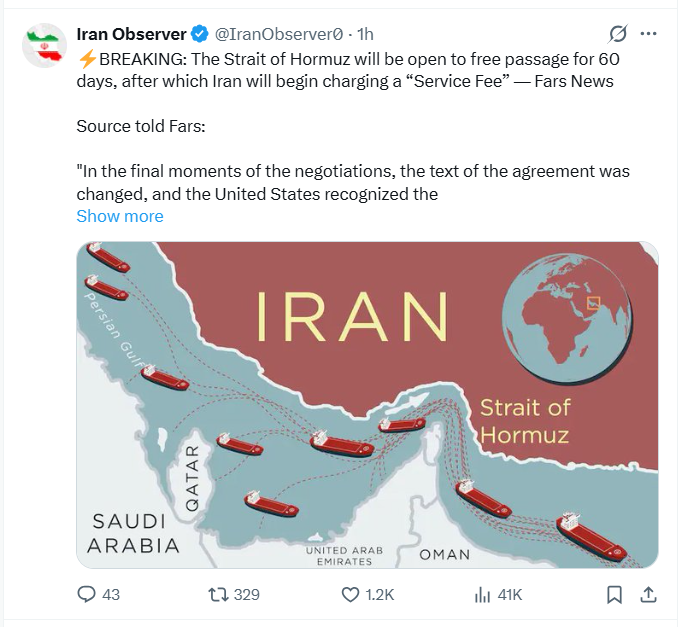
The recent U.S.-Iran Memorandum of Understanding (MOU) has triggered a wave of optimism in oil markets. Traders are pricing in a swift reopening of the Strait of Hormuz, a rapid normalization of supply chains, and a return to lower pre-crisis price levels. Brent crude has already dropped toward $83–$84 per barrel, with WTI near $80–$81, and some forecasts even point to a potential washout as low as $67 if euphoria takes hold.
But the physical realities of more than three months of severe disruption tell a different story. The damage to global oil supply chains, inventories, production, and logistics is already baked in—and it will take weeks to months, not days, for markets to rebalance. The low prices sparked by the MOU announcement may prove short-lived as hard arithmetic reasserts itself.
The Damage Is Done: Depleted Inventories and Curtailed Production
Global oil inventories have been drawn down at a historic pace. Preliminary data showed roughly 250 million barrels pulled from observed stocks in March and April alone—an average draw of about 4 million barrels per day. OECD stockpiles are heading toward multi-decade lows, and the U.S. Strategic Petroleum Reserve has already shed tens of millions of barrels.
Iran’s production and export infrastructure suffered significant setbacks during the crisis. Fields were shut in or curtailed due to storage constraints and blocked export routes. Restarting output is a mechanical, well-by-well process. Historical precedents suggest only partial recovery in the first 4–6 weeks, with full pre-crisis levels potentially requiring 3–6 months or longer.
Even under optimistic assumptions, the supply chain is not a light switch. Visible inventory rebuilding and refinery throughput normalization are unlikely to show up meaningfully until summer and into the fall.
Tanker Movements and Logistics: A Backlog That Takes Time to Clear
Hundreds of tankers were stranded or forced onto costly alternate routes during the disruption. Floating storage ballooned, with estimates of nearly 100 million barrels of crude and products still sitting on vessels inside or near the Gulf as of early June.
One market observer noted that even if Hormuz reopens, the roughly 300 ships now free to move represent just about two days of pre-war traffic—while another 500 or so vessels are still waiting to dock and load. The world has been running on fumes for months.
Clearing this backlog and repositioning the global tanker fleet will realistically span 30 to 90 days (or longer), not days or weeks. Demining operations and rebuilding confidence among shipowners, insurers, and refiners add further execution risk and timeline uncertainty measured in weeks rather than hours.
Analysts across the board agree: even if the strait reopens immediately following the MOU, trade through Hormuz will take months to return to normal. Buyers have already adapted by securing alternative supplies and routes, so pre-disruption patterns are unlikely to snap back quickly. Saudi Aramco’s CEO has warned that if disruption persists beyond mid-June, the oil market may not fully normalize until 2027. Even an immediate reopening would still require months for rebalancing, with a net loss of around 880 million barrels accumulated so far.
Cushing, Oklahoma: Approaching Tank Bottoms — The Opposite of 2020
The situation at Cushing, the delivery point for U.S. WTI futures, underscores the tightness. As of June 5, 2026, commercial crude inventories stood at just 21.64 million barrels—well below the normal ~40 million barrel range and heading rapidly toward operational minimums (estimated working tank bottoms around 18–20 million barrels).
Industry estimates suggest Cushing could hit these operational limits as soon as the end of June. At current draw rates, the system risks constraints on crude delivery, quality issues, and potential bottlenecks in the pipeline network.
This is the mirror image of the infamous April 2020 episode, when the May WTI contract plunged to negative $37.63 per barrel because Cushing storage was overflowing and there was nowhere to put the oil.
Now, with inventories scraping tank bottoms just two weeks from the expiration of the front-month contract (the July 2026 WTI futures, with first notice around June 24 and expiration around June 22), the dynamics flip. Physical tightness at the key U.S. hub creates the conditions for an “opposite and equal” response: instead of a glut-driven collapse into negative territory, the market faces potential squeezes, extreme backwardation, delivery constraints, and upward price pressure if any supply disappointment emerges.
Timeline to Market Balance
Days to a couple of weeks: Possible initial safe tanker transits and test flows after formal progress on demining and the MOU implementation.
30–90 days: Meaningful clearance of floating storage and stranded fleet backlog; repositioning of tankers.
Summer into fall: Visible inventory rebuilding and refinery throughput normalization in data.
Months to 2027: Full market rebalancing, depending on how quickly and sustainably flows resume. Low starting inventories act as a powerful buffer against any near-term supply shortfalls.
The self-reinforcing dynamics of the crisis phase now work in reverse—but with a significant lag. Lower prices will eventually support refining margins and higher runs, yet physical delivery timelines cannot be rushed.
Sentiment Reset and Asymmetric Risk
Positioning has already reset after weeks of selling on deal hopes. Speculative length is lighter, and sentiment has turned decisively bearish. This setup creates asymmetric upside risk. Any evidence that physical flows are lagging expectations will likely trigger short covering and fresh buying.
The “pain trade” has flipped. For weeks, every optimistic headline fueled a sell-off. With the MOU in place, further statements will be scrutinized more closely as potential steps away from full implementation. The numbers increasingly point higher.
Conclusion
The MOU has delivered a classic “sell the rumor, buy the fact” setup. While the geopolitical relief is real and welcome, the physical supply chain cannot recover overnight. Depleted inventories, curtailed production, a massive tanker backlog, and Cushing inventories scraping tank bottoms all point to a slow grind higher in prices over the coming months—even as headlines celebrate the reopening of Hormuz.
The low prices triggered by the MOU announcement are unlikely to last. Fundamentals are reasserting themselves, and the path to market balance will be measured in months, not days.
- X post by@Mark4XX(June 15, 2026): https://x.com/Mark4XX/status/2066422449286033808
- X post by@jackprandelli(June 15, 2026): https://x.com/jackprandelli/status/2066440402408743206
- Bloomberg: “Hormuz Trade Will Take Months to Return to Normal, Analysts Say” (June 15, 2026): https://www.bloomberg.com/news/articles/2026-06-15/hormuz-trade-will-take-months-to-return-to-normal-analysts-say
- Additional context from web searches on 2026 Strait of Hormuz crisis, Cushing inventories (EIA data via multiple outlets June 2026), Aramco CEO comments (CNBC May 2026), and WTI futures expiration mechanics (CME/Barchart data June 2026).
- Historical 2020 negative WTI pricing references from congressional and market analyses.
This article is prepared for the Energy News Beat Channel based on publicly available information as of June 15, 2026. Oil markets remain highly volatile and subject to rapid geopolitical and fundamental shifts.