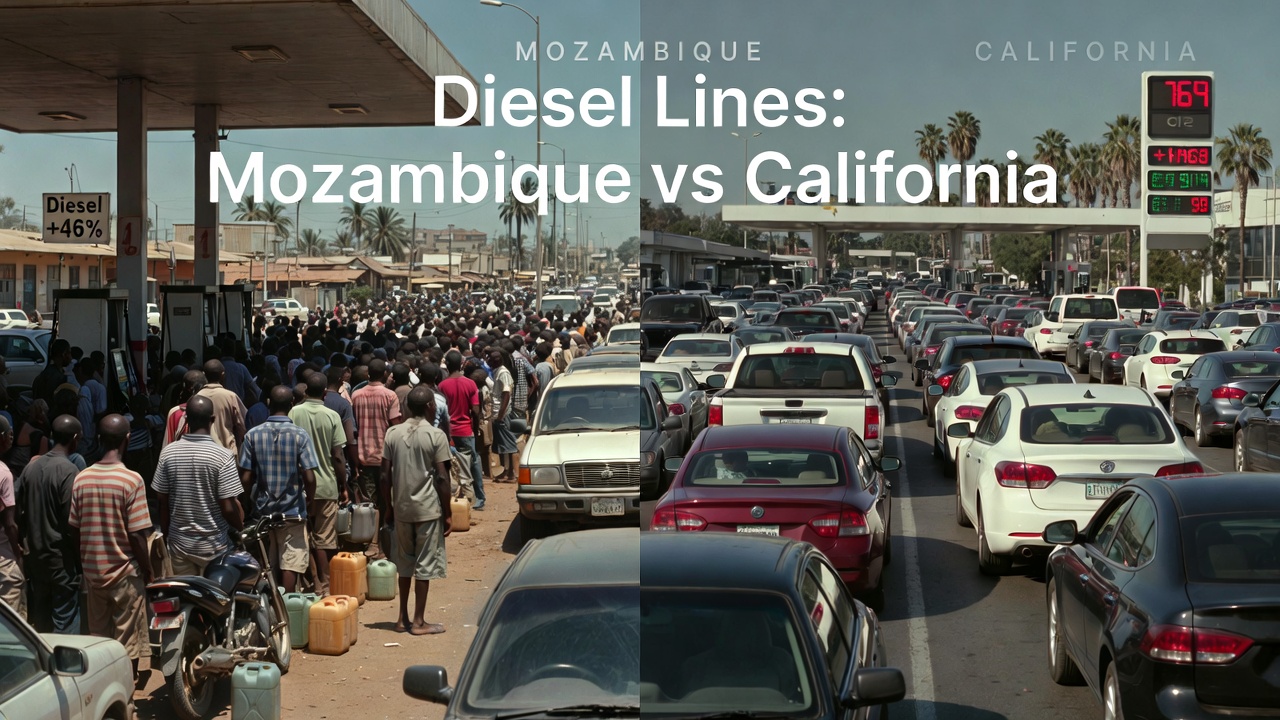
In a striking parallel amid the ongoing U.S.-Israel conflict with Iran, two distant regions—sub-Saharan Africa’s Mozambique and the U.S. West Coast’s California—are facing acute fuel supply pressures. Both heavily rely on petroleum products whose supply chains trace back to the Strait of Hormuz, the critical chokepoint through which roughly 20-25% of global seaborne oil and significant refined fuels normally flow.
The war has effectively disrupted tanker traffic through the strait, driving up global oil prices and halting routine shipments. On May 7, 2026, Mozambique announced a staggering 46% hike in diesel prices to align with soaring international costs.
Meanwhile, California’s fuel imports from Asia—itself starved of Middle Eastern crude—are drying up, compounded by recent refinery closures. Diesel prices in the Golden State are already spiking toward record levels, with analysts warning of further surges as in-transit cargoes run out in the coming weeks.
Mozambique’s Diesel Shock: 46% Hike Hits the Poorest Hard
Mozambique, one of the world’s poorest nations, implemented the diesel price increase effective May 7, 2026, raising it from approximately 79.88 meticais per liter to 116.25 meticais (roughly a 45.5-46% jump).
Petrol saw a more modest rise, while the government cited the need to match global market realities amid the Iran war’s oil surge.
Around 80% of Mozambique’s fuel imports transit the Strait of Hormuz, primarily from Middle Eastern suppliers like those in the UAE, Oman, and Iraq.
The conflict has triggered widespread shortages, station closures, long queues, and limits on purchases. The government is now scrambling for alternative sources outside the Persian Gulf, but stocks are thin—earlier reserves were projected to last only until early May without new arrivals.
This isn’t isolated: Ethiopia, Gambia, and Zambia have also hiked pump prices by up to 26% in recent days as regulated fuel markets across Africa buckle under the pressure. Subsidies and tax suspensions have been deployed but proved insufficient.
California’s Perfect Storm: Refinery Losses + Asian Import Crunch
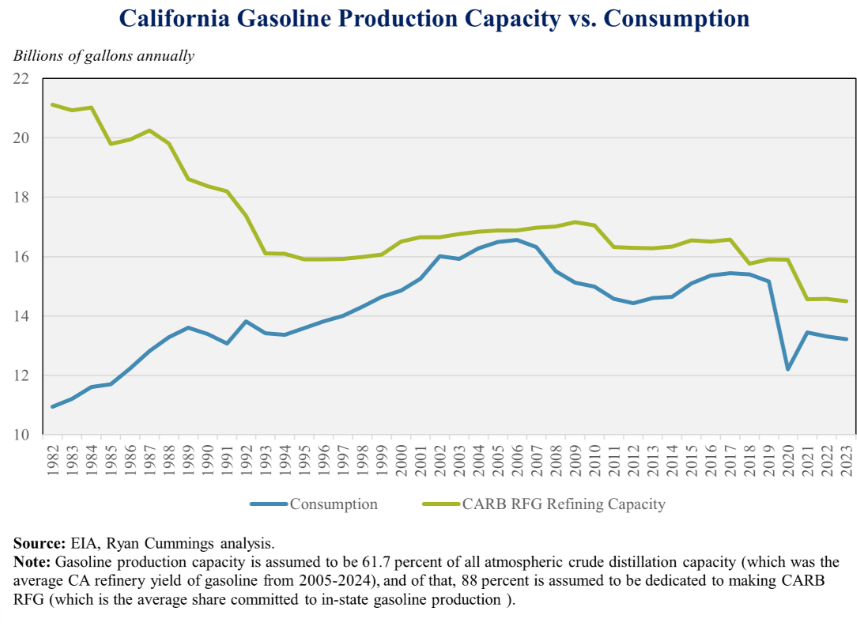
California faces its own crisis, one rooted in domestic policy and global disruption. Two major refinery closures—Phillips 66’s Los Angeles complex (late 2025) and Valero’s Benicia facility (April 2026)—have slashed roughly 17-20% of the state’s refining capacity.
The state already imported over 60% of its crude in 2025, with a significant portion historically from the Persian Gulf (about 10-30% of foreign crude depending on the year).
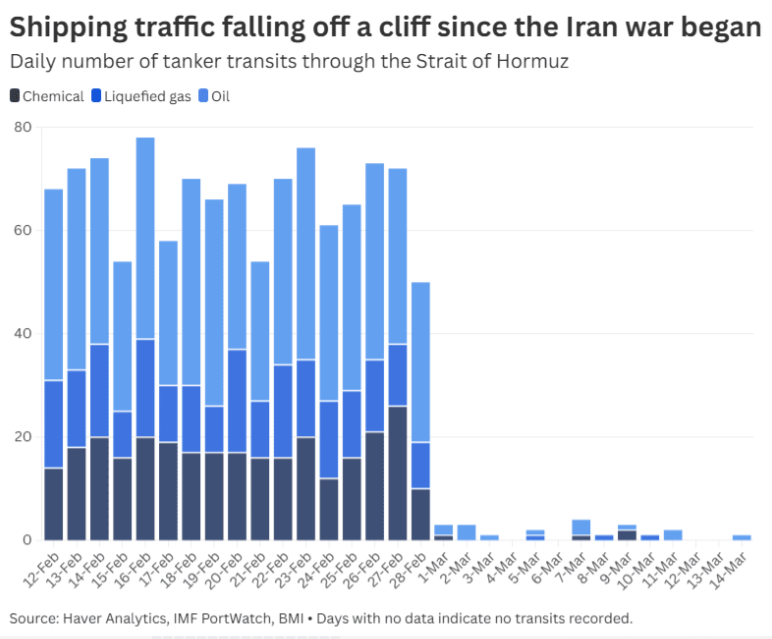
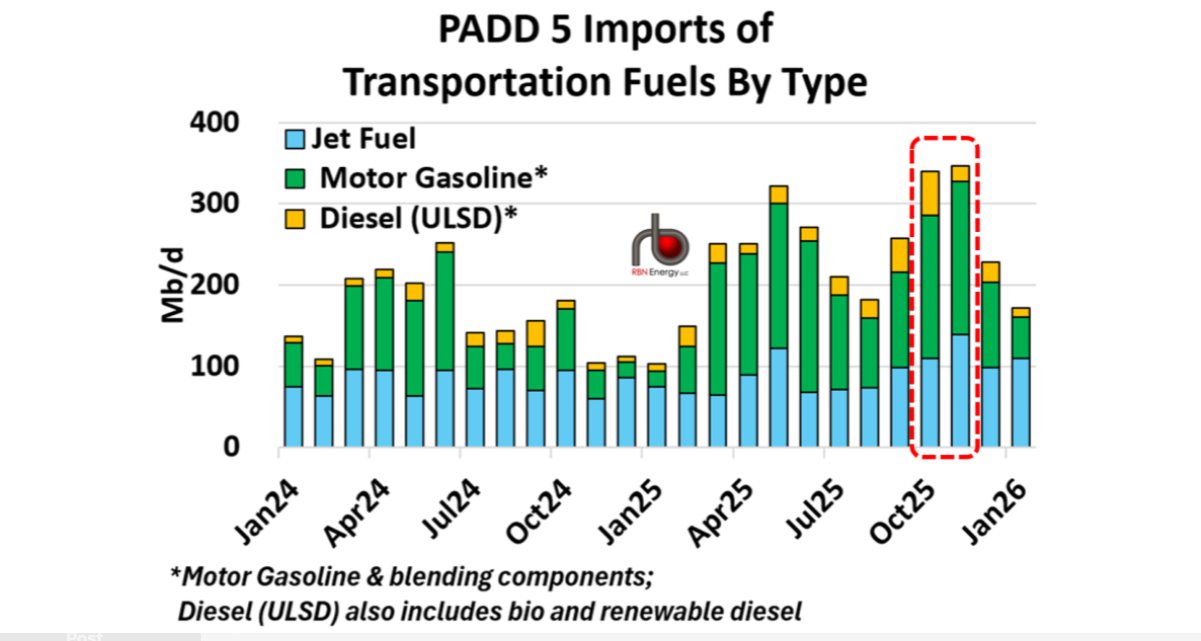
Compounding this, California depends heavily on refined products—gasoline, diesel, and especially jet fuel—from Asia (South Korea, Japan, and others). Those Asian refiners, in turn, rely on Middle Eastern crude via the Strait of Hormuz. With tanker traffic through the strait plummeting over 95% since late February 2026, Asian exports to California have collapsed.
Jet fuel cargoes from Asia hit a decade-low in April 2026, with only one confirmed departure by late month (the Jag Parth from South Korea, due in Los Angeles around May 8).
Korean gasoline and diesel shipments dropped over 50% month-on-month.
The last major Middle East crude tanker to reach California (the New Corolla, carrying ~2 million barrels from Iraq) arrived in Long Beach in early May 2026—the final pre-war shipment. No new Hormuz-origin cargoes are expected soon.
Tanker Traffic Through the Strait of Hormuz Has Collapsed
Pre-war, the strait saw 60-100+ tanker transits daily. Post-conflict data shows traffic falling off a cliff—down to single digits on many days in March-April 2026, with only scattered transits resuming under heightened risk.
Analysts warn of diesel potentially approaching $8.50-$9/gallon and jet fuel shortages grounding flights if disruptions persist.
Mozambique’s 46% diesel hike is already rippling into transport fares and goods prices, exacerbating inflation in a fuel-import-dependent economy.
What Lies Ahead
Both regions illustrate the fragility of global energy supply chains. The Iran war’s impact on the Strait of Hormuz isn’t just a Middle East story—it’s driving diesel price pain from Maputo to Los Angeles. As remaining in-transit cargoes deplete over the next 2-6 weeks, further upward pressure on diesel (and gasoline/jet fuel) appears inevitable unless tanker traffic fully resumes or alternative routes/supplies materialize quickly.
I did not have comparing Mozambique’s diesel problem to California on my bingo card this morning, but here we are, thanks to the horrific energy policies of the Gavin Newsom Administration in California.
Energy News Beat will continue monitoring tanker data, price movements, and policy responses. For now, the shared lesson is clear: dependence on a single volatile chokepoint carries a steep and immediate cost.
Appendix: Sources
- Bloomberg: “Mozambique Hikes Diesel 46% as Africa Faces War-Driven Oil Surge” (May 7, 2026).
- Insurance Journal / Bloomberg / Fortune / Reuters / LA Times reports on California jet fuel, refinery closures, and Asia import declines (April-May 2026).
- 360 Mozambique / Club of Mozambique: Mozambique fuel import dependence on Hormuz (~80%).
- Kpler / Vortexa / Haver Analytics tanker traffic data.
California Energy Commission, EIA, RBN Energy, and industry analysts (GasBuddy, Patrick De Haan) for price/import charts and context.
Charts sourced from public energy market analyses and news visuals (Mansfield Energy, Bloomberg/EIA, RBN Energy, etc.). Data as of early May 2026; real-time tanker tracking may vary.