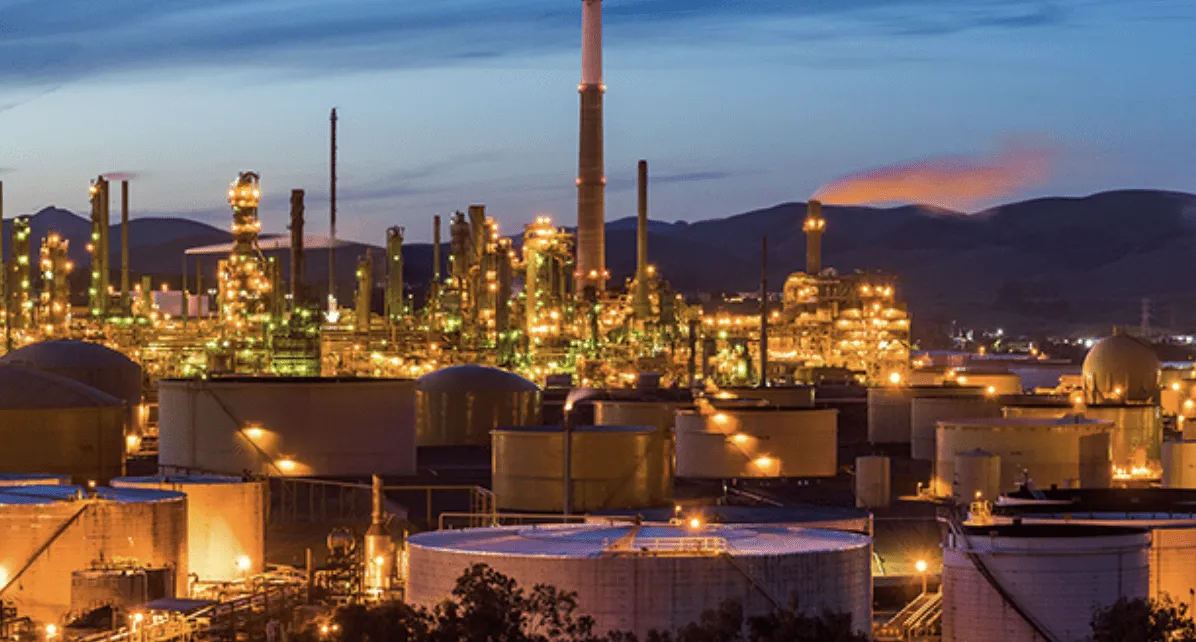
U.S. refiners are operating near full tilt, with utilization rates holding above 96% amid record refining margins, a global diesel squeeze, and disruptions from Russian refinery outages and Middle East tensions. The latest U.S. Energy Information Administration (EIA) Weekly Petroleum Status Report for the week ending July 17, 2026, shows U.S. refineries running at 96.1% of operable capacity (following 96.2% the prior week), processing 17.1 million barrels per day (bpd) of crude—down a modest 58,000 bpd week-over-week.
This elevated throughput is driven by historically strong economics, particularly for middle distillates. Distillate fuel oil (predominantly diesel) production hit a seasonal record of 5.3 million bpd as refiners maximized yields to capitalize on surging margins.
EIA Storage, Production, and Export Snapshot
Commercial crude oil inventories (excluding the Strategic Petroleum Reserve) rose 2.0 million barrels to 411.7 million barrels, remaining 6% below the five-year average. Gasoline stocks increased 0.8 million barrels (7% below the five-year average), while distillate inventories built 1.4 million barrels but stayed 10% below the five-year norm. Total commercial petroleum inventories rose 11.6 million barrels.
Crude imports edged up 117,000 bpd to 5.8 million bpd, though the four-week average remains 11% lower year-over-year. Crude exports declined about 368,000 bpd. Distillate exports, however, remain robust: the U.S. is on track for its second-highest July distillate export volumes on record (behind only summer 2022), with shipments supporting markets from South America to Europe. Recent weekly distillate export figures have hovered around 1.5–1.6 million bpd.
Product demand over the past four weeks averaged 20.4 million bpd (down 1% year-over-year), with gasoline demand up 1% to 8.9 million bpd and distillate demand up 2% to 3.7 million bpd.
Global Diesel Demand and Russian Refinery Impacts
Global diesel markets are exceptionally tight. Ukrainian drone strikes have knocked substantial Russian refining capacity offline—estimates range from more than 20% to as high as half of primary capacity in some analyses—triggering domestic fuel shortages across dozens of Russian regions and prompting export restrictions, including a diesel export ban.
Russia, historically a major diesel exporter, has seen production and seaborne shipments collapse, forcing buyers in Europe, Latin America, and elsewhere to scramble for alternative supplies. This compounds pressures from Middle East disruptions (including Strait of Hormuz concerns) and has elevated U.S. refiners as a key swing supplier. Analysts note that the real bottleneck is refining capacity rather than crude availability, with European diesel inventories projected to hit multi-year lows by year-end.
Refinery Maintenance Risks at High Utilization
Running above 96% leaves little spare capacity and raises the risk of unplanned outages. Some refiners have deferred or lightened spring maintenance to capture strong margins, resulting in one of the lightest maintenance seasons in recent years earlier in 2026.
A heavier global turnaround period is expected from September onward. On the U.S. Gulf Coast, scheduled work includes units at Valero, Shell, Motiva, and others later in the year. Canada’s Irving Oil Saint John refinery (a key supplier to the U.S. Northeast) plans an extended fall turnaround from early September to mid-November 2026.
High utilization amplifies vulnerability to weather events, mechanical issues, or further geopolitical shocks. Capacity creep projects have helped some Gulf Coast plants, but the overall system has limited headroom after years of permanent capacity retirements.
California’s Position and Asian Imports
California and the broader West Coast (PADD 5) operate at lower utilization (around 88–91% recently) and remain heavily dependent on imports. The state has lost significant refining capacity in recent years, increasing reliance on foreign product—particularly gasoline, where Asia (South Korea, India, and others) has supplied a large share, sometimes approaching 20% of the state’s gasoline needs.
Retail prices in California remain elevated (recently above $5.30–$5.35 per gallon for regular gasoline). While some Asian refiners have offered excess Middle Eastern crude cargoes toward the U.S. West Coast amid recovering Hormuz flows, product import dependence persists, and any further Asian supply constraints would tighten the market further. Pipeline projects aiming to bring more domestic product westward are advancing but will take time.
Crack Spreads in the Mix
The benchmark 3-2-1 crack spread (approximating the margin from refining three barrels of crude into two of gasoline and one of diesel) recently soared to record levels around $65–$70 per barrel, supported by diesel cracks near $84 per barrel and strong gasoline margins—levels not seen since 2022 or higher.
These elevated spreads explain why refiners are maximizing runs and prioritizing distillate yields despite modest crude inventory builds. Strong cracks support high utilization and crude demand but also signal underlying product tightness that can keep retail prices elevated even if crude prices moderate.
What Investors and Consumers Should Watch
Investors should monitor weekly EIA inventory reports (especially distillate and gasoline draws/builds), refinery utilization and unplanned outages, U.S. product export volumes, Russian recovery timelines, and Strait of Hormuz traffic. Refining equities and crack-spread-linked instruments benefit from sustained high margins, while crude producers face more mixed signals from product-led tightness versus potential longer-term surplus. Geopolitical headlines remain the dominant short-term driver.
Consumers should expect continued elevated diesel and gasoline prices into the fall and winter heating season, particularly if maintenance season overlaps with low inventories or further supply shocks. Watch for any relief from increased Asian or Middle Eastern product flows and seasonal demand patterns. California drivers face the steepest premiums due to local constraints and import reliance.
Oil Market Analyst Views: Short-Term and Long-Term
Short term (remainder of 2026): Most analysts see continued volatility and elevated product prices due to refining bottlenecks, residual Russian outages, and Hormuz risks, even as some crude flows recover. Forecasts vary with geopolitics: JPMorgan sees Brent averaging around $86 in Q3 and $80 in Q4 (exiting the year near $78); Goldman Sachs holds a Q4 Brent view near $80; others note the market is “full priced” on diesel tightness. WTI has traded in the mid-$80s recently amid flare-ups. Demand destruction from high prices is already evident, limiting inventory draws.
Longer term (into 2027 and beyond): Consensus leans toward surplus as supply recovers (Middle East production rebound, non-OPEC growth) and demand faces structural headwinds. The International Energy Agency projects global oil demand declining by about 1 million bpd in 2026 (first annual drop since the pandemic) before rebounding ~2 million bpd in 2027. JPMorgan and others see 2027 averages potentially in the $60s for Brent, with oversupply requiring production adjustments. Demand destruction from sustained high prices, efficiency gains, and electrification is expected to accelerate the shift.
In summary, U.S. refiners are the current safety valve for a tight global product market, running hard on strong cracks while inventories stay lean. The combination of deferred maintenance risk, Russian capacity losses, and California’s import dependence keeps the outlook constructive for margins near-term but vulnerable to any operational or geopolitical hiccup—and increasingly challenged by demand destruction over the longer horizon.
- EIA Weekly Petroleum Status Report and data tables (utilization, inventories, imports/exports): https://www.eia.gov/petroleum/supply/weekly/ and https://www.eia.gov/dnav/pet/PET_PNP_WIUP_A_%28NA%29_YUP_PCT_W.htm
- RBN Energy analysis on utilization and cracks: https://rbnenergy.com/daily-posts/analyst-insight/refinery-utilization-holds-above-96-strong-diesel-margins-drive
- Bloomberg/TT News on U.S. diesel production and exports: https://www.ttnews.com/articles/us-refiners-ramping-diesel
- Hydrocarbon Engineering EIA summary: https://www.hydrocarbonengineering.com/refining/23072026/eia-commercial-crude-oil-inventories-increased-by-2-million-barrels/
- Reports on Russian refinery impacts (RFE/RL, Moscow Times, StoneX, etc.): Various, including https://www.rferl.org/a/ukraine-russia-oil-refinery-fuel-shortages-kremlin/33787903.html
- Morgan Stanley on European diesel tightness: https://www.energyconnects.com/news/oil/2026/july/diesel-squeeze-in-europe-set-to-deepen-morgan-stanley-says/
- California imports and prices (IER, EIA gasoline/diesel update, Pecos Operating): https://www.instituteforenergyresearch.org/international-issues/refinery-closures-increase-californias-reliance-on-fuel-imports/ and https://www.eia.gov/petroleum/gasdiesel
- Maintenance schedules and notes (ExecGraph, BIC Magazine, Bloomberg): Various Gulf Coast and Irving Oil reports
- Analyst forecasts (JPMorgan, Goldman Sachs, IEA Oil Market Report July 2026, etc.): https://www.iea.org/reports/oil-market-report-july-2026 and related banking notes
Data current as of the EIA release of July 22–23, 2026, and contemporaneous market reports. Markets remain highly sensitive to geopolitical developments.