



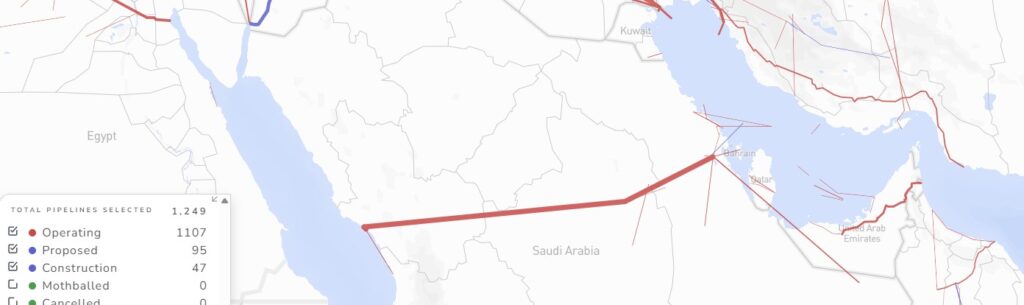
In a strategic move amid escalating geopolitical tensions, Saudi Arabia is ramping up efforts to bypass the disrupted Strait of Hormuz by utilizing its East-West Pipeline, also known as Petroline. This backup infrastructure allows the kingdom to redirect crude oil from its eastern fields to the Red Sea port of Yanbu, avoiding the chokepoint that’s been effectively closed due to the ongoing conflict involving Iran. The National Shipping Company of Saudi Arabia (Bahri), the kingdom’s primary oil shipper, has been aggressively booking very large crude carriers (VLCCs) to transport this rerouted oil to global markets.
Here is an interesting plot twist in the Middle East oil market. As Saudi Arabia uses their pipeline going to the Red Sea, the Houthis and other Iranian proxies are potentially lining up to attack. More on that in the second half of the article. But as you read the article, remember that President Trump’s Adminstration has laid the groundwork to drop the Venezuelan-style oil controls on Iran. This will eliminate the proxy’s cash flow. Iran paid the Houthis about 2 billion a year. That money will be going away, and it will be leaving more for the Iranian people.
The Tankers Being Contracted
Bahri has secured at least six VLCCs in recent days, with bookings made at premium rates reflecting the urgency and market tightness caused by the Hormuz standstill.
Reports indicate that the hiring spree may be even larger, with additional deals anticipated as demand surges.
These supertankers, each capable of carrying around 2 million barrels of crude, are part of a massive armada—estimated at up to 25 vessels—currently en route to Yanbu.
This fleet mobilization underscores Saudi Arabia’s determination to maintain export flows despite the regional disruptions.
Charter rates for these vessels have skyrocketed, approaching $200,000 per day in some cases, as the kingdom prioritizes securing capacity.
The bookings are provisional and focused on short-term needs, signaling a rapid response to the crisis.
Shipping Routes and Destinations
The oil will be loaded at Yanbu, Saudi Arabia’s key Red Sea export terminal, which serves as the western endpoint of the East-West Pipeline.
From there, tankers will navigate the Red Sea, potentially routing through the Suez Canal for deliveries to Europe or the Mediterranean, or taking the longer Cape of Good Hope route to reach Asia amid Houthi threats in the Bab el-Mandab strait.
Primary destinations appear to be Asian markets, where Saudi Aramco has urged buyers to nominate volumes for April loadings from Yanbu, specifically for its flagship Arab Light crude.
This shift aims to sustain supplies to major importers like China, India, and Japan, who rely heavily on Gulf oil. While some sources mention general movements toward Asia, the exact buyer breakdowns remain fluid, with Aramco adapting nominations based on customer responses.
Oil Volumes in Play
Saudi Arabia is looking to significantly boost exports via this route, with the East-West Pipeline set to operate at its full capacity of 7 million barrels per day (bpd).
After accounting for domestic refinery needs (around 2 million bpd), this leaves approximately 5 million bpd available for Yanbu exports.
Early March data already shows a surge, with Yanbu loadings averaging 2.2 million bpd—double the February levels.
The incoming tanker fleet could collectively haul up to 50 million barrels of crude, providing a substantial buffer to clear inventories and meet contractual obligations.
However, Yanbu’s effective loading capacity is estimated at 4-4.5 million bpd across its terminals, which may cap the short-term ramp-up.
This workaround partially offsets the loss of the Hormuz route, which normally handles about a fifth of global oil supplies.
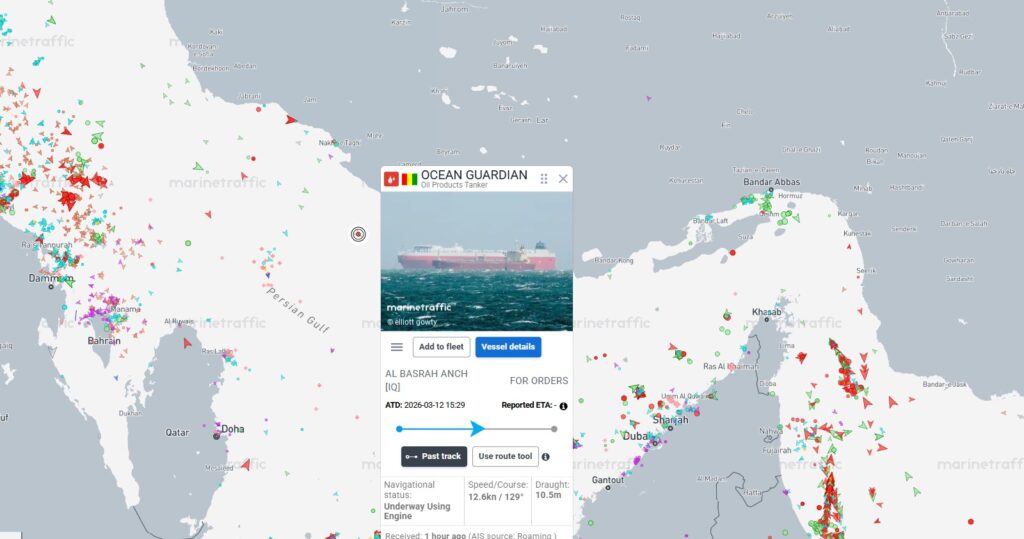
At the time of this writing, we are tracking a refined products tanker en route to the Strait of Hormuz from Guinea, and we will see whether she gets through. Seeing some traffic is a good sign, but having a way around the Strait of Hormuz is critical for Saudi Arabia.
Broader Context and Implications
The Hormuz disruption, stemming from the US-Israel-Iran conflict, has halted traditional Persian Gulf exports, prompting this pivot to the Red Sea.
While the East-West Pipeline offers a vital lifeline, it’s not without risks—Houthi activities could threaten Red Sea shipping, potentially forcing more tankers to circumnavigate Africa.
For global energy markets, this development highlights Saudi Arabia’s resilience but also underscores vulnerabilities in supply chains. Oil prices have fluctuated amid these uncertainties, with traders watching for further escalations. As Bahri continues to snap up vessels, the kingdom’s ability to sustain output at around 9-10 million bpd will be tested, but this tanker surge positions it to weather the storm—at least for now.
Houthi Threats Escalate: Potential Resumption of Red Sea Attacks Amid Iran Conflict
In the wake of the U.S.-Israeli strikes on Iran in late February 2026, Yemen’s Houthi movement has renewed threats to resume attacks on commercial shipping in the Red Sea and Gulf of Aden. This development comes after a pause in hostilities following the October 2025 Israel-Hamas ceasefire, raising fresh concerns for global energy markets already strained by the closure of the Strait of Hormuz.
As of March 12, 2026, while no large-scale resumption has been confirmed, isolated incidents and heightened rhetoric suggest an elevated risk to maritime traffic.Background on the Houthi CampaignThe Houthis, an Iran-backed group controlling much of northern Yemen, initiated attacks on shipping in November 2023 in solidarity with Palestinians during the Gaza conflict.
These operations involved drones, missiles, and anti-ship ballistic missiles targeting vessels linked to Israel, the U.S., and their allies. The campaign disrupted the Bab el-Mandab Strait, a critical chokepoint for 15% of global trade, including oil shipments, forcing many carriers to reroute around the Cape of Good Hope.
Attacks paused in early 2025 under a U.S.-brokered deal via Oman, and further de-escalated after the Gaza ceasefire.
However, on February 28, 2026, senior Houthi officials announced plans to restart missile and drone strikes on U.S. and Israeli-flagged ships in support of Iran.
One official indicated the first attack could occur that night, though initial reports showed internal debates delaying action.
Recent Developments and Incidents
By March 5, Houthi leader Abdul-Malik al-Houthi stated in a televised address that the group stands with Iran and is “prepared to take action if developments require it,” emphasizing that their “hands are on the trigger.”
eRhetoric has been more subdued compared to previous campaigns, focusing on political solidarity rather than immediate military escalation.
Real-time reports indicate sporadic activity:On March 9, the Houthis formally announced the resumption of attacks, according to AP reports cited in monitoring feeds.
As of March 10, no confirmed strikes were reported in the previous 24 hours, but threat levels remain elevated with U.S. CENTCOM maintaining a presence.
Recent X posts suggest potential incidents, including a reported targeting of the U.S.-linked oil tanker Chios Lion by Houthi forces on March 12.
This aligns with warnings of renewed launches at shipping lanes.
Additional threats include blocking the Bab el-Mandab Strait if Saudi Arabia intervenes against Yemen, potentially drawing Riyadh into direct conflict.
Energy and Shipping Implications
The renewed threats exacerbate the global oil crisis triggered by the Hormuz closure. Saudi Arabia is rerouting exports via its East-West Pipeline to the Red Sea port of Yanbu, with up to 30 supertankers en route—far exceeding the usual two per month.
This aims to maintain 5 million barrels per day in exports, but the route passes through Houthi-threatened waters.
Brent crude surpassed $100 per barrel on March 12, partly due to a 2-3% daily supply shortage compounded by Red Sea disruptions, which have caused a 60% drop in Suez Canal traffic.
U.S. gas prices hit $3.60, reflecting broader market pressures.
Shipping firms like Maersk are suspending Hormuz transits and rerouting via the Cape, anticipating Red Sea risks.
Even without full resumption, traffic through Bab el-Mandab remains down, with vulnerabilities to Iranian missiles adding to concerns.
International Response
France has deployed nearly a dozen warships, including the Charles de Gaulle carrier group, to the Mediterranean and Red Sea for maritime security, potentially extending to Hormuz.
European assets in the region aim to defend allies like Cyprus and escort tankers, though their role in a full escalation remains unclear.
NATO forces could focus on securing the Red Sea, freeing U.S. Navy resources for Iran-related operations.
U.S. Energy Secretary Wright indicated naval escorts in Hormuz might begin by month’s end, but Red Sea uncertainty complicates this.
Outlook for 2026
Analysts forecast scenarios ranging from sustained asymmetric attacks to a structured pause under tension.
Escalation is likely if the U.S.-Iran conflict intensifies, particularly involving direct strikes on Houthi assets or broader regional involvement.
For energy stakeholders, this dual chokepoint crisis—Hormuz and potentially Bab el-Mandab—poses unprecedented risks, with long-term rerouting potentially institutionalizing higher costs.
Stay updated with Energy News Beat as this fast-moving situation evolves, impacting global supply chains and prices.
Sources: X @jacoposcita, gosships.com , globalsecurityreview.com, @intelFromBrian
Get your CEO on the #1 Energy Podcast in the United States: https://energynewsbeat.co/energy-news-beat-media-kit/
Is oil and gas right for your portfolio? https://energynewsbeat.co/invest/


Be the first to comment