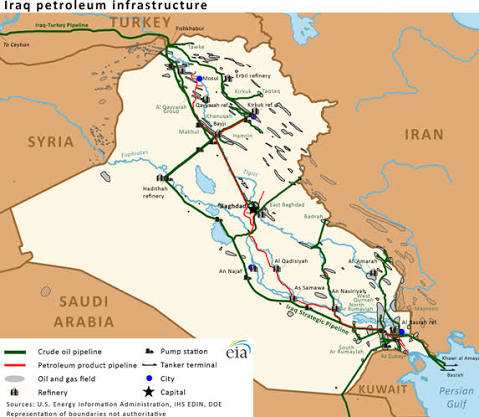
Iraq has suspended crude oil loading operations at all its southern export terminals following a drone incident at the Basra (Basrah) terminal complex in the Persian Gulf. The move affects a significant portion of the country’s exports, which normally average around 3.3–3.6 million barrels per day (bpd) via these facilities (with some market commentary citing figures above 4 million bpd in recent contexts).
According to sources, including Bloomberg and Iraqi oil/security officials, a drone crashed into an oil tanker that was in the process of loading approximately 1 million barrels at the Basrah export installations. No damage, fire, or injuries were reported. The affected tanker was towed outside the port area, and another vessel was moved as a precaution. Loadings have been halted across all Iraqi terminals while authorities assess the situation and investigate. No timeline for resumption has been provided.
This development introduces fresh uncertainty in supply to already-tense global oil markets amid broader geopolitical risks in the Middle East.
Details of the Drone Incident
The drone struck the tanker at Iraq’s main southern export hub near Basra. Iraqi sources confirm it is not immediately clear who launched the drone, and no group or country has claimed responsibility as of the latest reports.
The incident occurred on the same day the US struck an Iranian-linked oil tanker elsewhere in the Persian Gulf, though the two events appear unrelated based on available information. Previous attacks in the Basra region (e.g., March 2026 incidents involving tankers or facilities) had been linked in some reporting to Iranian or Iran-aligned actions, but today’s event lacks any such attribution so far.
Key clarification on location and the Strait of Hormuz: Iraq’s Basra-area terminals (including Basra Oil Terminal, Khor al-Amaya, etc.) sit in the northern Persian Gulf. Crude loaded there must transit the Strait of Hormuz to reach most international buyers. However, this suspension is a localized terminal/loading disruption — not a closure or direct attack on the Strait of Hormuz itself (which would affect exports from multiple Gulf producers, including Saudi Arabia, UAE, Kuwait, etc.).
Map of key global oil chokepoints (Strait of Hormuz and Bab el-Mandeb highlighted in context of major shipping routes). Source: The Economist / EIA data.Broader Context for Oil Prices: China’s Buying Behavior and Houthi Threats to Bab el-Mandeb
Two additional factors are influencing oil market sentiment alongside the Iraq news:1. China’s Crude Oil Purchases
China, the world’s largest crude importer, has sharply curtailed purchases in recent months amid the Iran-related conflicts and associated supply risks. Seaborne crude imports fell to roughly 6.4–7.8 million bpd in June 2026 — the lowest levels in nearly a decade and well below the 11+ million bpd averages seen in 2025.
Beijing has been drawing down strategic stockpiles rather than aggressively restocking or replacing disrupted barrels. This demand-side weakness has helped moderate potential price spikes from Middle East supply concerns. While some procurement signals and one-off deliveries hint at possible future pickup, imports remain subdued for now, acting as a buffer against higher prices.
2. Houthis and the Risk to the Bab el-Mandeb Strait
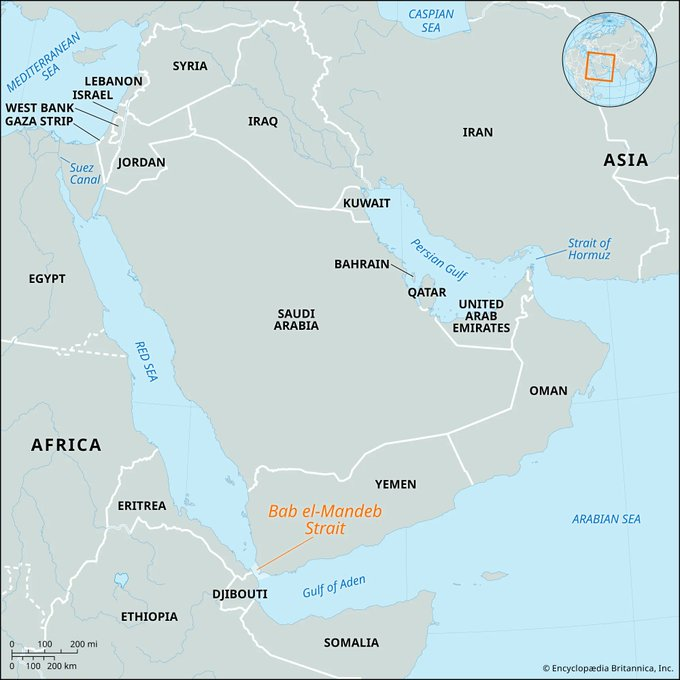
Iran-backed Houthi forces in Yemen continue to threaten shipping through the Bab el-Mandeb Strait (the narrow waterway linking the Red Sea to the Gulf of Aden and Indian Ocean). The Houthis possess demonstrated capability to disrupt the route via missiles, drones, unmanned surface vessels, and other tactics, as shown in prior Red Sea campaigns.
They have issued explicit threats to target vessels linked to the US, Israel, and others, and have signaled readiness to escalate or even attempt closure in response to broader regional conflicts. However, as of mid-July 2026, the strait remains open to commercial traffic, albeit with elevated risks, some diversions, and historical volume declines during peak threat periods. A full or sustained closure would force rerouting around the Cape of Good Hope, raising costs and delays — though the oil volume affected is smaller than that through Hormuz.
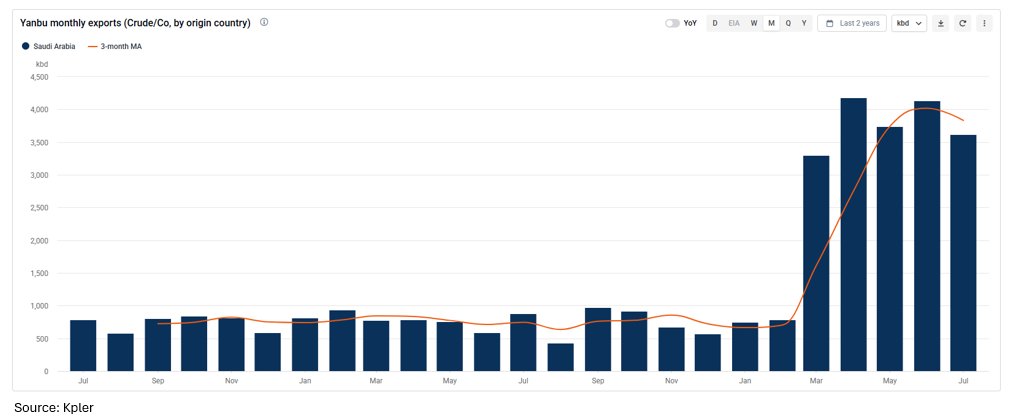
This could affect the Saudi exit port of Yanbu and force smaller tankers to transit the Suez Canal, which does not accommodate the larger VLCCs that pass through the Bab El-Mandeb Strait. This could impact the oil available to the market, from 7 million barrels lost to some number that is entirely dependent on securing SuezMax-class tankers. So, a guess would be that 2 to 3 million barrels per day might come back online, and only 5 million barrels lost to the Strait closed.
Satellite view of Iraq’s southern oil infrastructure near Basra (terminals and pipelines in the Shatt al-Arab / Persian Gulf area).
Saudi Arabia Exports through the Red Sea Yanbu port.
Market Implications
The Iraq terminal suspension removes meaningful supply from the market in the short term and adds a geopolitical premium amid already fragile sentiment. Combined with China’s reduced buying (which has cushioned prices) and the ongoing Houthi risk to another key chokepoint, the situation highlights how interconnected and vulnerable global oil flows remain.
Markets will monitor:
- Updates on the Basra investigation and resumption of loadings.
- Any escalation (or de-escalation) in Red Sea/Houthis activity.
- Signs of renewed Chinese import demand.
- Iran has a major oil leak off Kharg Island, and the cause is unknown. If it is just oil from overfilling to keep their oil producing and not having storage or tankers to take the pressure off, or is it the result of an attack? Unknown, but huge data point.
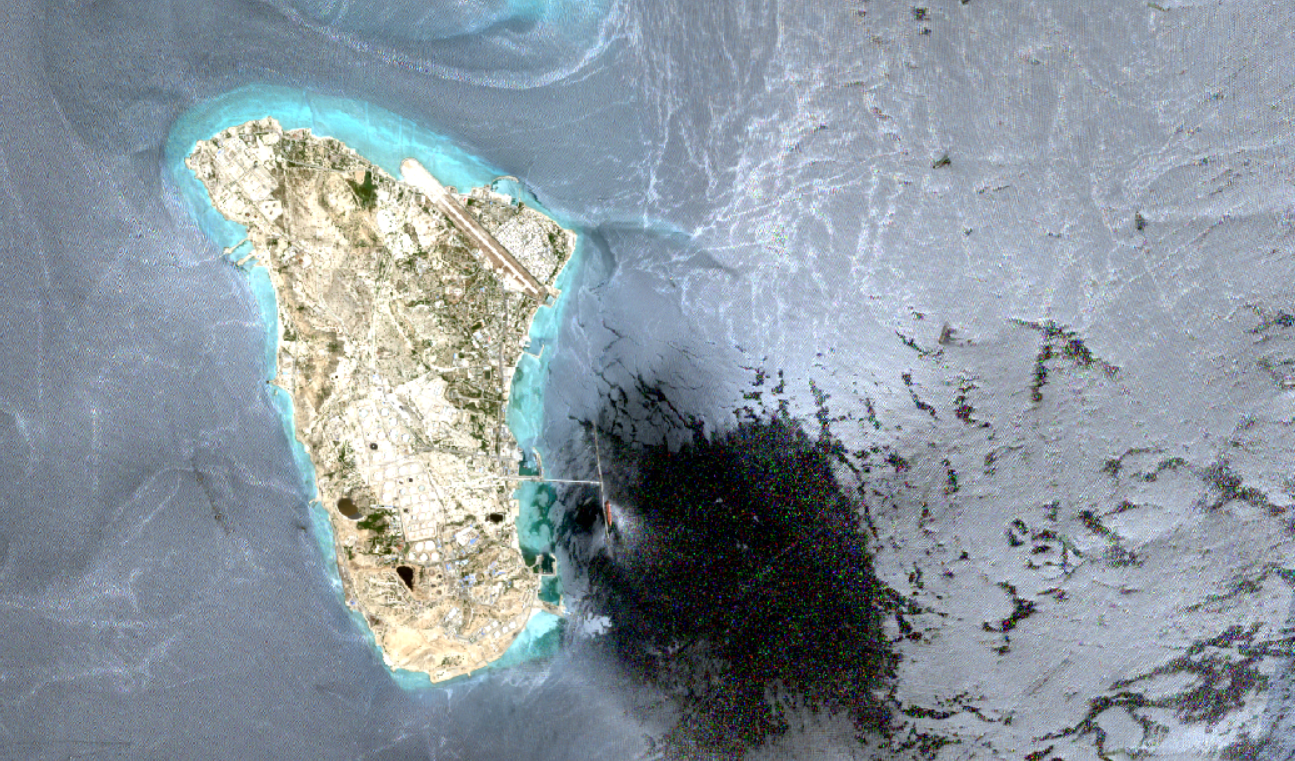
No immediate full-scale supply crisis has materialized from today’s event alone, but the uncertainty is contributing to volatility.
Appendix: Sources and Links
- Jack Prandelli (X/Twitter post with initial report): https://x.com/jackprandelli/status/2077712036213993918
- Bloomberg – “Iraq Pauses Basrah Oil Loadings After Drone Attack on Tanker” (July 16, 2026): https://www.bloomberg.com/news/articles/2026-07-16/iraq-suspends-basrah-oil-loadings-after-drone-attack-on-tanker
- Asharq Al-Awsat – “Crude Oil Loading Suspended at All Iraqi Terminals after Drone Incident”: https://english.aawsat.com/node/5296682
- Bloomberg coverage on China’s plunging crude imports (June/July 2026 data): https://www.bloomberg.com/news/articles/2026-07-14/china-s-crude-oil-imports-plunge-to-lowest-in-nearly-a-decade (and related June reports)
- Multiple sources on Houthis/Bab el-Mandeb threats and status (2026): Habtoor Research, Al Jazeera, Time Magazine, maritime advisories, and others referenced in searches.
- Iraq export volume context: Reuters, EIA, SOMO-related reports (normal southern exports ~3.3–3.6 million bpd range).
All information is based on publicly reported developments as of July 16, 2026. Further updates expected as investigations proceed.